15 Narrow Walk In Closet Ideas That Maximize Every Inch
I know the struggle of staring into a cramped closet and wondering how anything is supposed to fit. You want a boutique-style dressing room, but you are working with a hallway’s worth of width. It can feel impossible to organize your clothes without the space feeling claustrophobic.
However, a narrow footprint doesn’t mean you have to sacrifice style or functionality. With the right strategy, I believe you can transform even the tightest walk-in into an organized oasis. In this list, I will walk you through 15 design ideas that make the most of limited square footage, helping you build the closet of your dreams.
1. Prioritize Vertical Storage
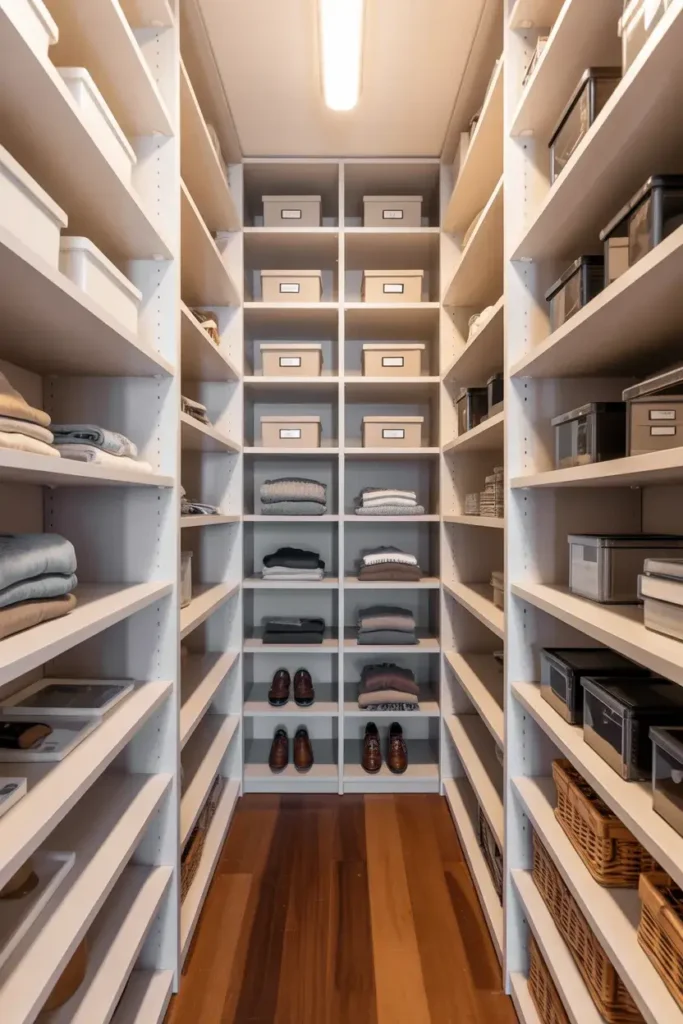
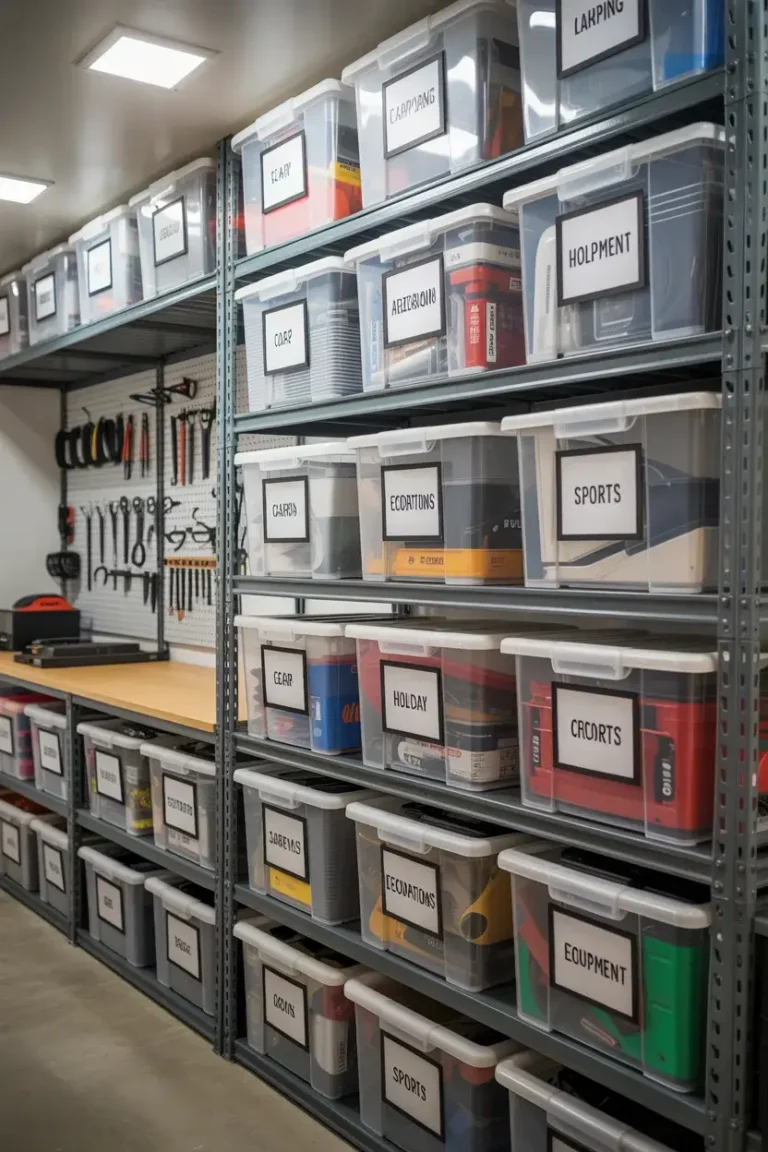
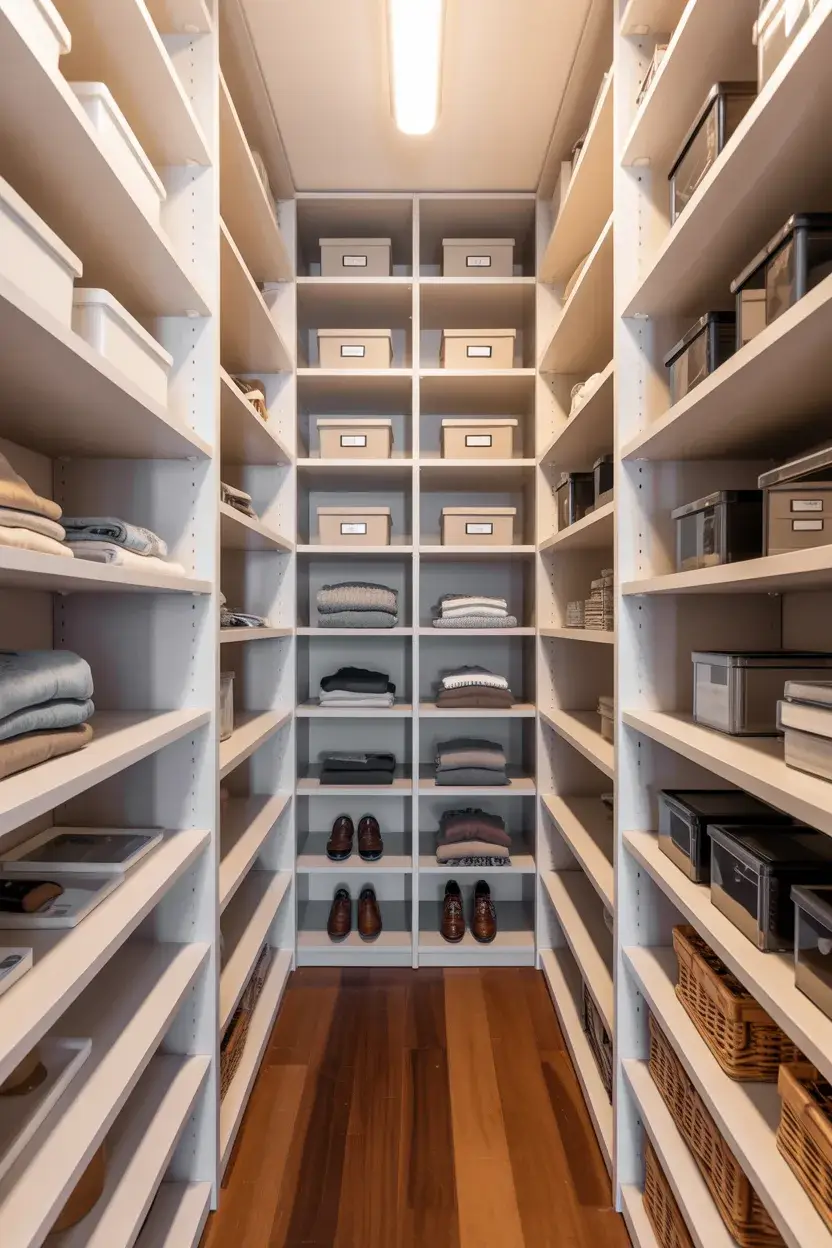
I always tell homeowners to look up when they run out of floor space. In a narrow closet, your walls are your most valuable asset. I recommend taking your shelving units all the way to the ceiling to maximize storage potential.
Standard closet heights usually cap around 84 inches, but utilizing the space above that is a game-changer. I use that high-up real estate for seasonal items or bins I rarely need to access. This draws the eye upward, making the room feel taller and less confined.
2. Install Strategic Task Lighting
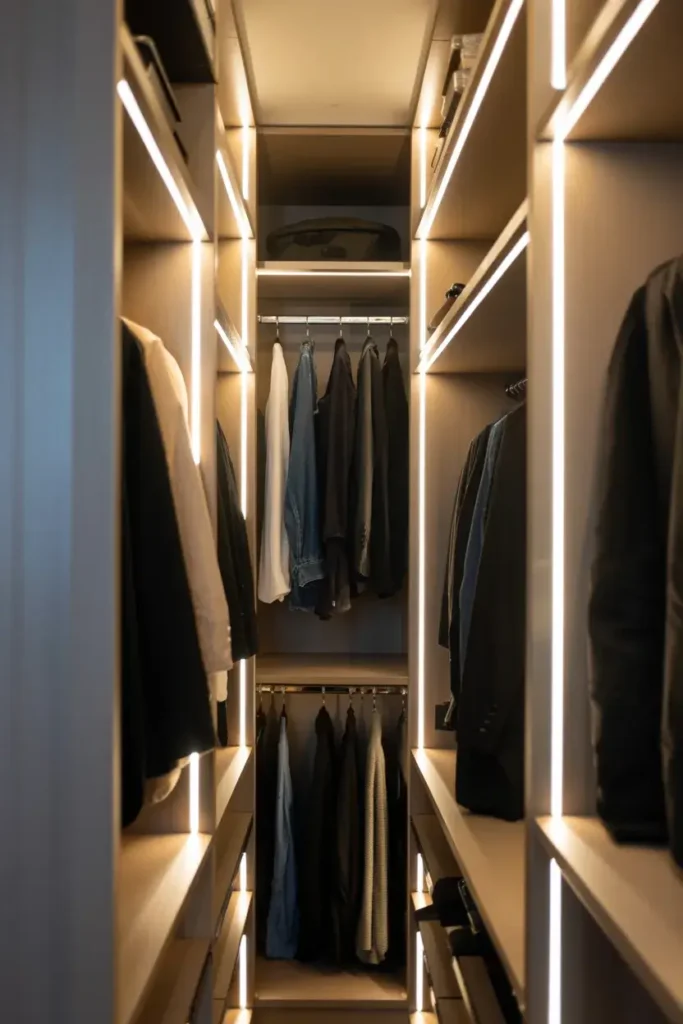
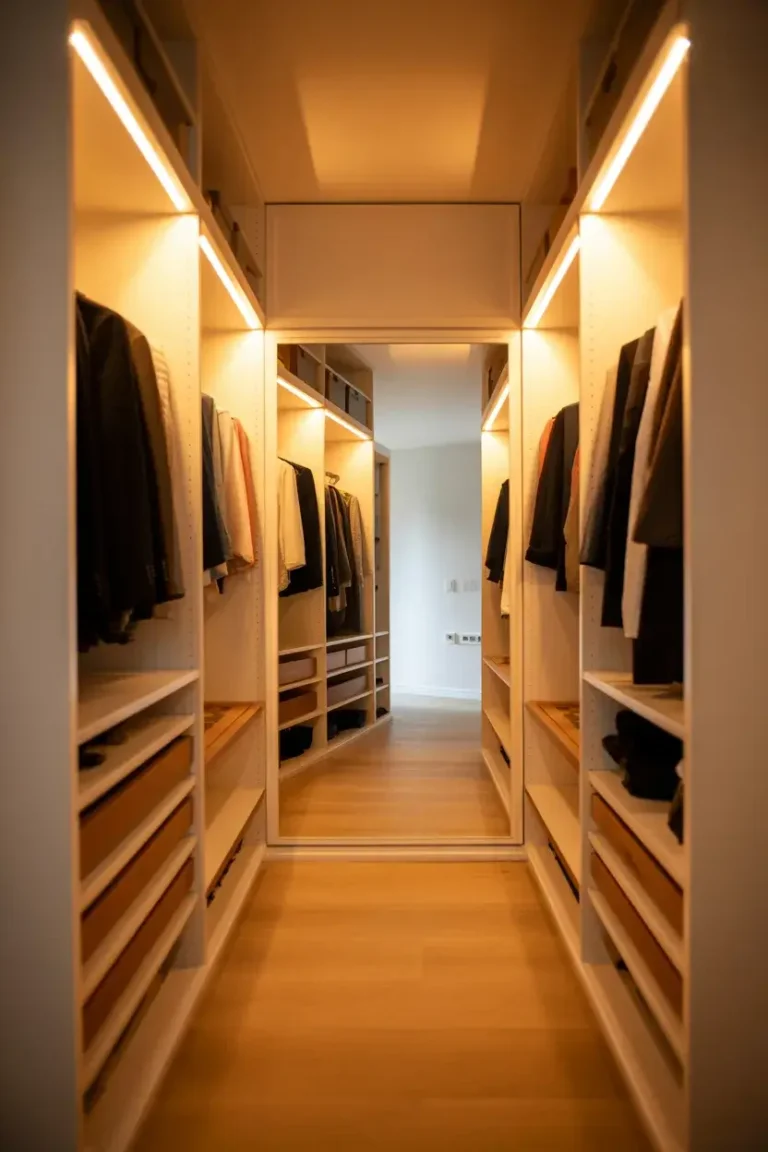
Lighting can make or break a small space. If you can’t see your clothes, you won’t wear them. I suggest ditching the single, dim overhead bulb for a layered lighting approach that brightens every corner.
According to lighting experts, you should aim for a color temperature between 3000K and 4000K. This range provides a neutral white light that helps you distinguish navy from black. I love using LED strip lights along vertical shelf edges to eliminate shadows in tight aisles.
3. Stick to a 24-Inch Hanging Depth
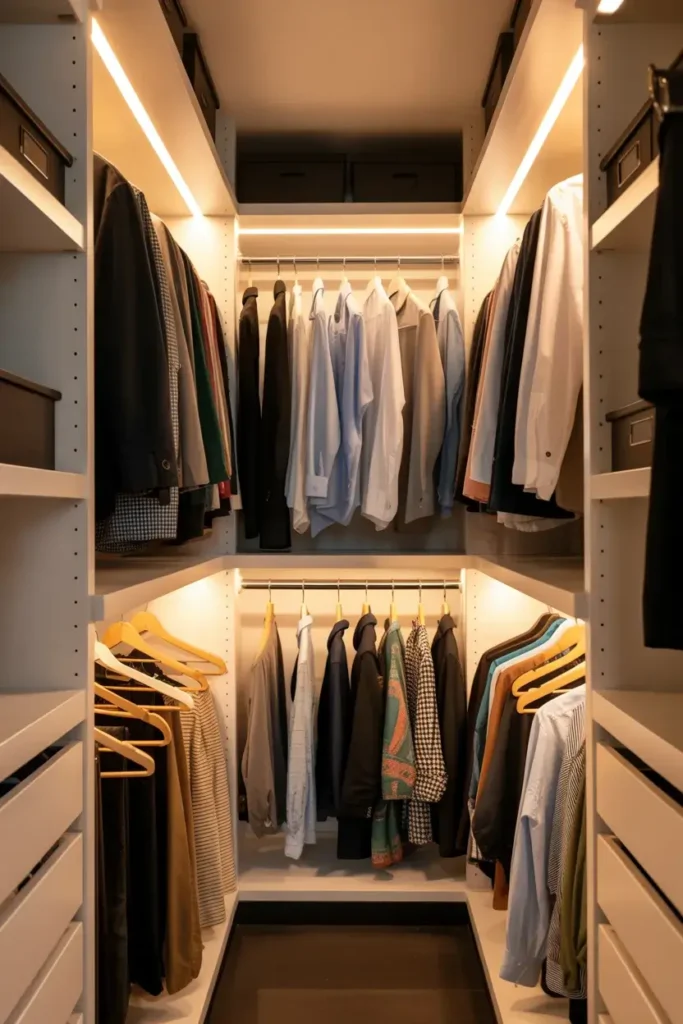
I find that respecting standard dimensions is crucial in a narrow layout. You generally need a depth of 24 inches for hanging clothes to ensure they don’t brush against the wall or protrude too far into your walking space.
If you try to cheat this number, your sleeves will get crushed. I always plan for this 24-inch zone first, then build the rest of the storage around it. This ensures your garments hang freely and stay wrinkle-free.
4. Use Mirrors to Double the Space
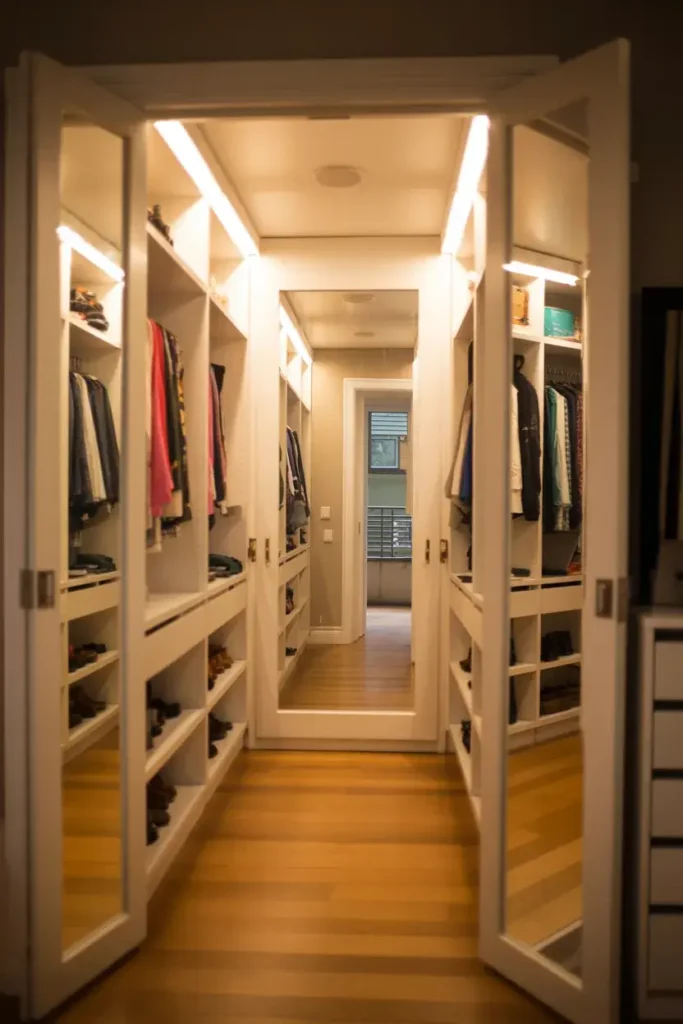
I consider mirrors to be the oldest trick in the design book for a reason. Placing a full-length mirror at the far end of a narrow walk-in closet instantly creates the illusion of a deeper, grander room.
Beyond just checking your outfit, mirrors reflect light, which helps brighten up a windowless space. I often mount mirrors on the back of the door or cabinet fronts to save precious wall space while adding that necessary visual depth.
5. Opt for Shallow Shelving
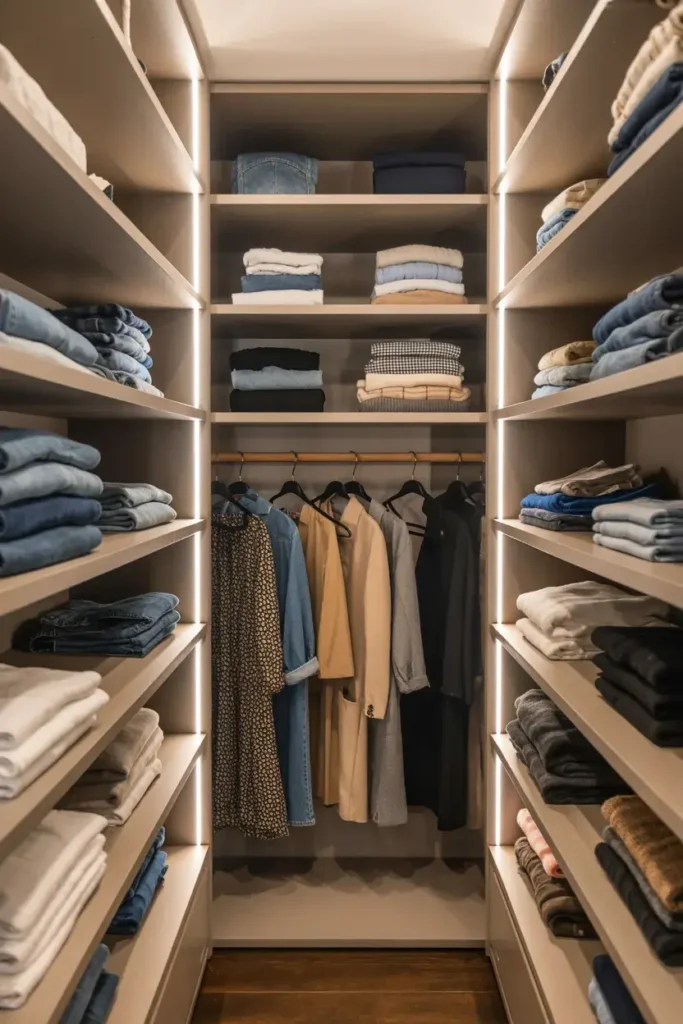
While hanging clothes need depth, I prefer shallower shelves for folded items in narrow closets. A 12-inch or 16-inch shelf depth is often plenty for sweaters, jeans, and t-shirts without encroaching on your walkway.
Deeper shelves often lead to lost items disappearing in the back. By keeping shelves shallow, I maintain a wider aisle—ideally a minimum of 24 to 36 inches—which makes the closet feel much more comfortable to move around in.
6. Embrace the Double Hang
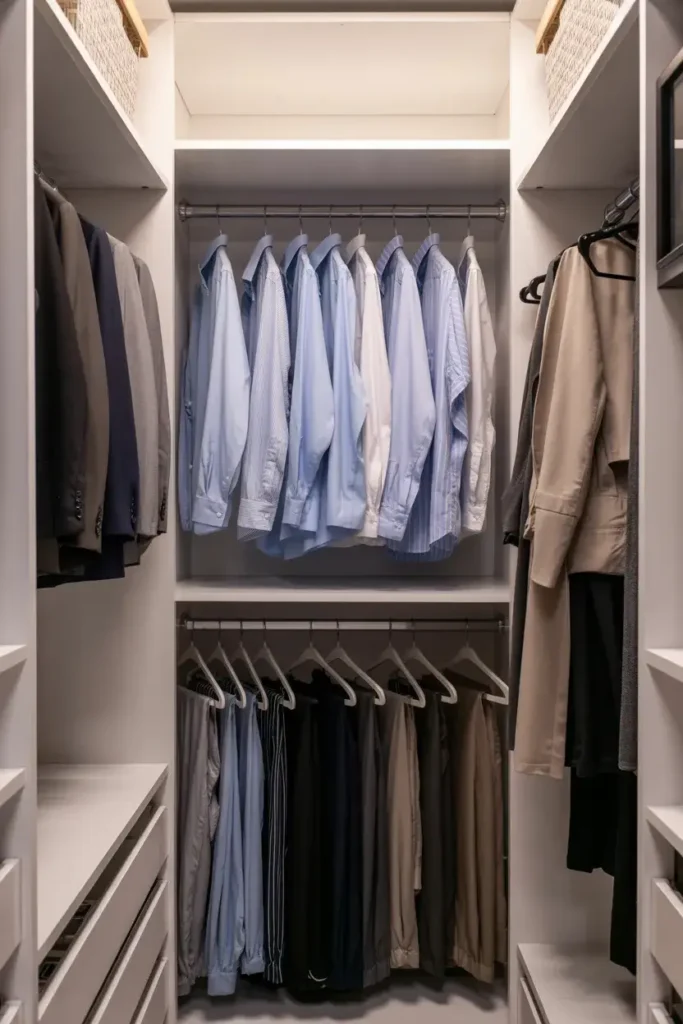
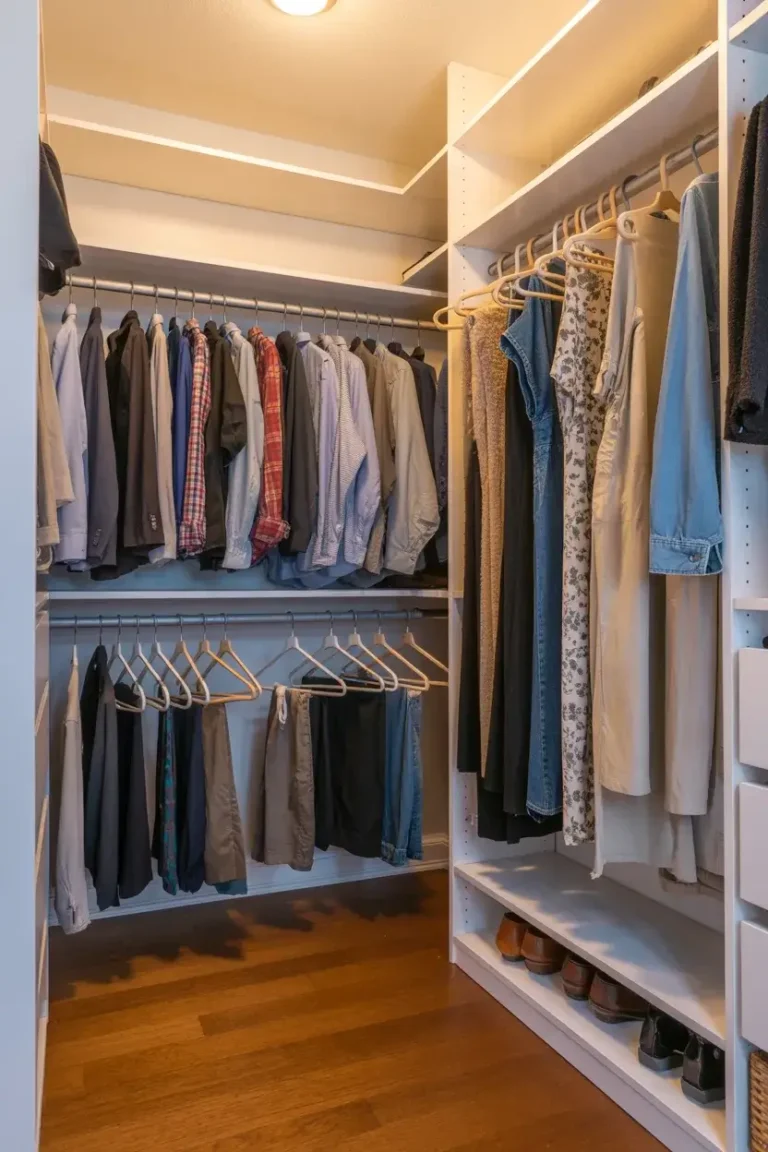
I rarely design a closet without incorporating double hanging rods. By stacking two rods on top of each other, you instantly double your storage capacity for shirts, skirts, and folded trousers.
Standard placement puts the top rod at roughly 84 inches and the lower one at 42 inches. I find this configuration efficiently uses vertical space, leaving a specific section for long-hanging items like dresses or coats elsewhere in the layout.
7. Choose a Light Color Palette
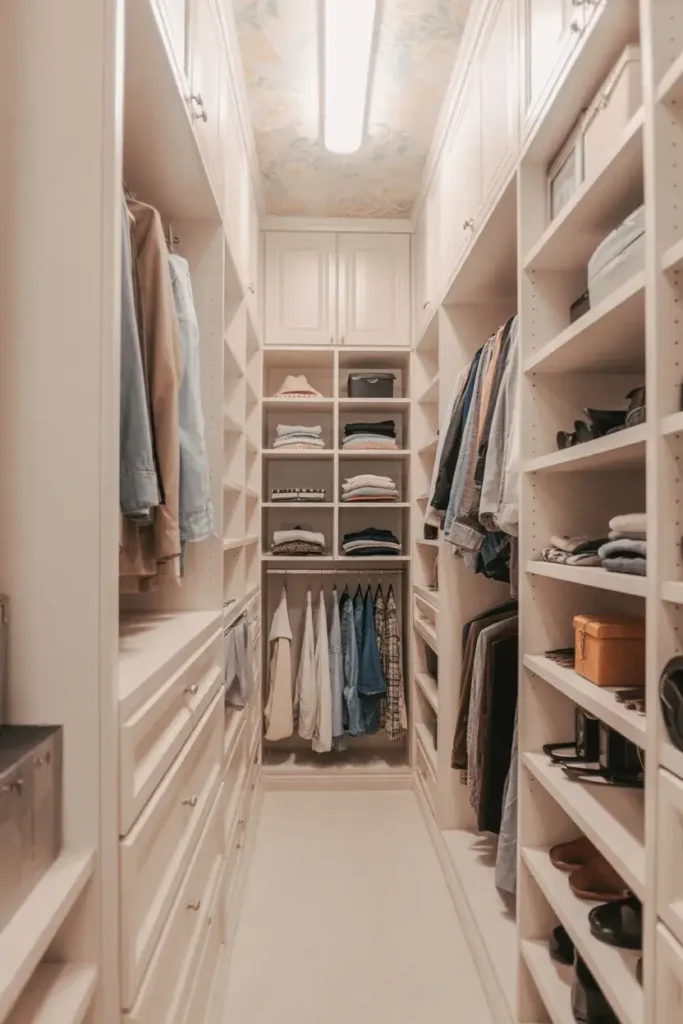
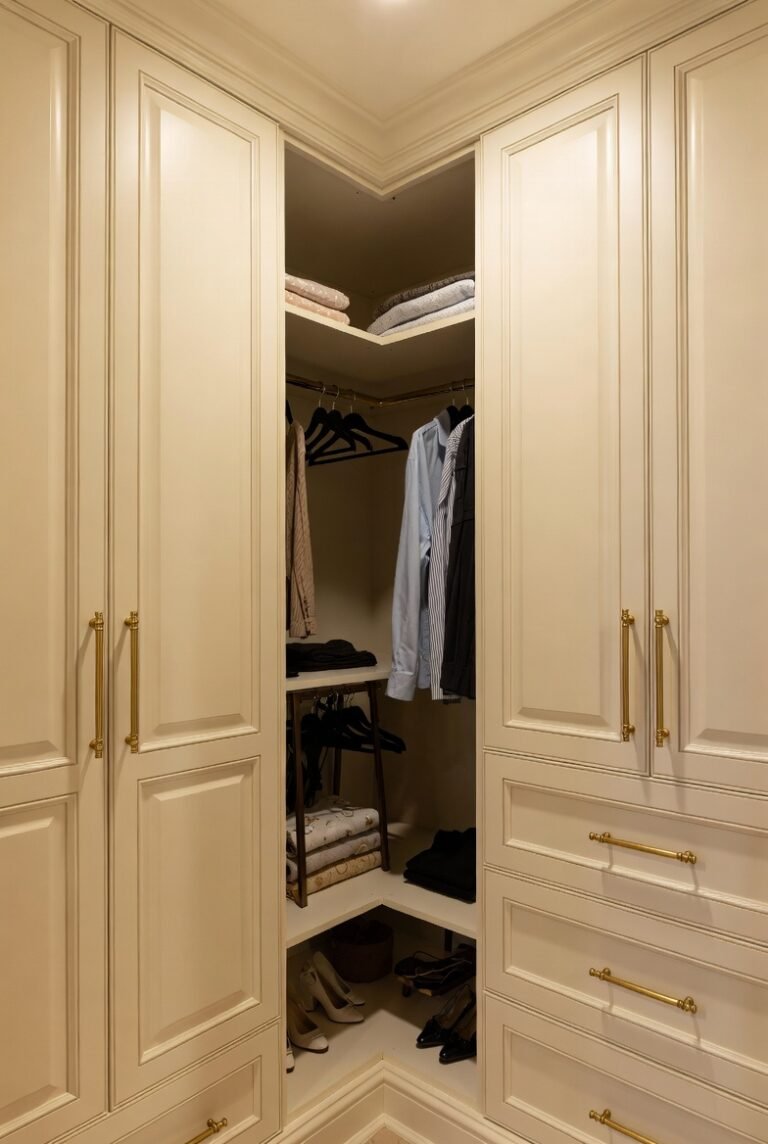
I gravitate toward white or light neutral tones for narrow spaces. Dark cabinetry can make a tight walk-in feel like a cave, whereas bright whites, creams, and light grays reflect light and open up the area.
If you crave color, I suggest adding it through wallpaper on the ceiling or behind the shelves. This adds personality without visually shrinking the width of the room, keeping the overall vibe airy and expansive.
8. Utilize the Back of the Door
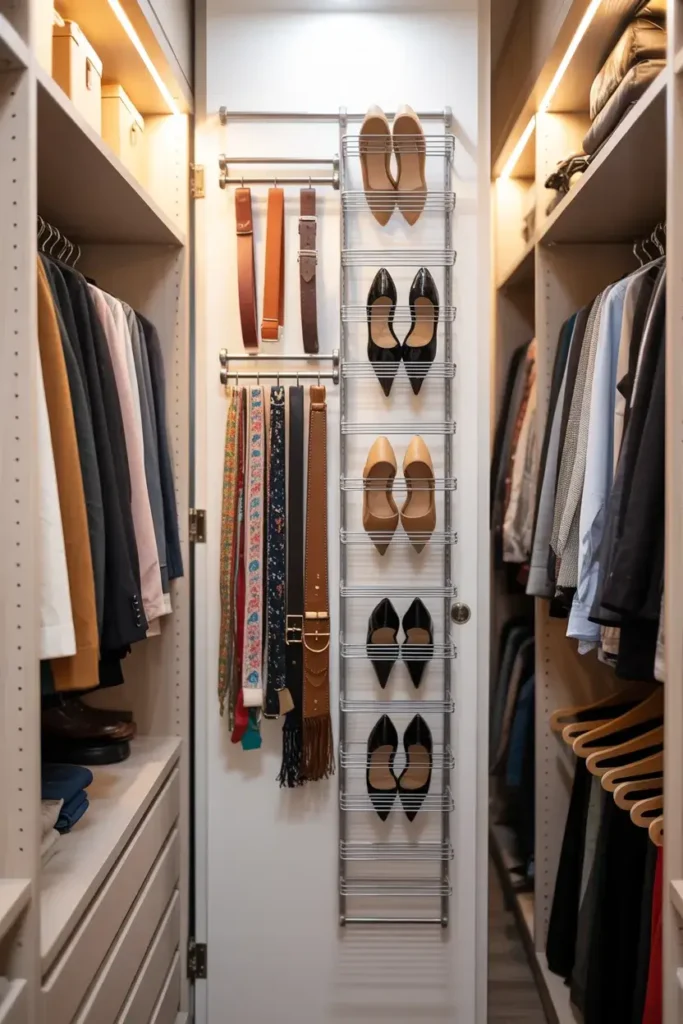
I never let the back of a door go to waste in a small closet. This is prime real estate for accessories that usually clutter up drawers, like belts, scarves, or even a shoe rack.
You can install hooks, racks, or a specialized organizer system here. I find this frees up shelf space for bulkier items and keeps your frequently used accessories right at eye level as soon as you walk in.
9. Install Valet Rods
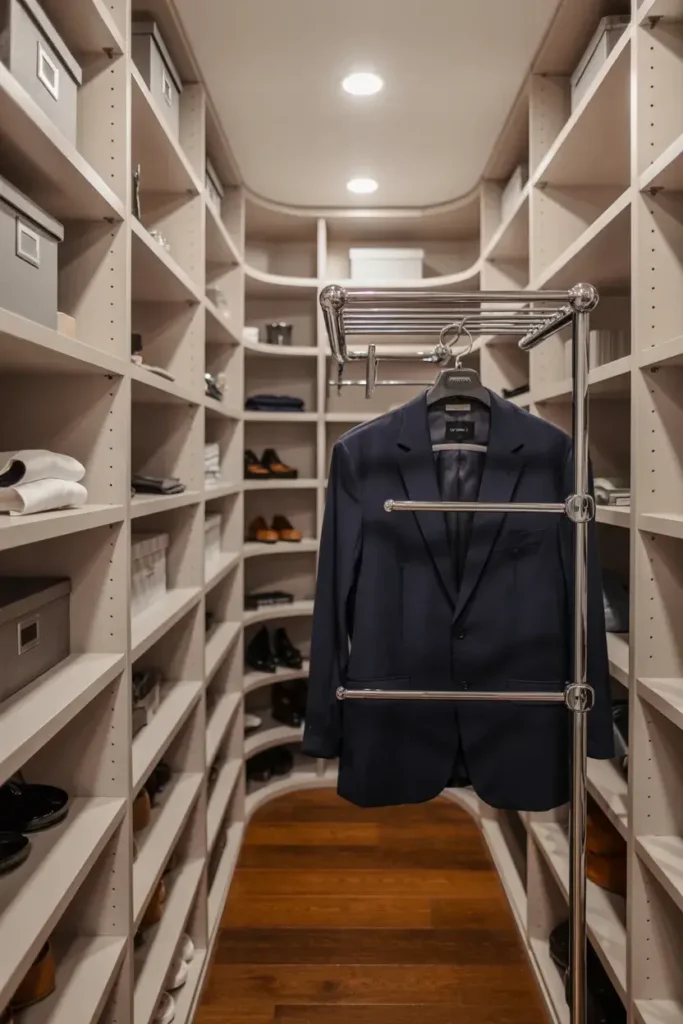
I think the valet rod is the unsung hero of closet organization. These retractable rods slide out to give you a temporary spot to hang an outfit for the next day or hold dry cleaning while you organize.
In a narrow closet where you might not have room for a dressing island, a valet rod serves as that crucial “staging area.” I love that it tucks away completely invisibly when you aren’t using it.
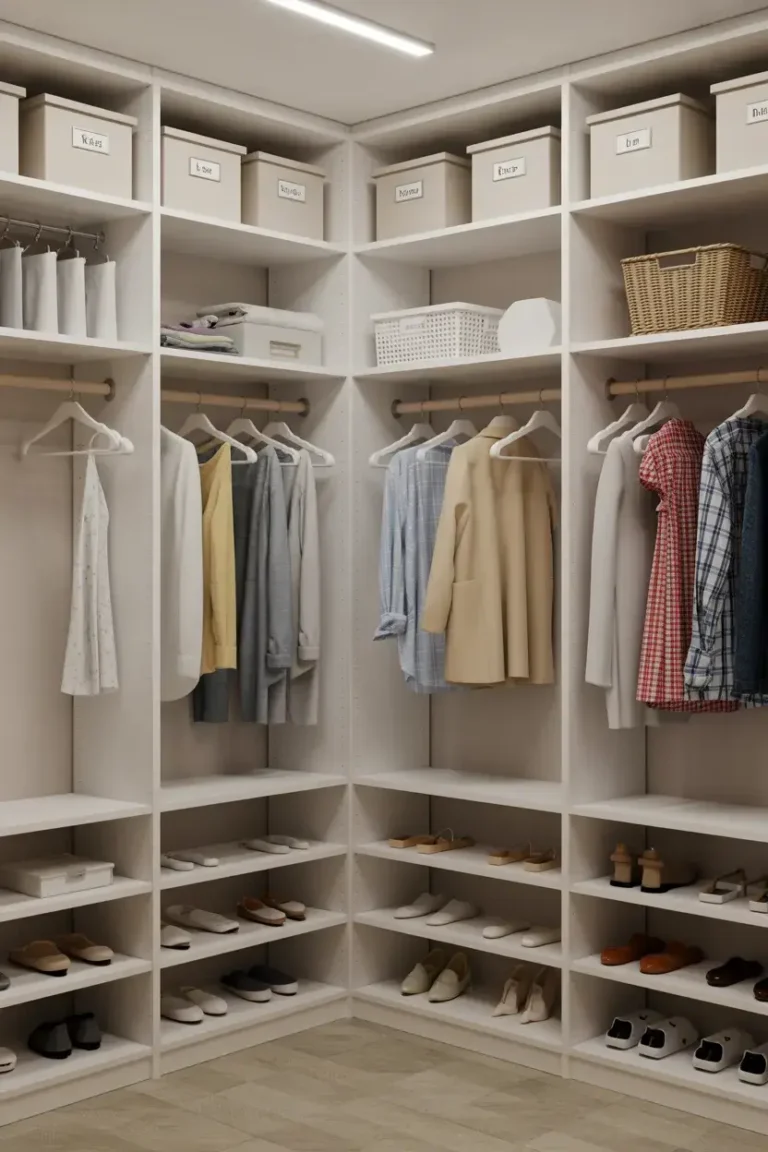
10. Create an L-Shaped Layout
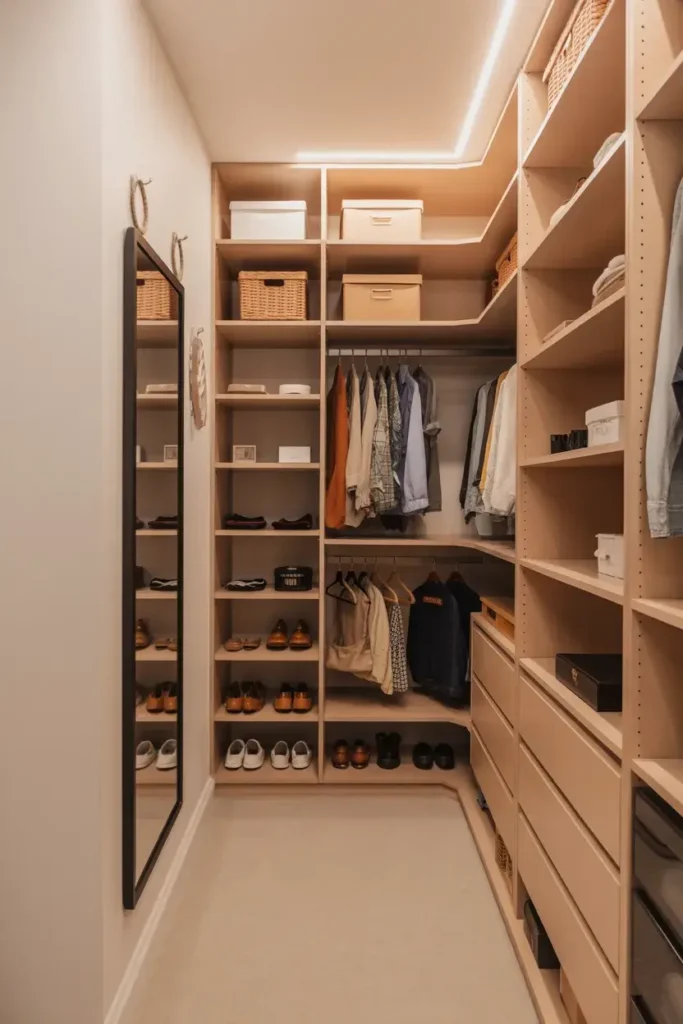
When width is an issue, I often recommend an L-shaped configuration. This layout utilizes one long wall and the short back wall, leaving the other long wall open or reserved for shallow hooks and mirrors.
This approach prevents the “tunnel effect” you get from having clothes on both sides of a very narrow aisle. I find it provides ample storage while maintaining enough clearance for you to dress comfortably without bumping your elbows.
11. Incorporate Glass Cabinet Doors
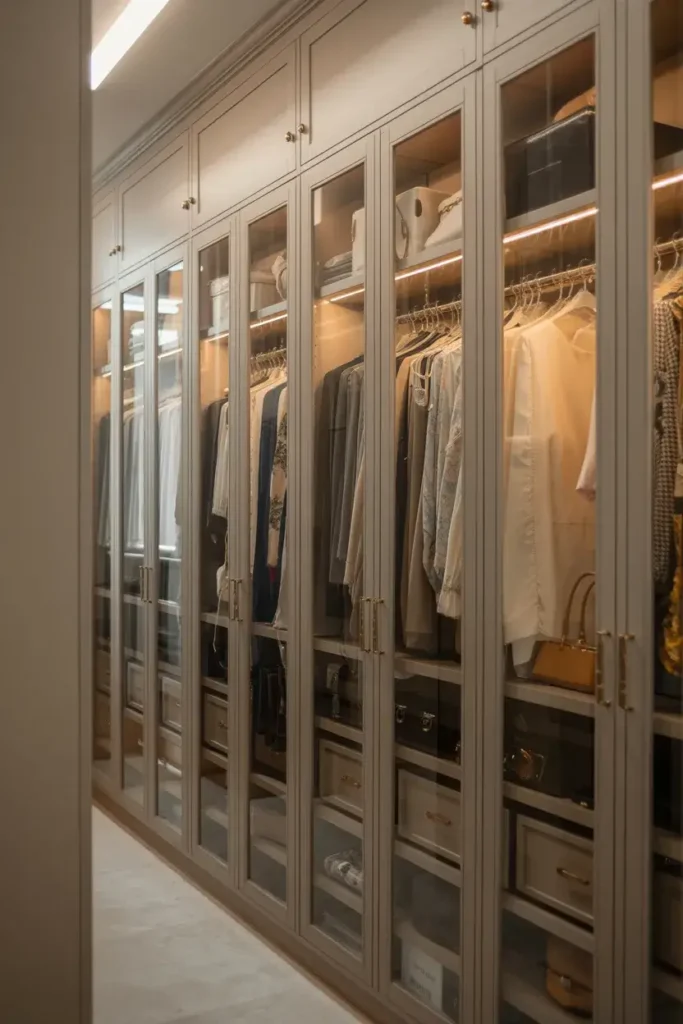
If you want to protect your clothes from dust without closing off the space, I suggest glass cabinet fronts. They offer the sleek look of a wardrobe but keep the visual lines open, allowing the eye to travel to the back of the cabinet.
This transparency stops the walls from feeling like they are closing in. I use this trick often for handbag displays or formal wear sections to add a touch of boutique luxury to a small footprint.
12. Use Adjustable Shelving
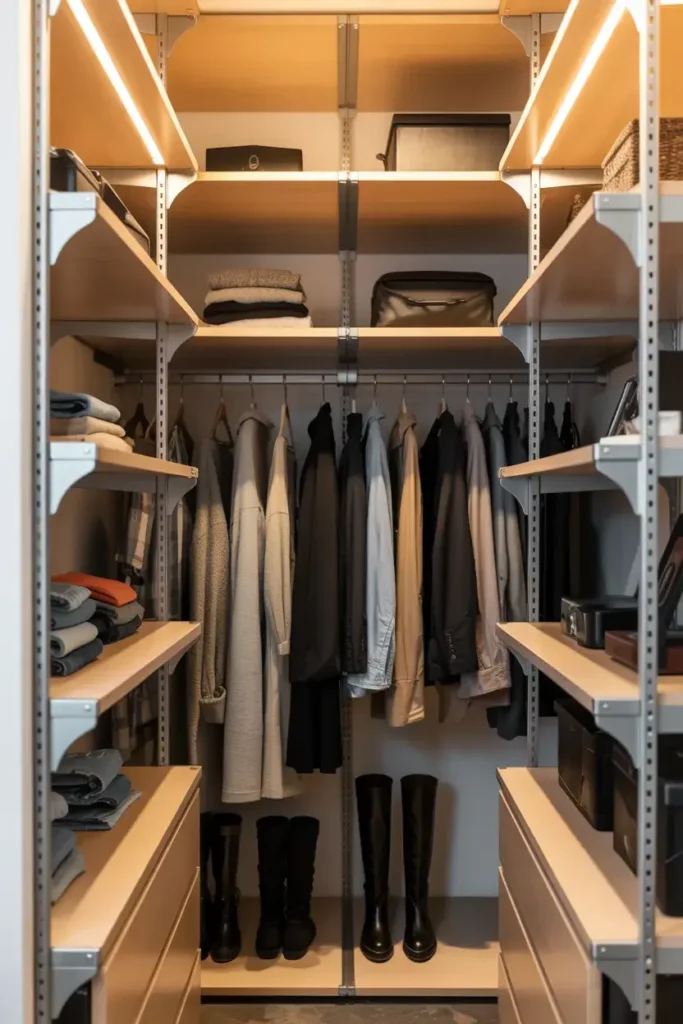
I believe flexibility is key in a small closet. Your wardrobe changes with the seasons and the years, so your closet should too. Adjustable shelving systems allow you to move heights around based on what you need to store.
If you buy tall boots one winter, you can simply raise a shelf to accommodate them. I find this prevents wasted vertical space between shelves, ensuring every cubic inch acts as usable storage.
13. Dedicate a Shoe Wall
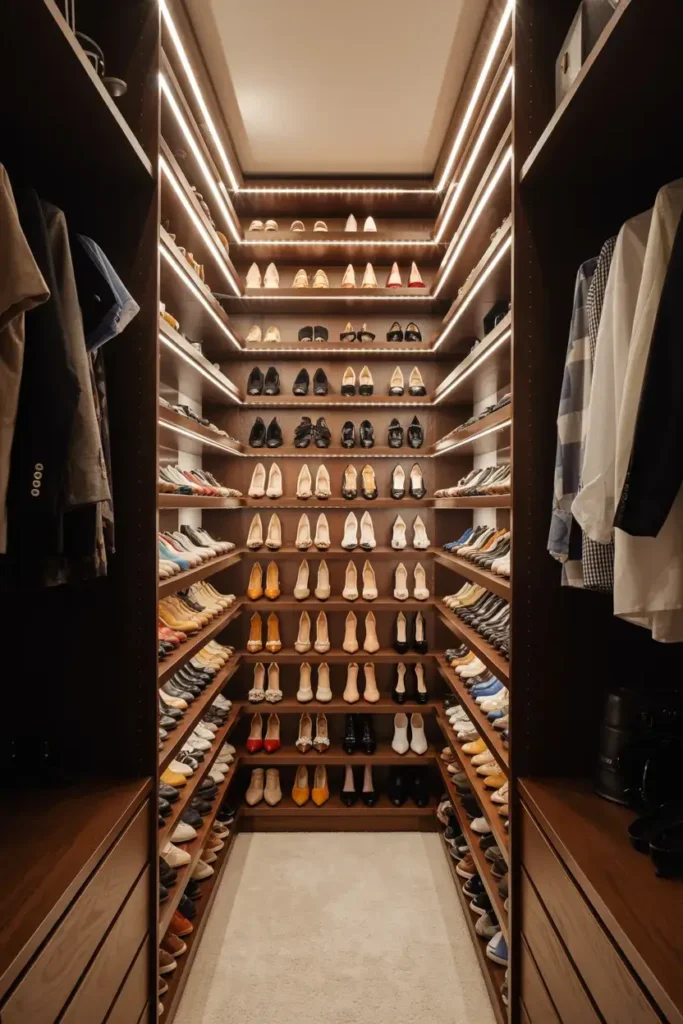
I love turning the narrow back wall of a walk-in closet into a floor-to-ceiling shoe shrine. Since shoes require less depth than hanging clothes (usually only 12 inches), this is the perfect spot for them.
Angled shelves with heel catches display your footwear beautifully and make it easy to see what you have. I find this creates a stunning focal point that draws you into the room, rather than just staring at a blank wall.
14. Standardize Your Hangers
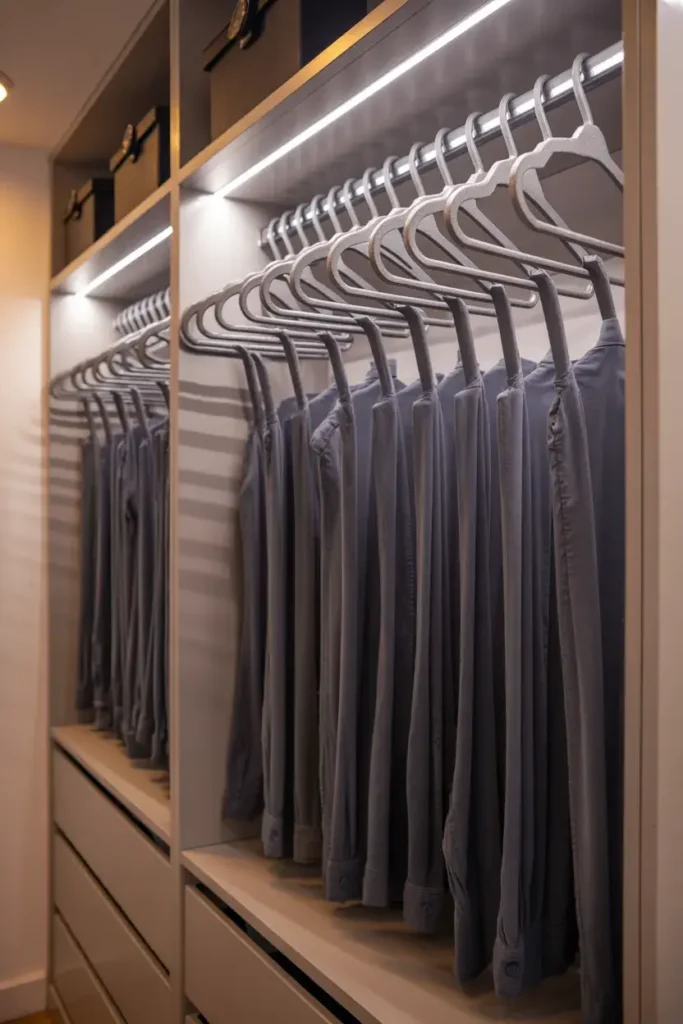
I cannot stress this enough: matching hangers change everything. In a narrow space, visual clutter makes the room feel smaller. Using uniform hangers creates a streamlined, cohesive look that instantly calms the eye.
Whether you choose slim velvet hangers or sturdy wood ones, sticking to one style saves space and keeps clothes hanging at the same height. I find this simple swap makes even a tiny closet look professionally organized.
15. Keep the Floor Clear
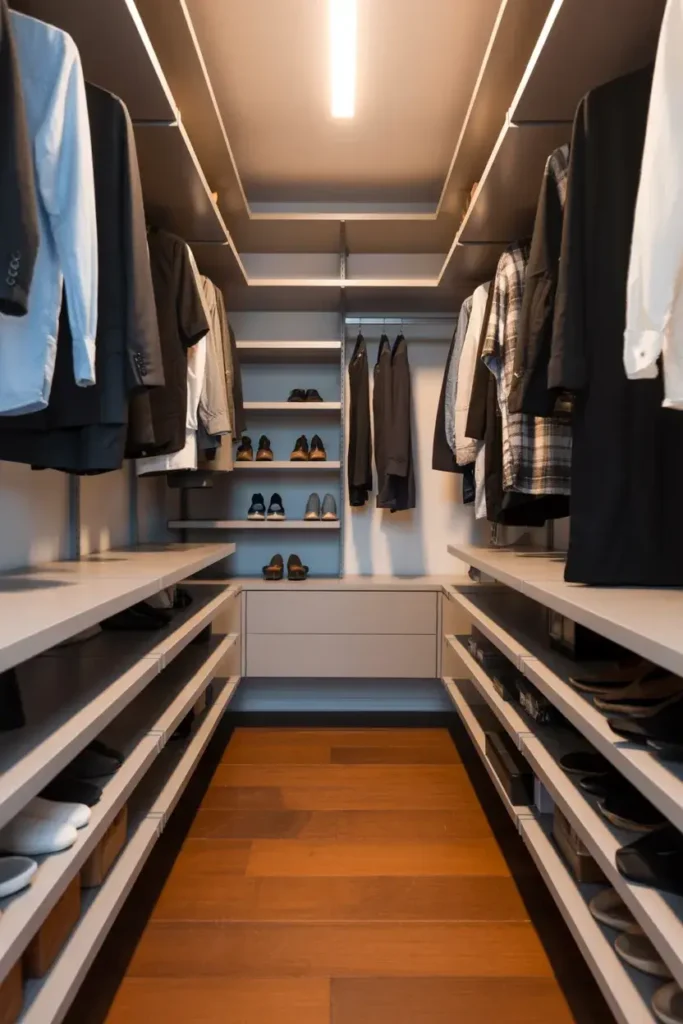
I always advise keeping the floor as visible as possible. Avoid storing heavy bins or stacks of boxes directly on the floor, as this eats into your walking path and makes the room feel cluttered.
Instead, I use floating drawers or shelves that start a few inches off the ground. Seeing the flooring extend to the wall tricks your brain into thinking the floor area is larger than it actually is.
Final Words
Designing a narrow walk-in closet requires precision and creativity, but you don’t have to do it alone. If you are ready to maximize your space with a custom plan, book a free design consultation with us today and let’s build the perfect closet for your home.