18 Hallway Paint Ideas to Transform Your Transition Spaces
Hallways are the arteries of your home, yet they often get the “leftover” treatment—painted whatever color was in the bucket after the living room was done. But as the space that greets guests and connects your life, your hallway deserves more than an afterthought.
Whether you’re dealing with a dark, narrow corridor or a grand entryway, the right paint color can manipulate light and space to your advantage.
From high-LRV neutrals that bounce light around to moody hues that embrace the cozy factor, here are 18 hallway paint ideas to elevate your home’s transition spaces.
1. Choose Alabaster for a Warm Neutral Backdrop
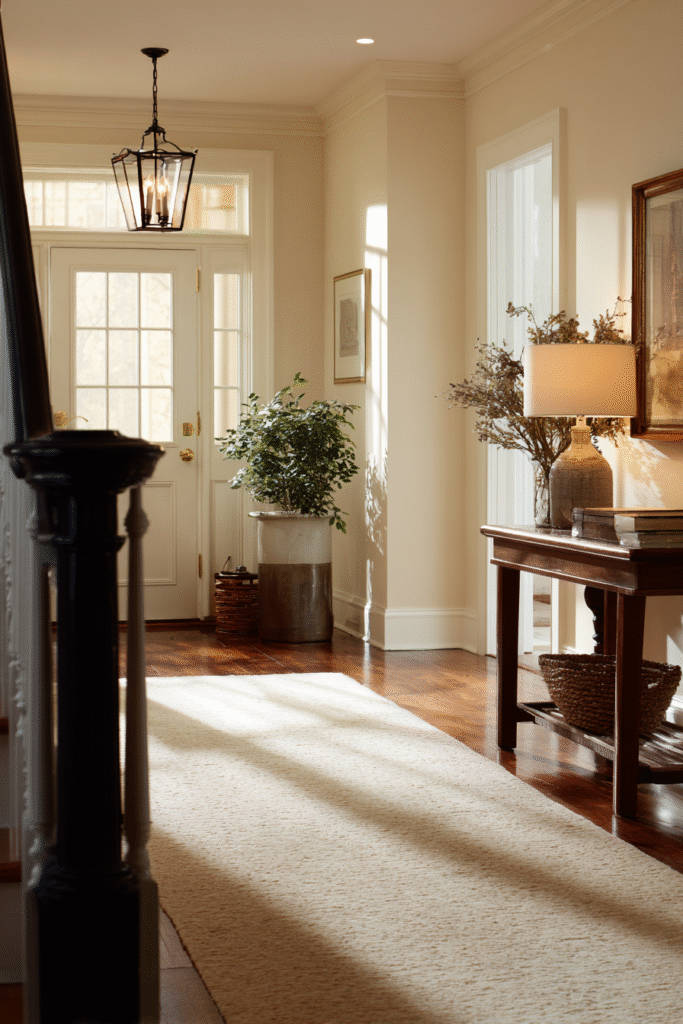
If you want a versatile “blank canvas” that isn’t stark, Sherwin-Williams Alabaster is a top contender. It is a warm off-white that works beautifully in entryways and staircase walls, coordinating effortlessly with most living room palettes.
Its subtle undertone provides enough warmth to be inviting while hiding the occasional scuff better than a pure bright white.
2. Embrace the “Greige” with Pale Oak
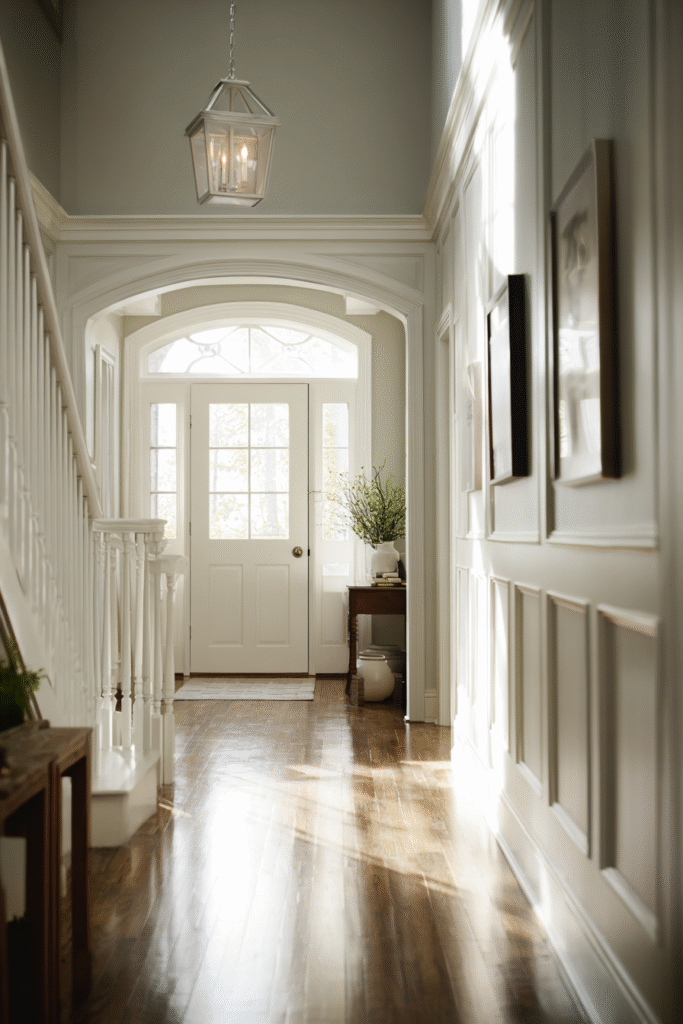
For a sophisticated neutral that bridges the gap between gray and beige, try Benjamin Moore’s Pale Oak. In hallways with plenty of natural light, it reads as a soft off-white. In dimmer spaces, it takes on a creamy, warm gray tone. It pairs exceptionally well with crisp white trim, like Chantilly Lace, creating a timeless look that suits classic decor styles.
3. Create Depth with a Two-Tone Wall
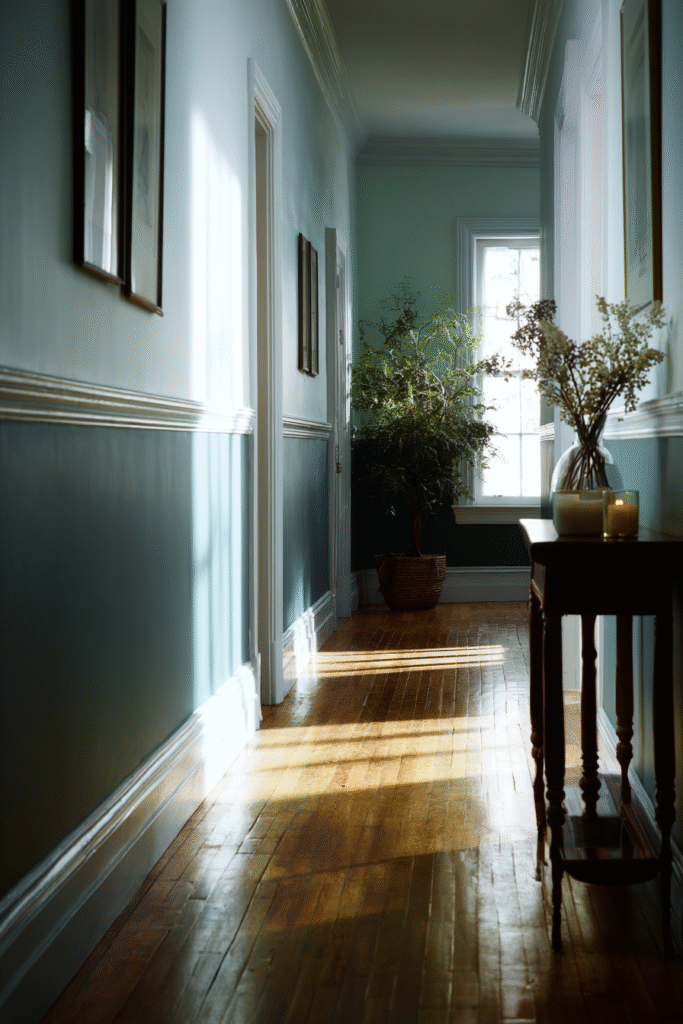
Break up a long, monotonous hallway by using two different colors on the wall, separated by a chair rail or simply a crisp paint line. A darker color on the bottom anchors the space and hides scuffs (perfect for high-traffic zones), while a lighter shade on top keeps the hallway feeling airy. Try a moody charcoal on the bottom third and a bright white on top for dramatic contrast.
4. Brighten Narrow Spaces with Pure White
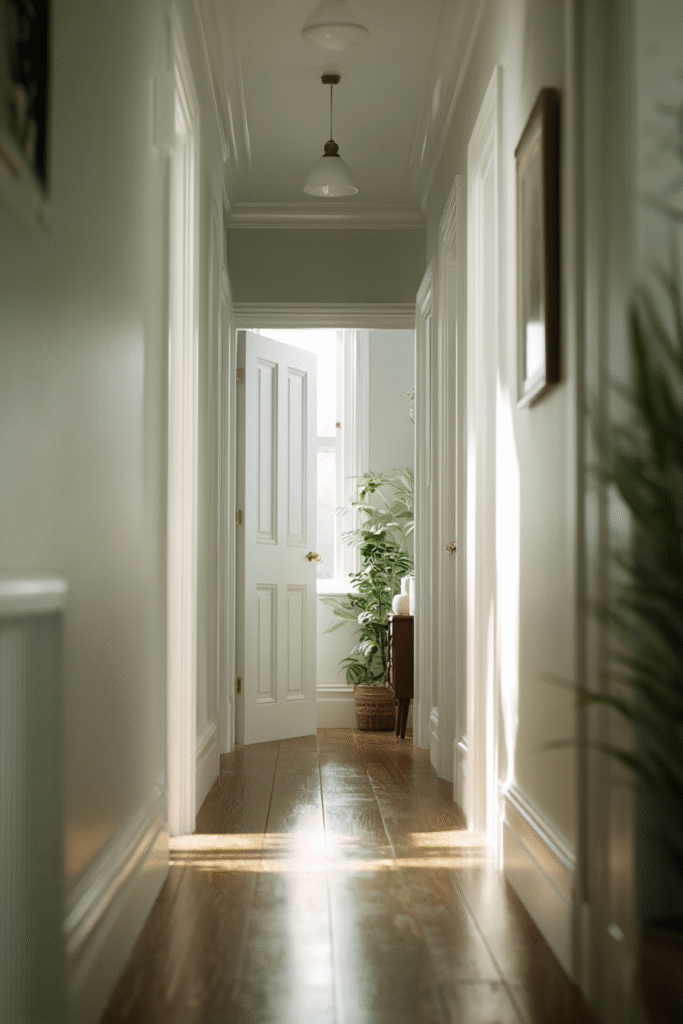
To visually expand a narrow hallway, lean into the power of high Light Reflectance Value (LRV). Sherwin-Williams Pure White has a high LRV that reflects light efficiently, making tight spaces feel larger and more open. Just remember to choose a durable finish like eggshell or satin, as lighter walls in tight corridors are prone to showing marks.
5. Go Moody with Dark Green
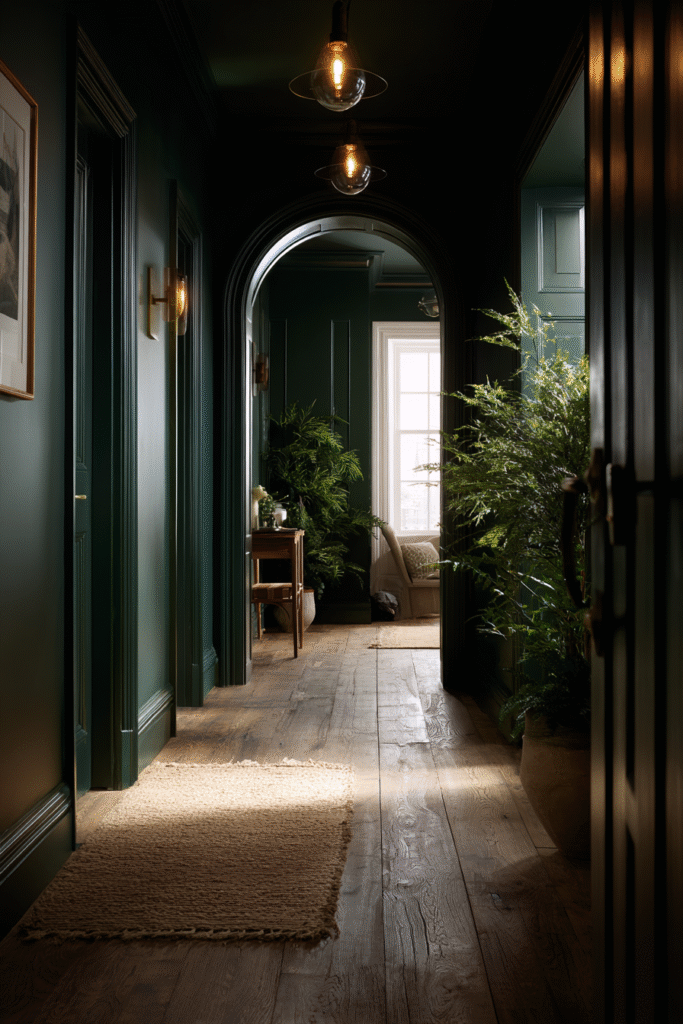
Don’t be afraid of the dark. In a hallway that lacks natural light, embracing the shadows with a rich, dark green can turn a “cave-like” feel into a cozy, intentional design choice. Dark colors can blur the edges of a room, sometimes making it feel larger than it is. Pair it with warm lighting and brass fixtures for a luxurious, jewel-box effect.
6. Define the Space with Crisp Trim
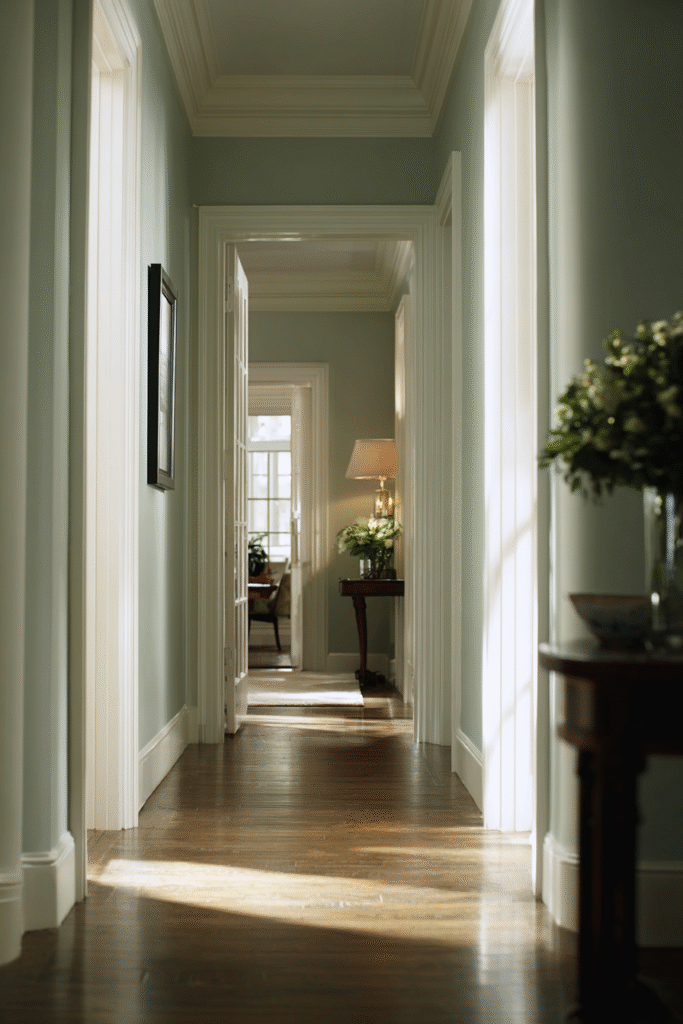
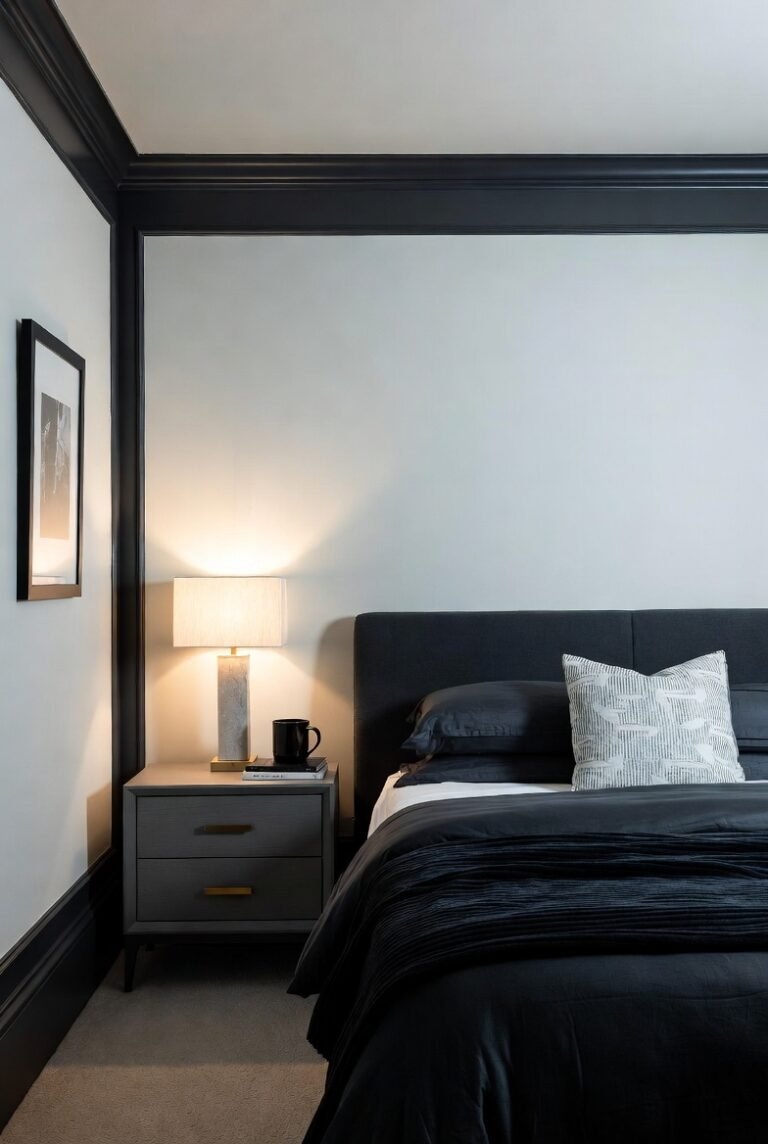
If you want to keep your walls neutral, make a statement with your woodwork. Painting door frames, baseboards, and crown molding in a contrasting color—like a deep gray or even black—adds architectural interest to a plain hallway. This technique frames the view into adjacent rooms, turning your doorways into picture frames.
7. Use Origami White for a Subtle Violet Undertone

Sherwin-Williams Origami White is a unique off-white with a slight violet undertone that prevents it from looking yellow. This makes it a fantastic choice for hallways where lighting conditions change throughout the day. It maintains a creamy, clean look without the starkness of a true white, adding a layer of subtle complexity to your walls.
8. Add Drama with a Painted Ceiling
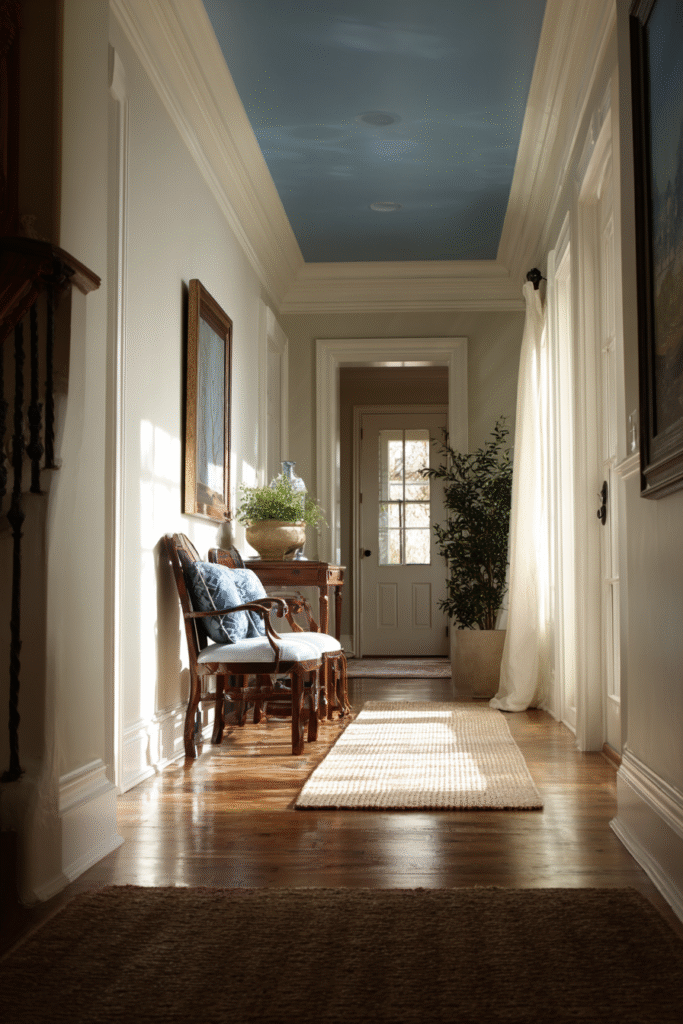
Who says the ceiling has to be white? In a hallway with high ceilings, painting the “fifth wall” a darker or vibrant color can bring the scale down to a more intimate level. It draws the eye upward and adds a surprise element to an otherwise transitional space. A soft blue ceiling can mimic the sky, adding an airy feel even in an enclosed corridor.
9. Soften the Look with Sea Pearl
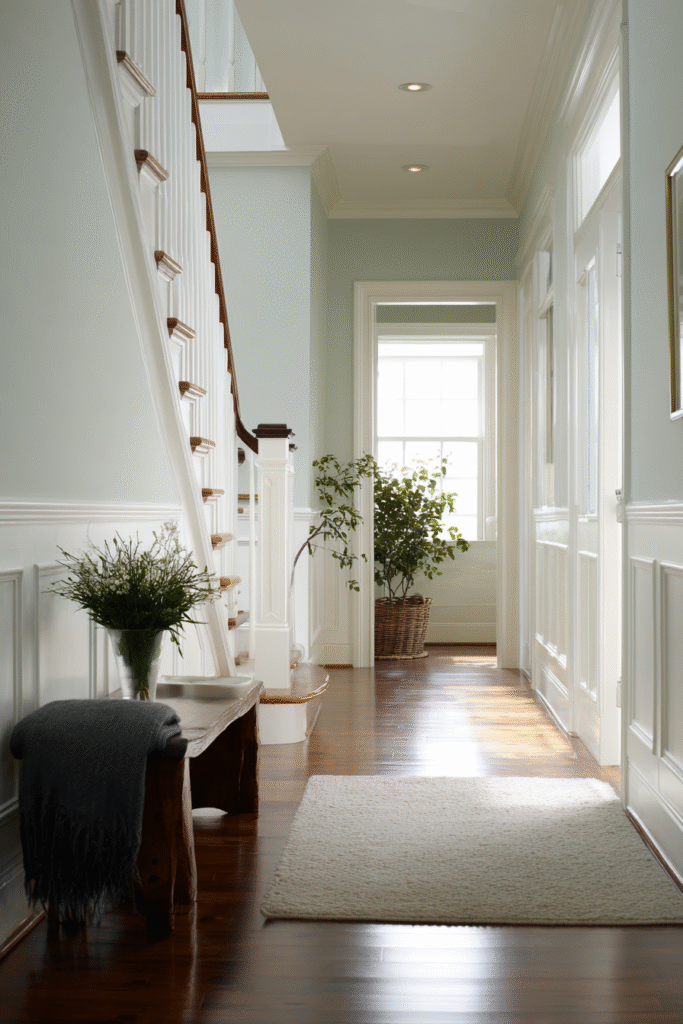
Benjamin Moore’s Sea Pearl is a trending favorite for its ability to look like a cool gray or a warm off-white depending on the light. With an LRV of 77, it reflects plenty of light without being blindingly bright. It has slight hints of green, making it a calming, organic choice that pairs beautifully with natural wood floors and stair treads.
10. Try “Color Drenching” for a Modern Vibe
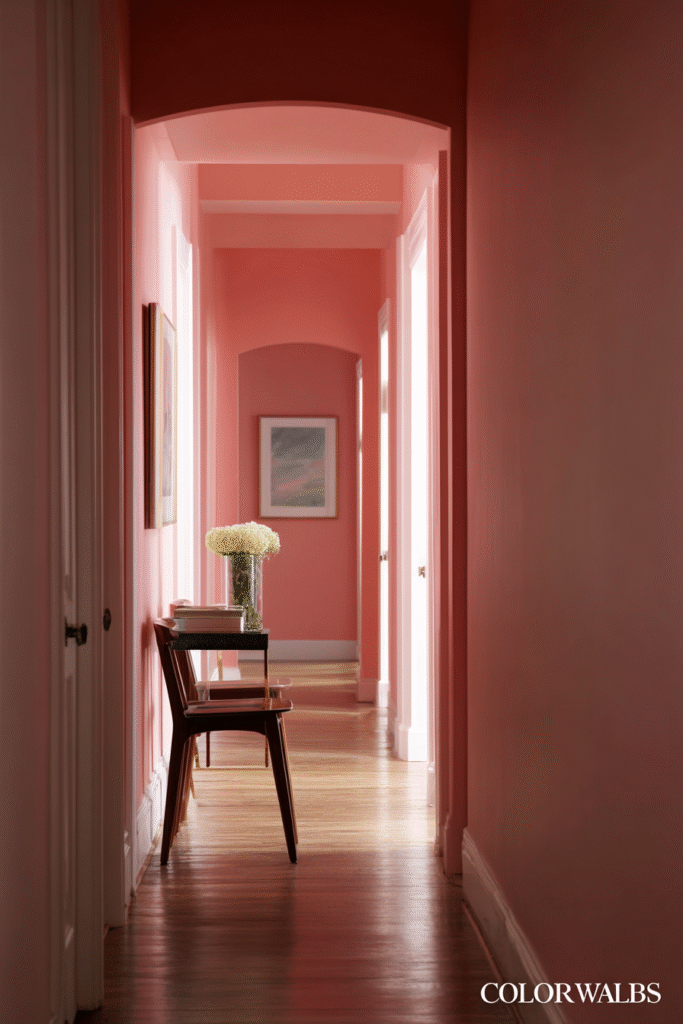
Color drenching involves painting the walls, trim, doors, and even the ceiling the same color. This monochromatic technique blurs the lines of the room, making small hallways feel larger and less cluttered visually. It creates a seamless, enveloping experience that is incredibly modern and chic.
11. Reflect Light with High-Gloss Finishes
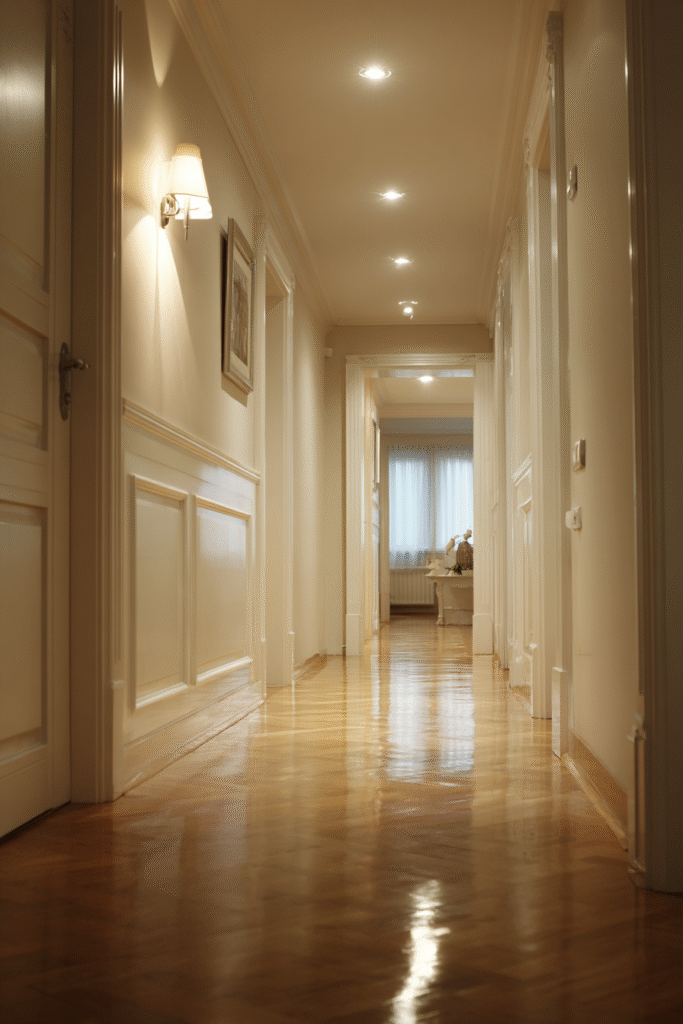
While matte finishes hide imperfections, a high-gloss or semi-gloss finish reflects light like a mirror. Using a high-gloss paint on hallway walls can make a dim space feel brighter and more glamorous. However, be warned: high-gloss finishes highlight every bump and uneven patch, so your walls need to be perfectly prepped and smooth before painting.
12. Warm It Up with Beige
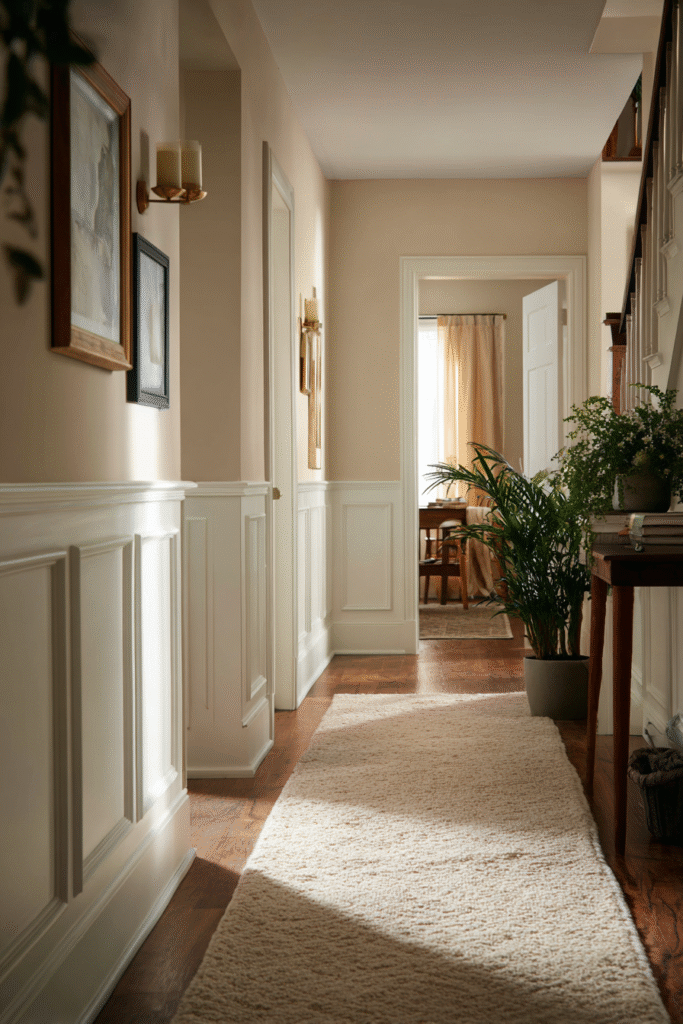
Beige is back, but not the boring builder-grade kind. A warm, sandy beige like Sherwin-Williams Accessible Beige adds coziness to a hallway without feeling dated. It serves as a perfect neutral backdrop for gallery walls, allowing your art and photos to stand out without competing for attention.
13. Create a Gallery Effect with Charcoal
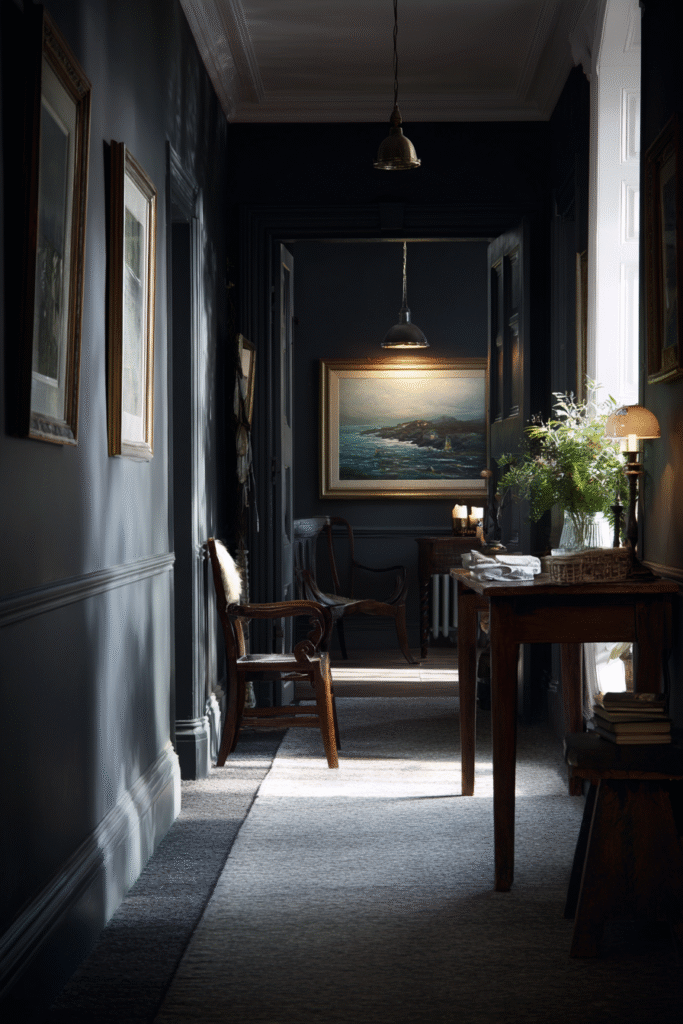
If you have a collection of art or photos to display, consider a deep charcoal or navy wall. Dark walls recede, allowing the artwork to pop, much like in a museum or art gallery. This turns your hallway from a simple passageway into a destination for viewing your favorite pieces.
14. Use Pastel Blues for a Breath of Fresh Air
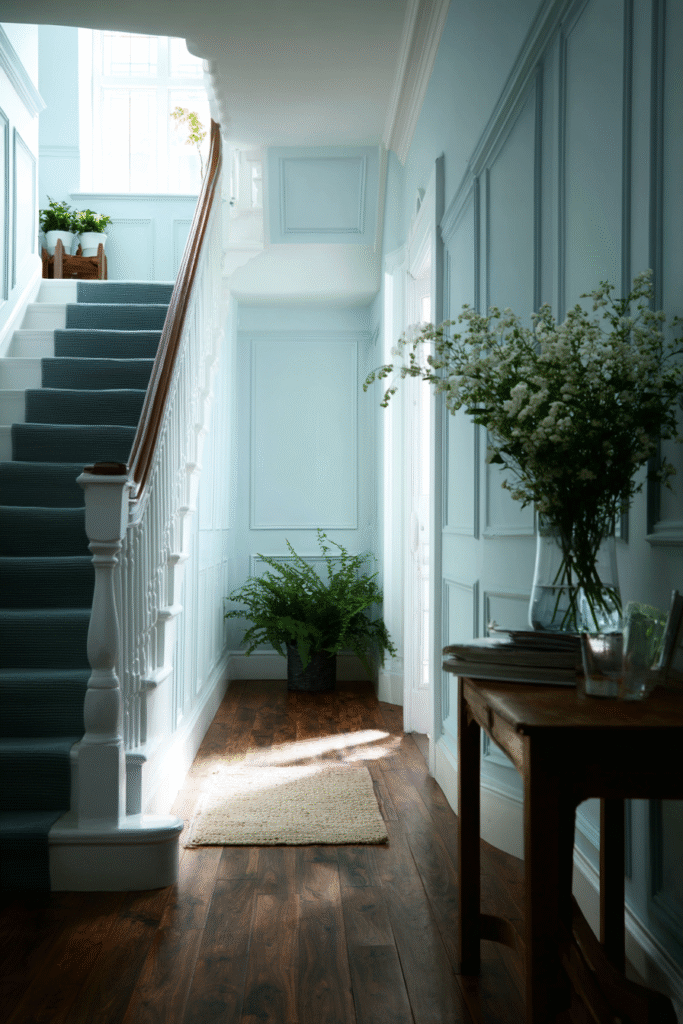
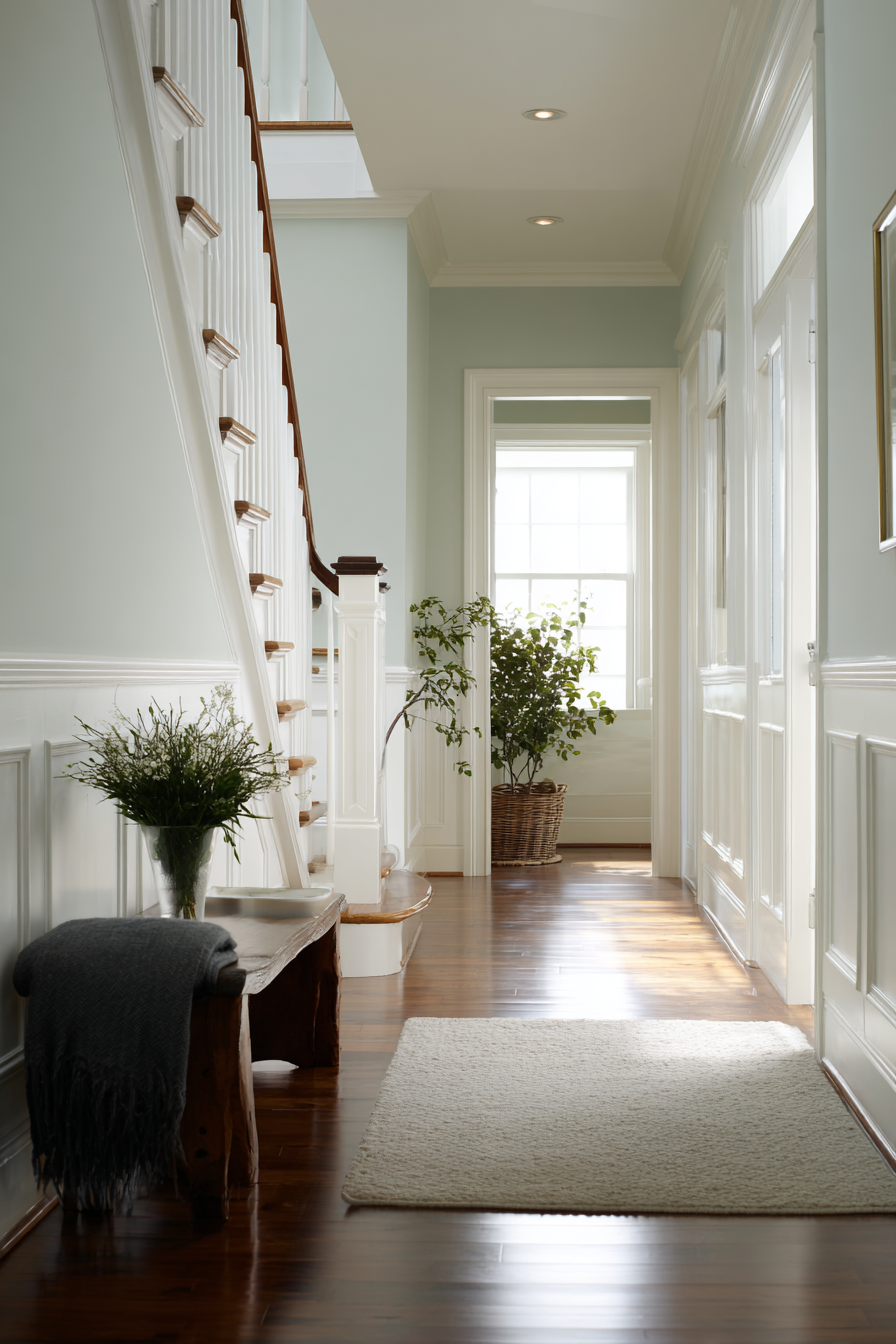
For a serene and airy feel, especially in narrow British-style hallways, pastel blues or greens work wonders. Benjamin Moore’s Breath of Fresh Air is a light, ethereal blue that feels open and breezy. It evokes a sense of calm as you move between rooms, acting as a palate cleanser for the eyes.
15. Anchor with Edgecomb Gray
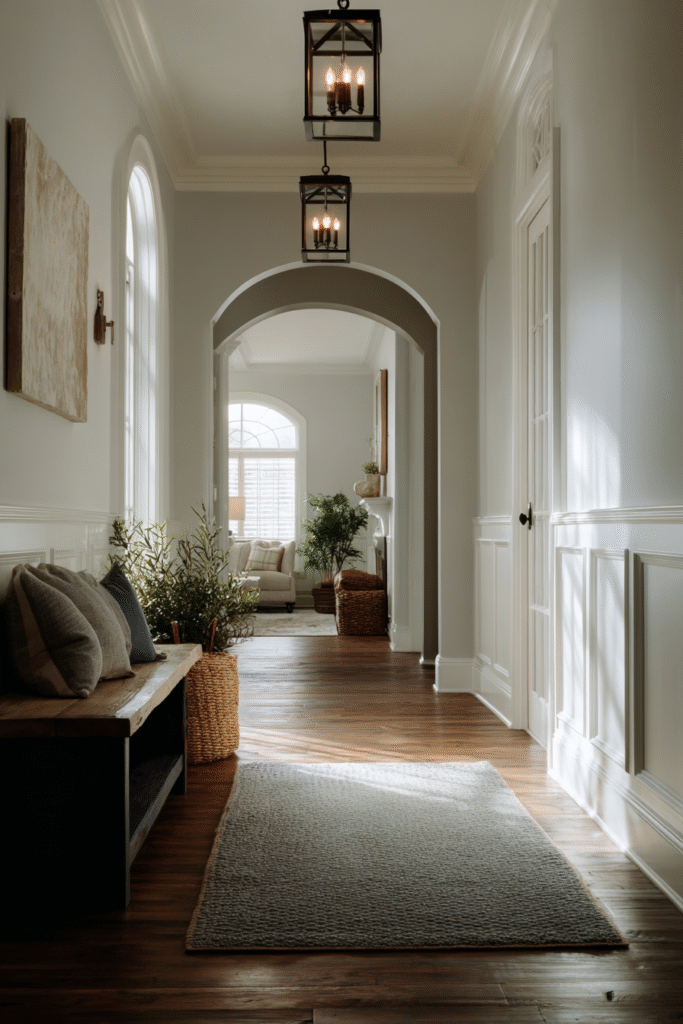
Benjamin Moore’s Edgecomb Gray is a soft, airy neutral that sits comfortably between gray and beige. It’s warmer than a typical gray, making it welcoming for an entryway, but modern enough to feel fresh. It works particularly well in open-concept homes, providing a subtle transition between different color schemes in adjoining rooms.
16. Highlight Architecture with Satin Paint
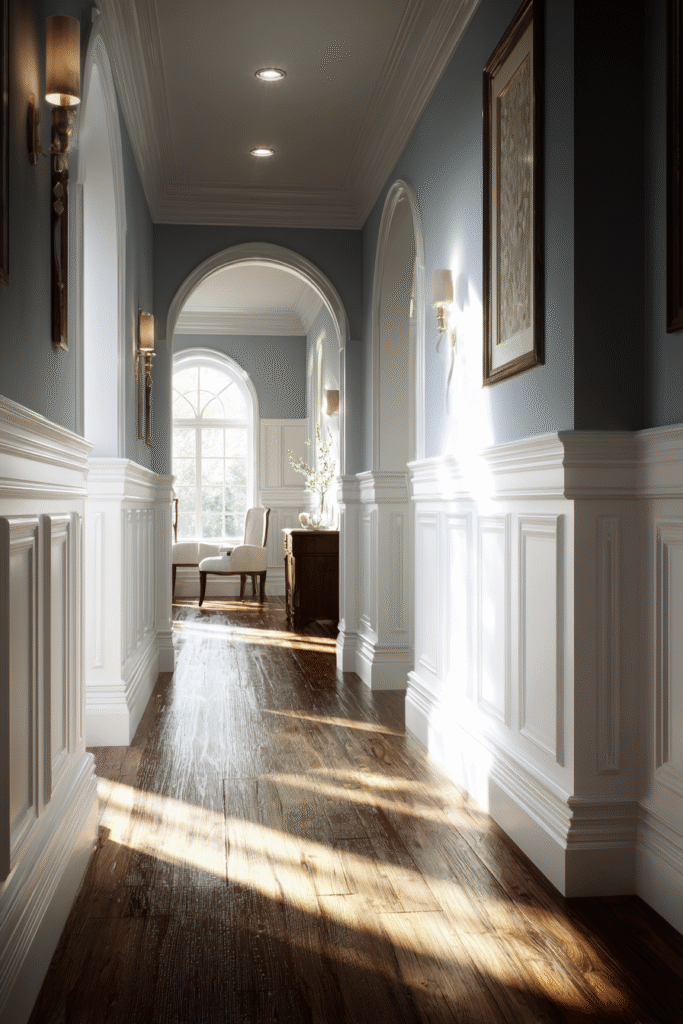
If your hallway features wainscoting, paneling, or intricate molding, use a satin or semi-gloss finish to highlight these details. The slight sheen catches the light, defining the shadows and curves of the woodwork. Pairing satin trim with matte walls creates a sophisticated textual contrast that adds depth to the space.
17. Make a Statement with a Painted Door
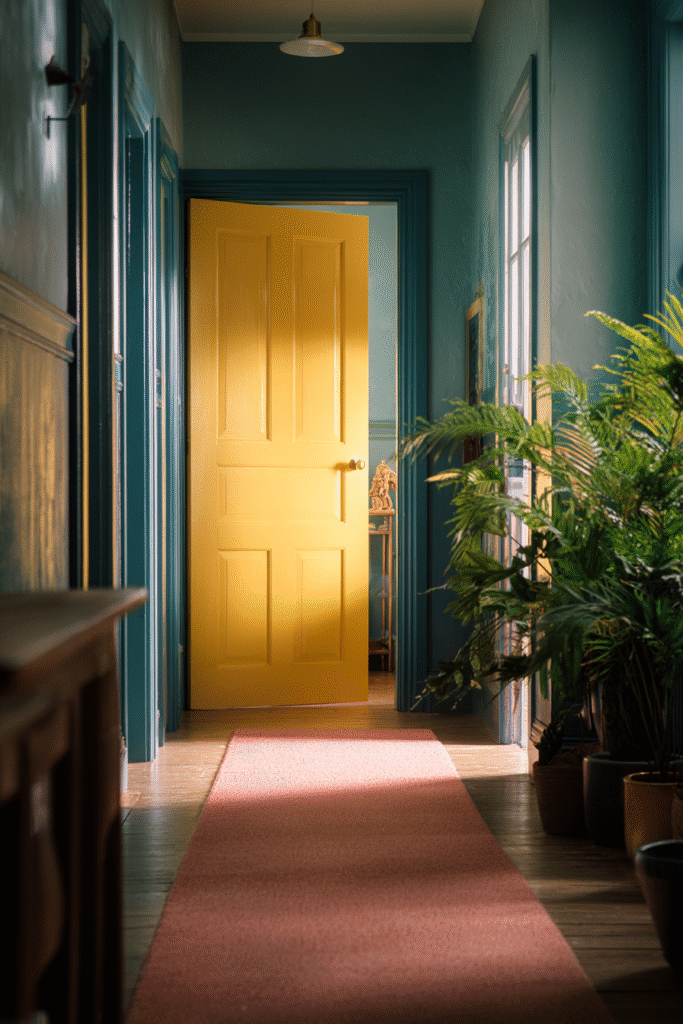
If painting the entire hallway feels like too much commitment, paint just the interior side of your front door or the doors leading off the hallway. A bright yellow, deep red, or teal door adds a fun pop of personality that can be easily changed if you tire of the color.
18. Opt for Eggshell in High-Traffic Zones
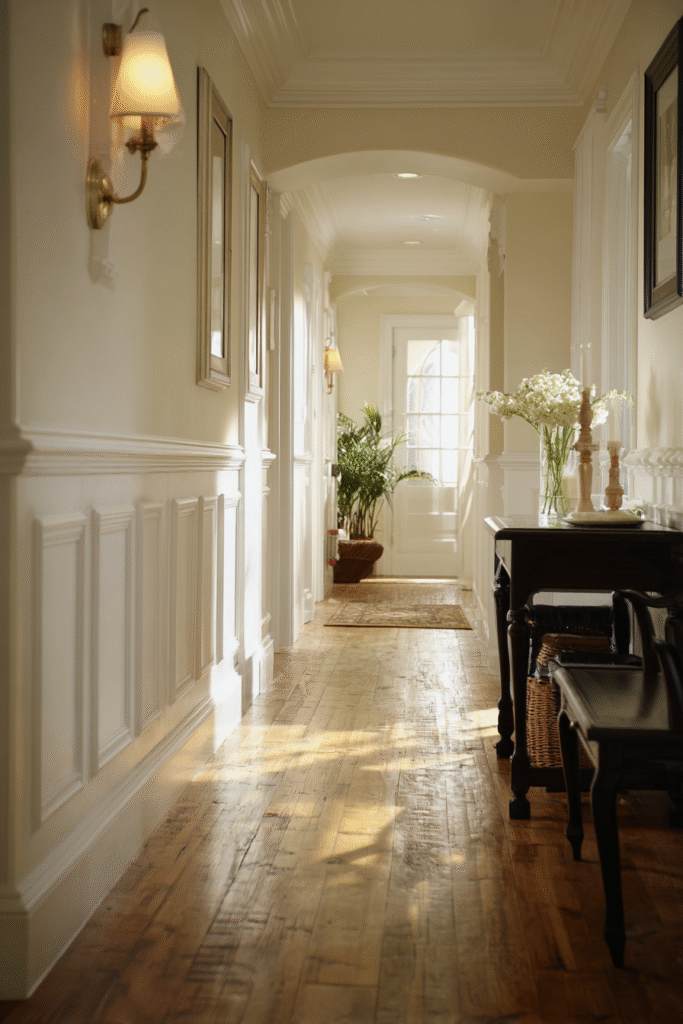
When choosing your paint finish, practicality is key. Hallways see a lot of traffic, leaning, and bag-bumping. An eggshell finish is often the sweet spot—it has a low sheen that is forgiving of wall imperfections but is durable enough to be wiped down. According to Benjamin Moore, eggshell provides an easy-to-clean surface suited for most high-traffic areas like hallways.