15 Calm Accent Wall Colors That Will Transform Your Bedroom Into a Sanctuary
I believe your bedroom should be more than just a place to sleep; it should be a personal sanctuary where the stress of the day melts away. Creating a calm atmosphere starts with the right color palette, and an accent wall is the perfect way to introduce tranquility without overwhelming the space.
Did you know that the color of your walls can actually impact how much sleep you get? A survey by Travelodge found that people with blue bedrooms clock the most sleep, averaging 7 hours and 52 minutes per night.
If you are ready to reclaim your rest, I have curated a list of 15 calming accent wall colors. These shades mix psychology-backed serenity with serious style to help you build the bedroom of your dreams.
1. Soft Sky Blue
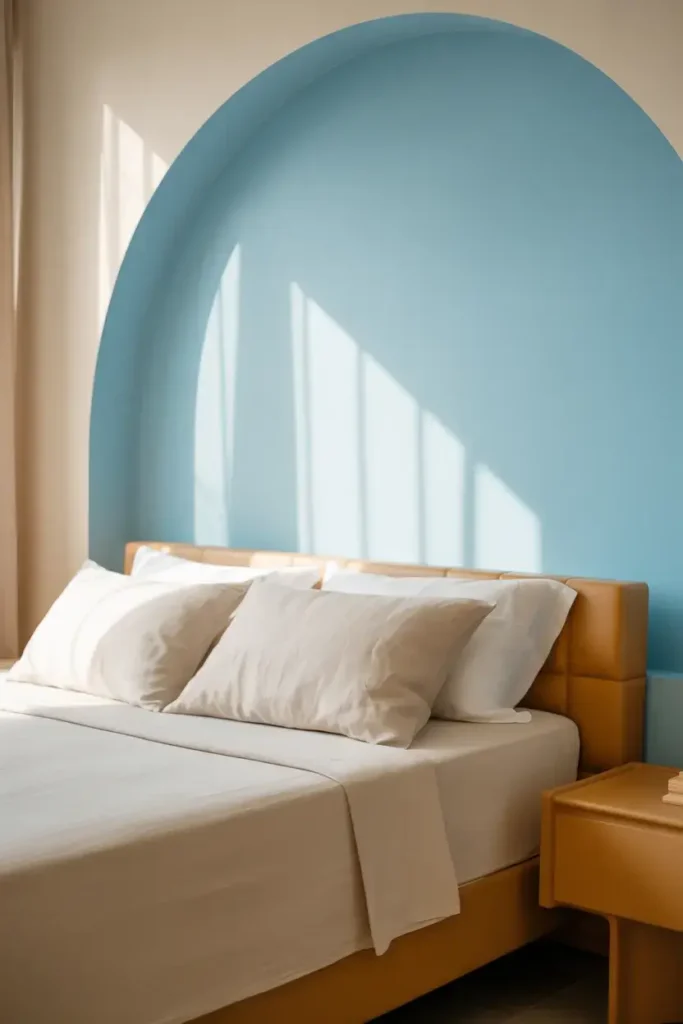
I always recommend starting with blue when you want relaxation. Soft sky blue mimics the feeling of looking up at a clear day, which instantly lowers your heart rate and signals your brain that it is time to unwind.
This shade works beautifully as an accent wall behind a bed with white linen sheets. It provides a subtle pop of color that feels fresh rather than heavy.
Tip: Pair this color with warm wood furniture to keep the room from feeling too “chilly” or clinical.
2. Sage Green
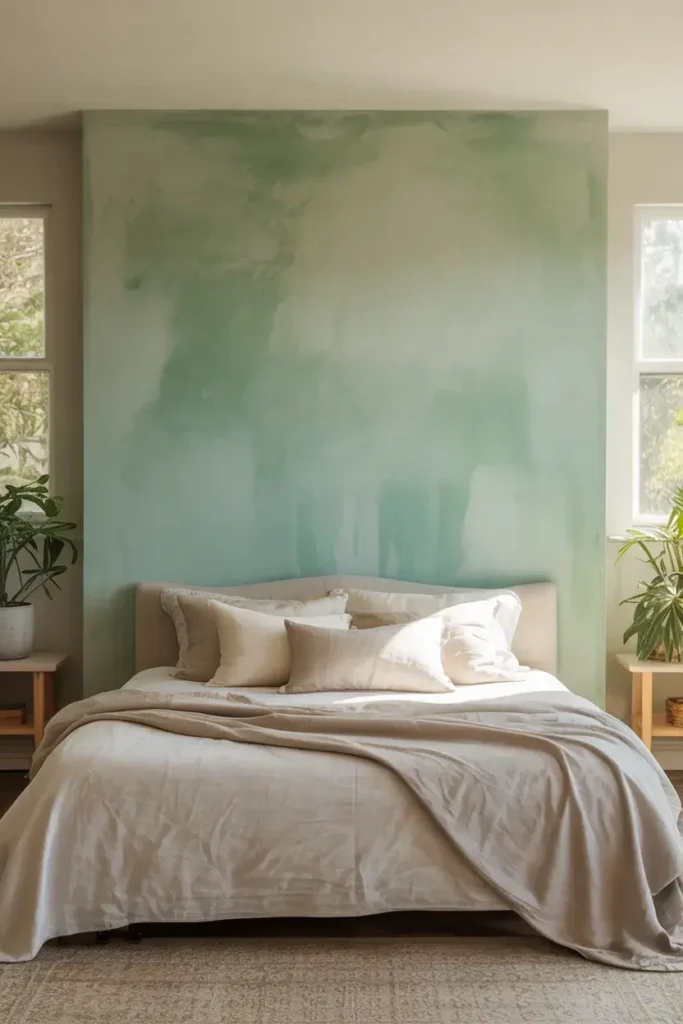
Nature has a profound ability to soothe us, and sage green brings the outdoors right into your bedroom. This earthy, muted tone connects you to the natural world, promoting feelings of balance and renewal.
I love using a shade like Sherwin-Williams’ Sea Salt for an accent wall. It is versatile enough to look gray in low light and vibrant green when the sun hits it.
Tip: Add potted plants or botanical artwork to your room to enhance the organic vibe of this accent wall.
3. Muted Navy
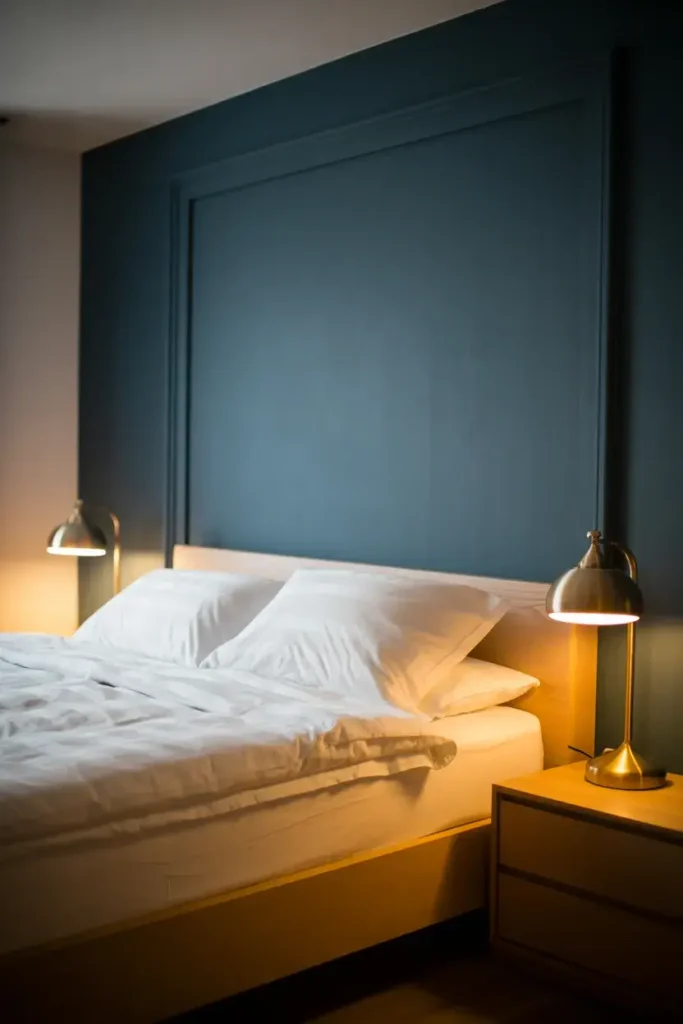
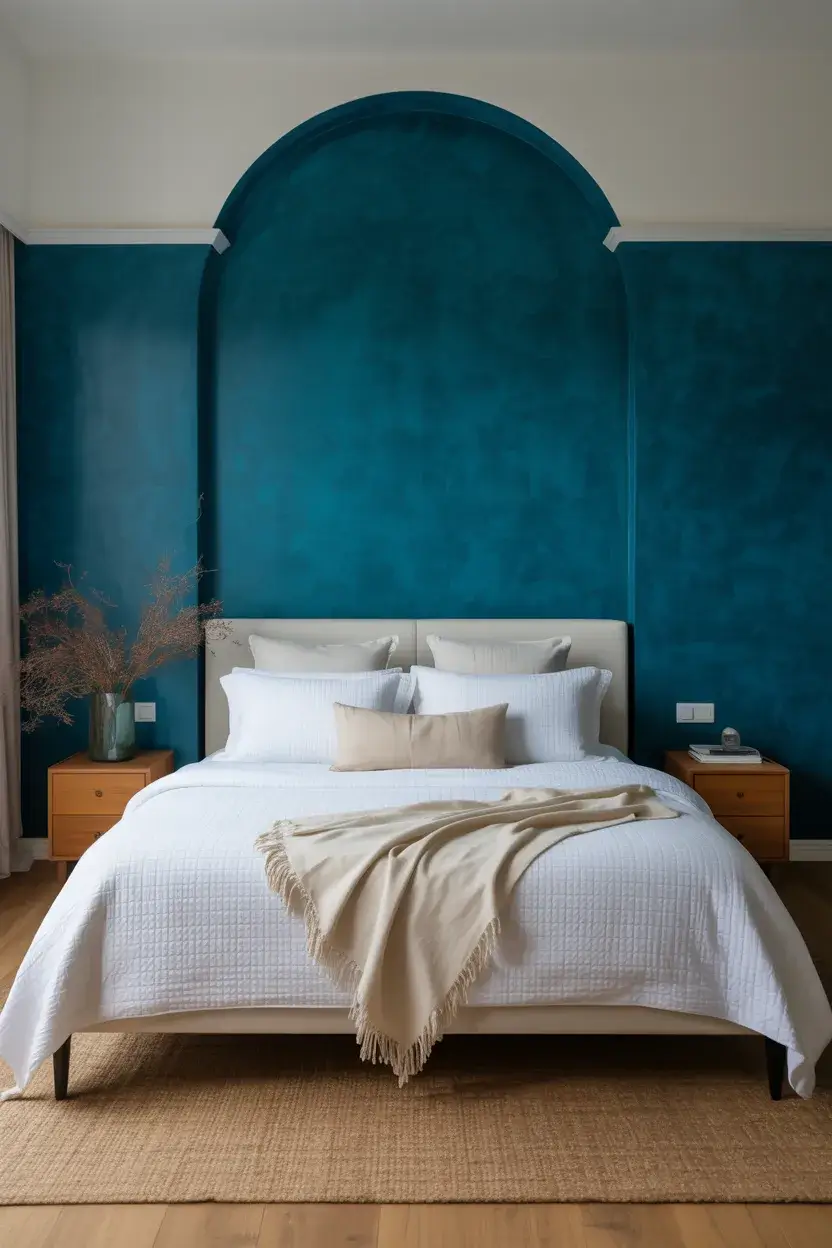
You might think dark colors are intense, but a muted navy can actually be incredibly cozy. Darker colors tend to make walls recede, creating a sense of depth that feels like a warm hug.
Navy blue is a classic choice that pairs well with metallic accents like gold or brass lamps. It grounds the room and creates a focal point that feels sophisticated yet sleepy.
Tip: Ensure your room has good natural light or adequate bedside lamps so the navy wall doesn’t make the space feel small.
4. Warm Greige
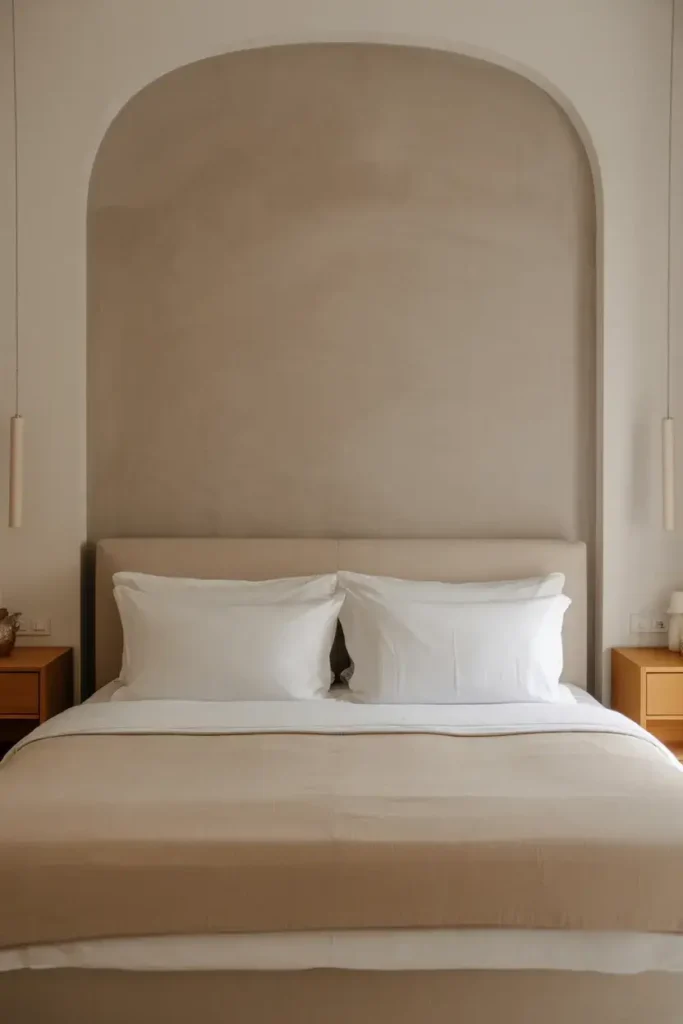
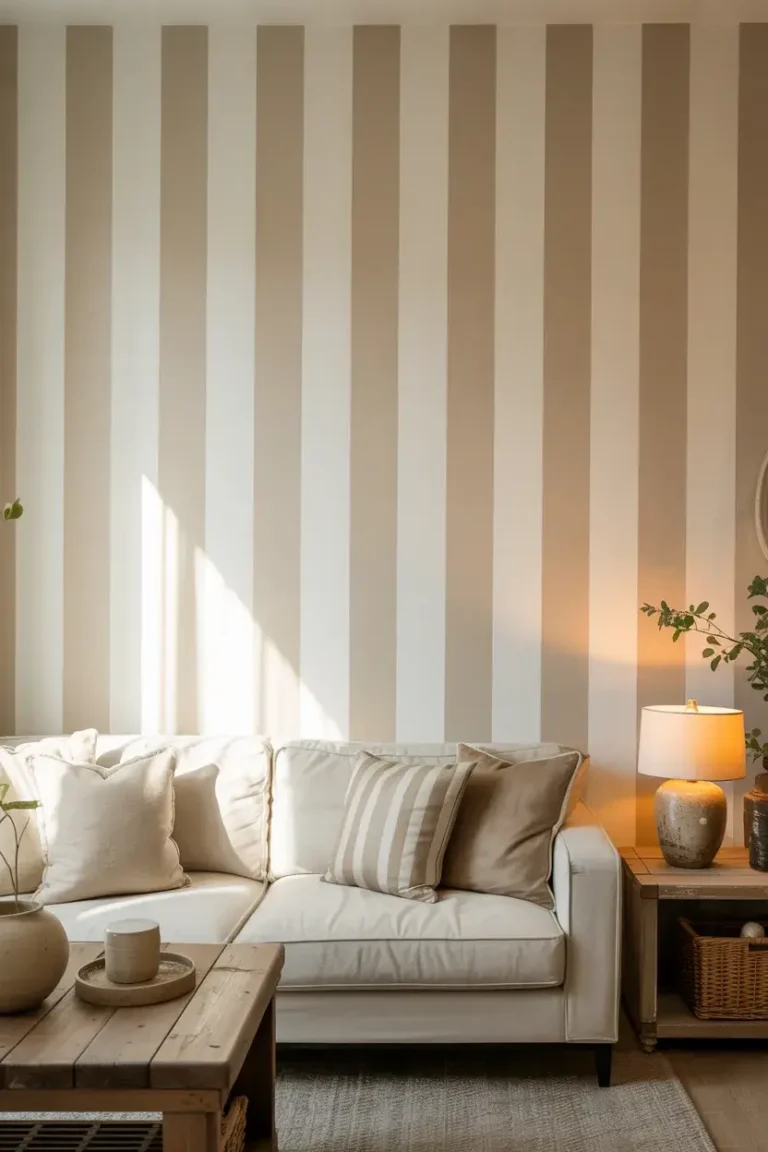
If you cannot decide between gray and beige, I suggest going with “greige.” This hybrid color offers the coolness of gray with the warmth of beige, making it the ultimate neutral backdrop for relaxation.
A greige accent wall adds texture and warmth without demanding attention. It is perfect for those who want a minimalist aesthetic that still feels inviting.
Tip: Use white trim and baseboards to make a greige accent wall pop and look crisp.
5. Pale Lavender
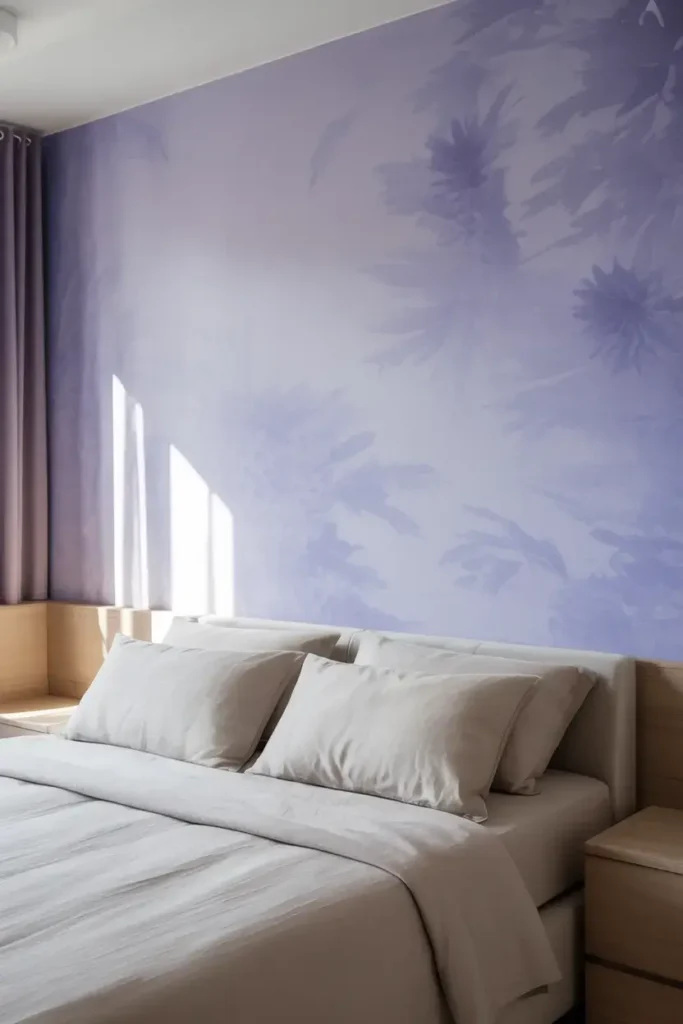
Lavender often gets a bad rap as old-fashioned, but a modern, pale lavender is incredibly soothing. It combines the calmness of blue with the warmth of red, creating a balanced hue that encourages relaxation.
I find that this color works exceptionally well in rooms with soft, diffused light. It creates a dreamlike quality that is perfect for drifting off to sleep.
Tip: Avoid bright purples; stick to dusty or gray-washed lavender shades to keep the look mature and calming.
6. Earthy Terracotta
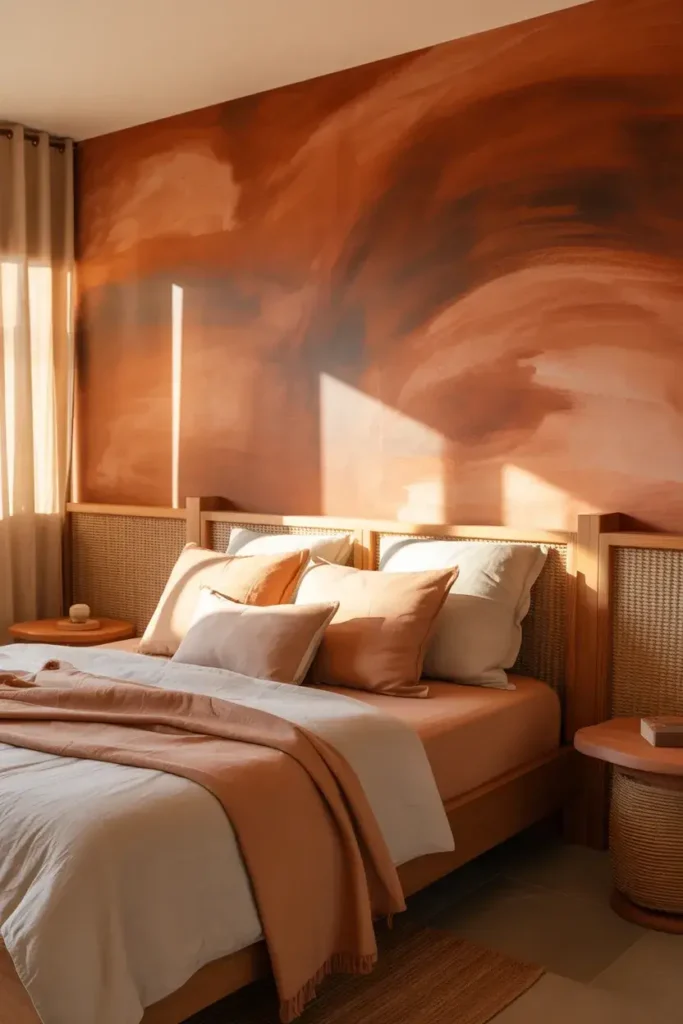
Terracotta brings a grounded, warm energy to a bedroom. While red is typically considered a stimulating color to avoid, earthy terracotta leans more toward brown and orange, which feels cozy rather than aggressive.
I love using this shade to add warmth to a room that feels physically cold or north-facing. It mimics the glow of a sunset, helping you transition from day to night.
Tip: Pair terracotta with woven textures like a jute rug or a rattan headboard to complete the boho-chic look.
7. Buttery Yellow
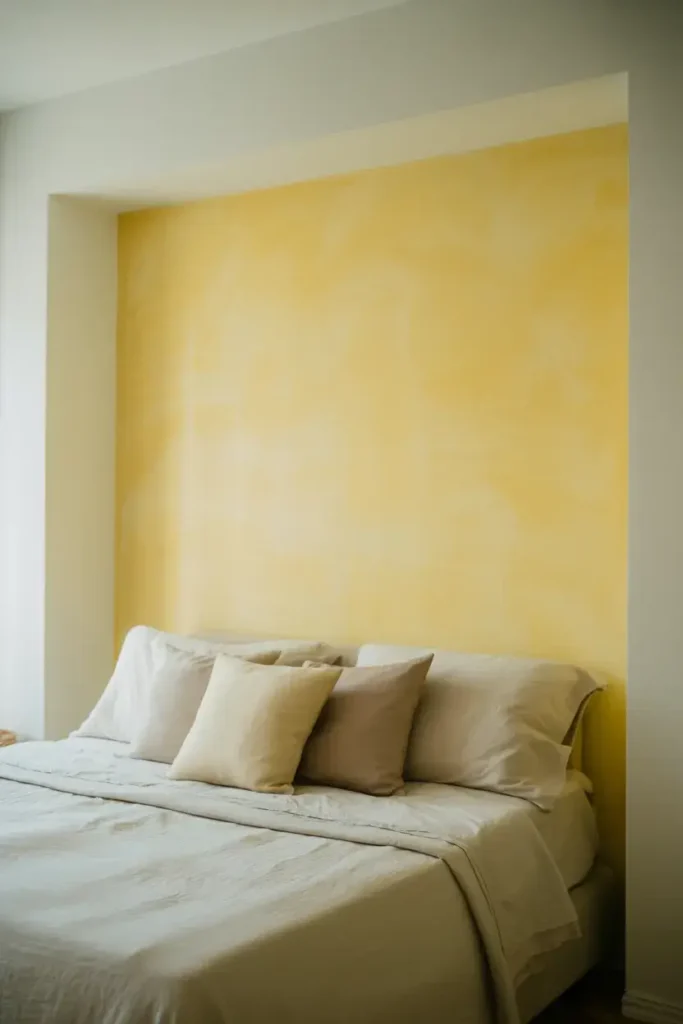
You might be surprised to learn that yellow is excellent for sleep. The same Travelodge survey found that people in yellow bedrooms slept for an average of 7 hours and 40 minutes.
The trick is to choose a buttery, pale yellow rather than a neon lemon. A soft yellow accent wall creates a cheerful morning vibe that helps you wake up feeling refreshed.
Tip: Keep your bedding white or neutral to let the yellow wall shine without clashing.
8. Moody Charcoal
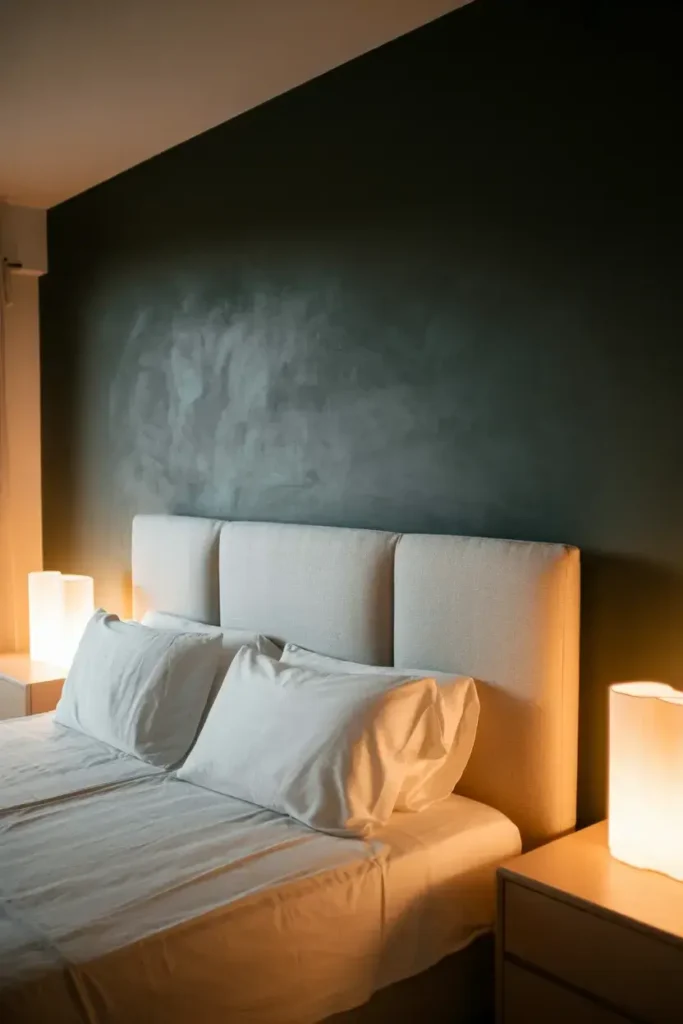
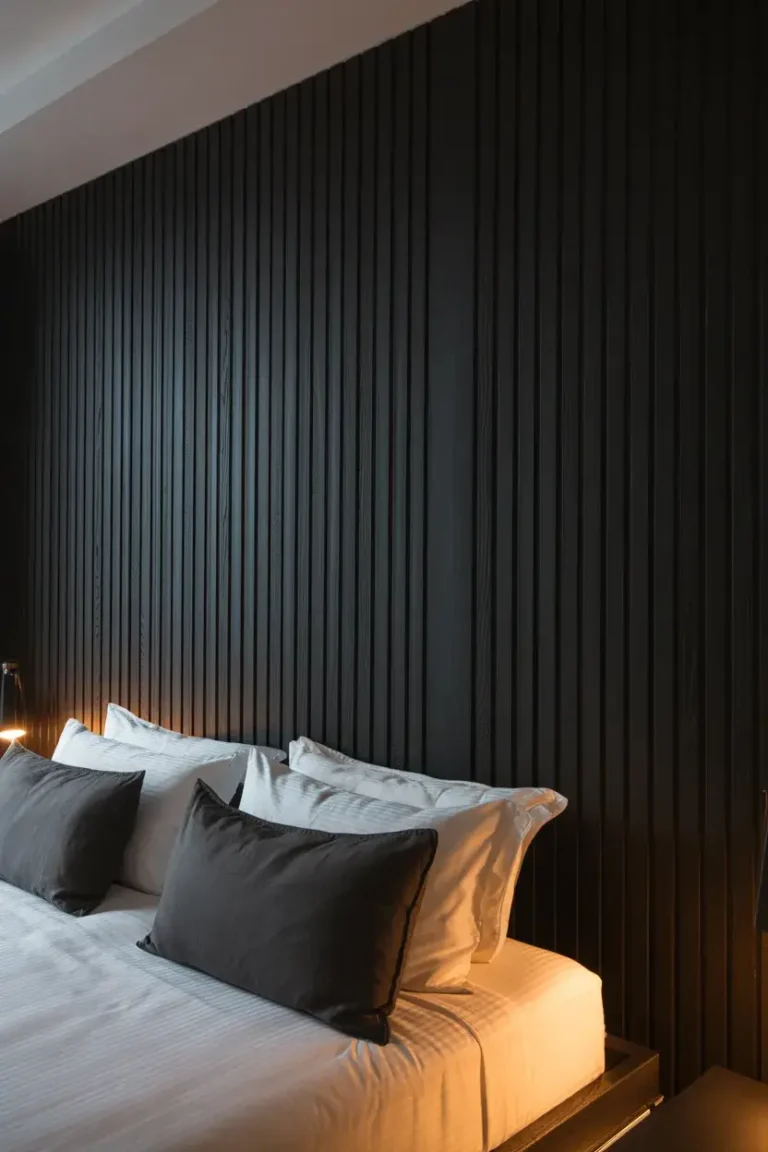
For a dramatic yet restful look, I turn to charcoal gray. Unlike stark black, charcoal has softer undertones that create a cocoon-like effect, perfect for deep sleep.
A charcoal accent wall creates a stunning contrast against a light-colored headboard. It absorbs light rather than reflecting it, which is helpful if you are sensitive to streetlights outside your window.
Tip: Use matte paint for charcoal walls. Glossy finishes can reflect light and ruin the moody, cozy effect.
9. Blush Pink
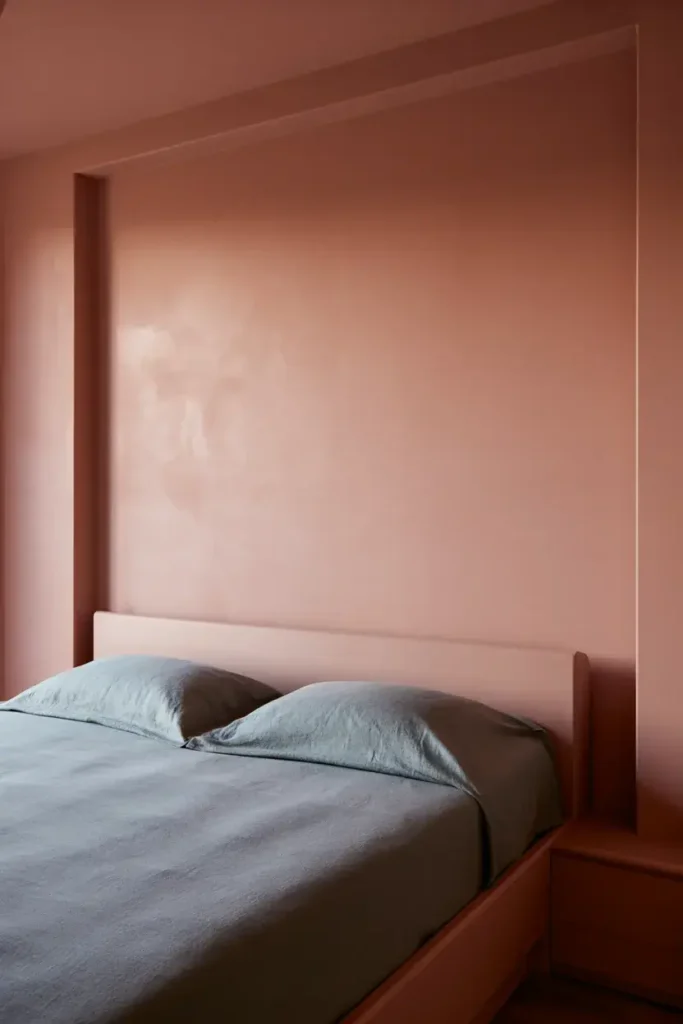
Blush pink is not just for nurseries. A dusty, muted pink, like Benjamin Moore’s First Light, acts as a warm neutral that promotes feelings of kindness and comfort.
I find this color particularly effective for softening a room with hard edges or modern furniture. It adds a gentle glow that makes everyone look good in the lighting.
Tip: Pair blush pink with gray or navy bedding to keep the room from looking too sweet or feminine.
10. Deep Teal
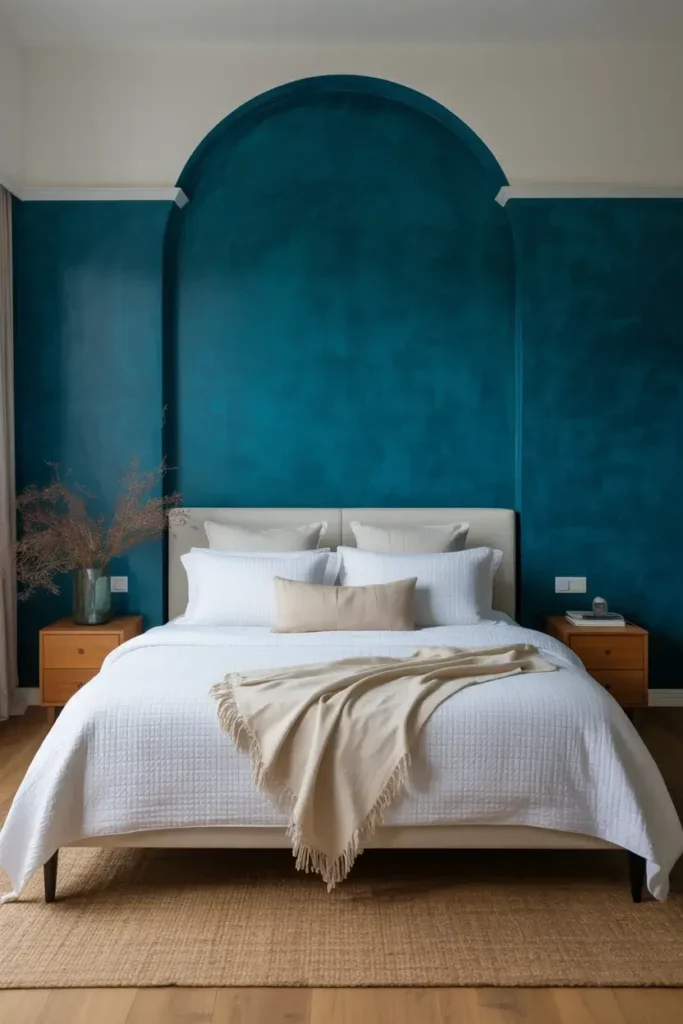
Teal balances the restorative qualities of green with the tranquility of blue. A deep teal accent wall makes a bold statement while maintaining a serene atmosphere.
This color is rich and enveloping. I love how it changes character throughout the day, looking vibrant in the morning and moody at night.
Tip: Use gold or brass hardware on your nightstands to complement the jewel tones of a teal wall.
11. Creamy Off-White
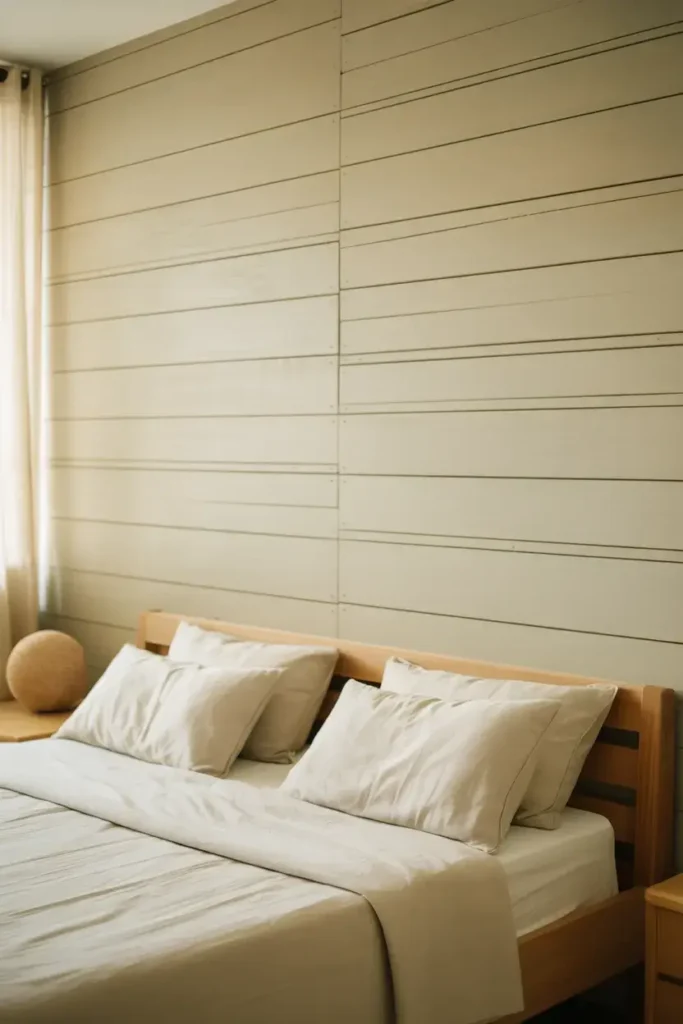
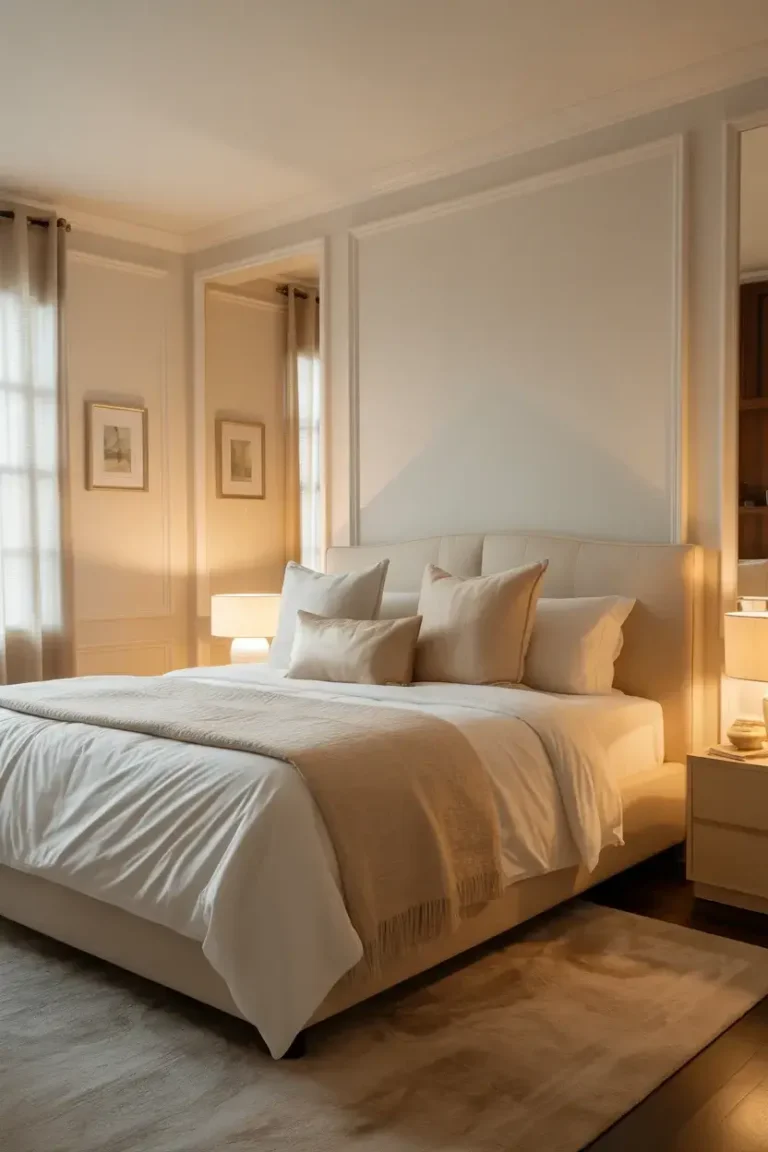
Sometimes, the most calming color is simply a shade of white that isn’t stark. A creamy off-white accent wall, perhaps with shiplap or texture, adds interest without visual clutter.
White is associated with peace and cleanliness. If your mind feels cluttered at the end of the day, a clean, creamy backdrop can help you clear your thoughts.
Tip: Choose an off-white with warm undertones to avoid the room feeling sterile or hospital-like.
12. Olive Green
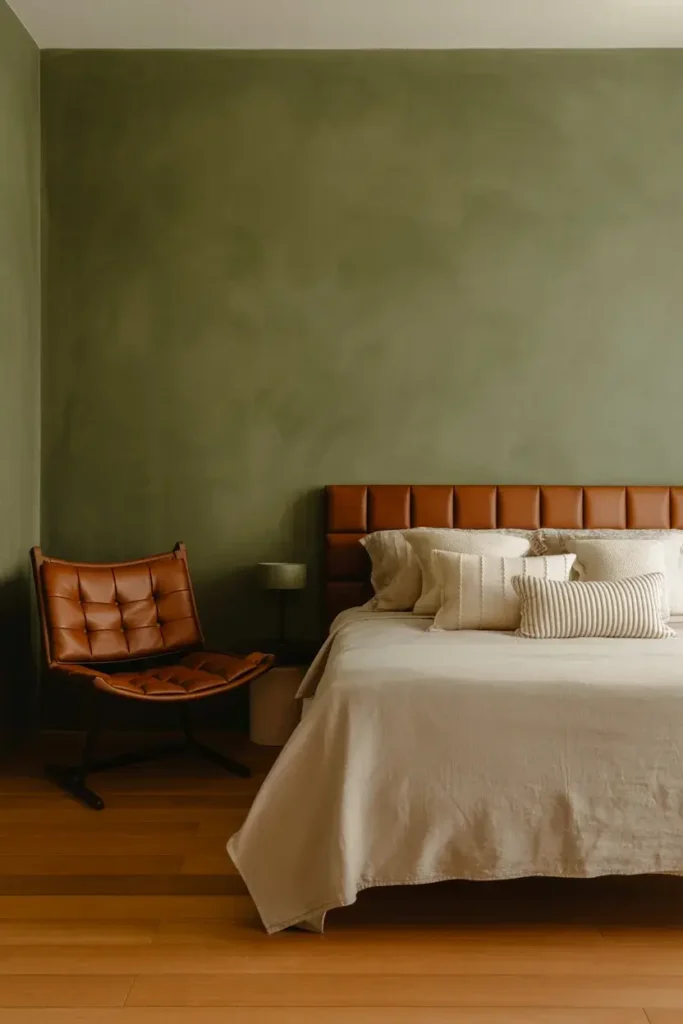
Olive green is a sophisticated alternative to brighter greens. It feels grounded, historic, and incredibly peaceful, much like walking through an ancient forest.
I recommend an olive accent wall for rooms with leather accents or wood flooring. It enhances the richness of natural materials and makes the space feel established and safe.
Tip: Ensure your lighting is warm (2700K-3000K bulbs) to bring out the cozy, golden undertones of the olive paint.
13. Slate Blue
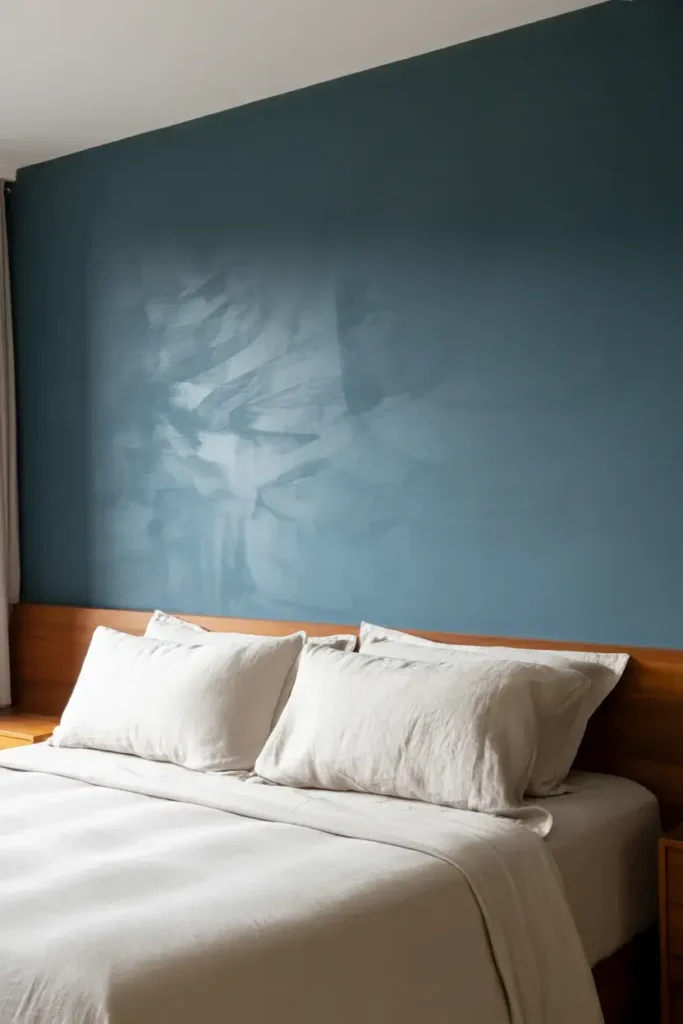
Slate blue is a gray-forward blue that feels very mature and steady. It reminds me of a stormy sea or a cloudy sky, which many people find deeply relaxing.
This color is perfect if you want the benefits of blue (lowered blood pressure) but want a color that acts as a neutral. It pairs with almost anything.
Tip: Try a velvet headboard against a slate blue wall for a luxurious, tactile experience.
14. Warm Taupe
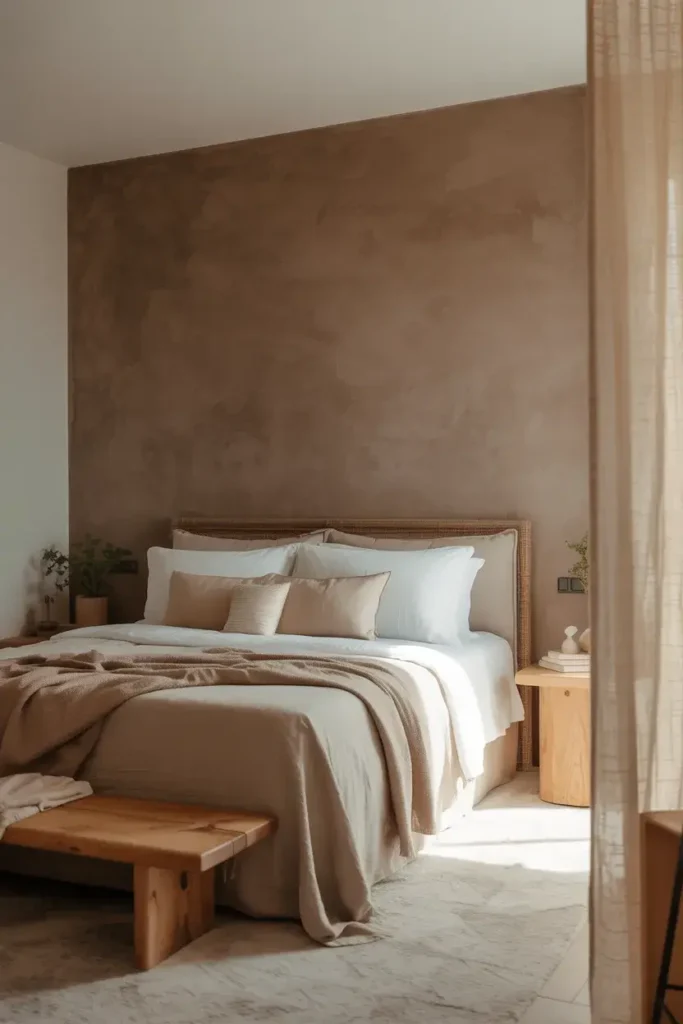
Taupe is a brownish-gray that is undeniably comforting. It is the color of stone and earth, providing a solid foundation for a good night’s rest.
I use taupe when I want to create a space that feels timeless. It doesn’t follow trends, which means your bedroom will feel relevant and relaxing for years to come.
Tip: Layer different shades of taupe and beige in your bedding to create a monochromatic, high-end hotel look.
15. Shimmering Silver
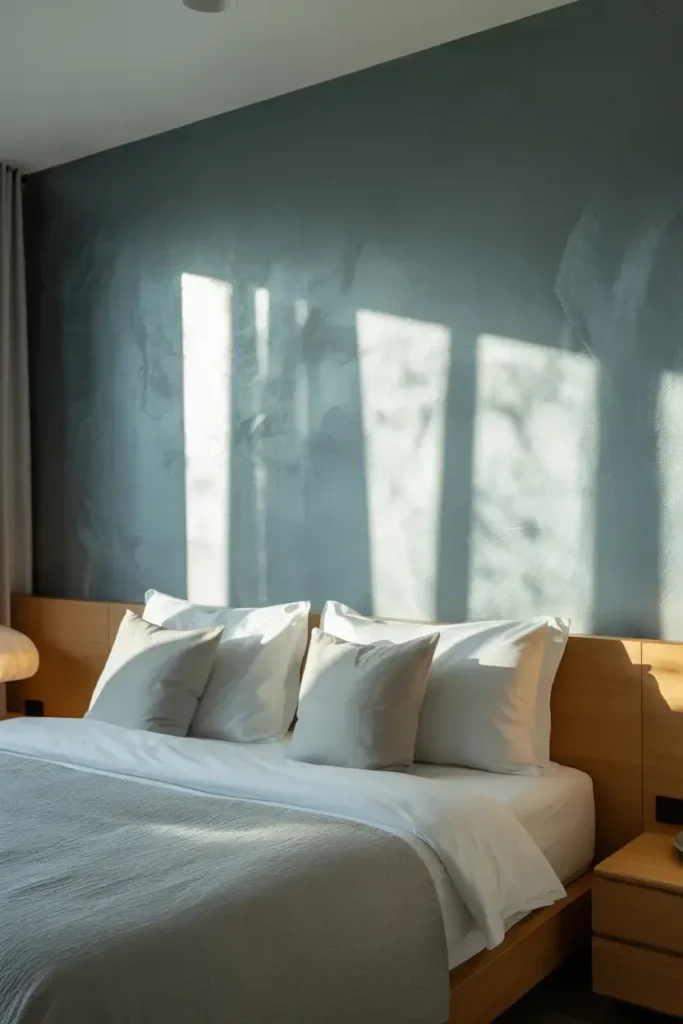
Believe it or not, silver bedrooms are conducive to sleep, with sleepers getting an average of 7 hours and 33 minutes of rest. A metallic or matte silver accent wall mimics moonlight.
I love using a matte silver-gray paint rather than a glittery one. It reflects light gently and creates a cool, calming environment that signals your body to cool down for sleep.
Tip: Avoid mixing silver with too many other cool metals. Introduce wood or fabric to warm up the space.
Conclusion
Creating a sanctuary starts with a single brushstroke. If you are tired of staring at blank walls and want to finally get the rest you deserve, pick up a sample pot this weekend and test out one of these calming shades.