19 Colors That Go With Green for Stylish and Versatile Design Choices
When working with green in interior design, choosing the right colors to complement it is essential for creating a balanced and appealing space. Green’s versatility allows it to adapt to various styles and moods, making it a popular choice for many rooms.
I want to share 19 colors that go well with green, helping you develop cohesive and stylish color schemes in your home. These combinations can highlight green’s natural beauty while adding depth and interest to your design.
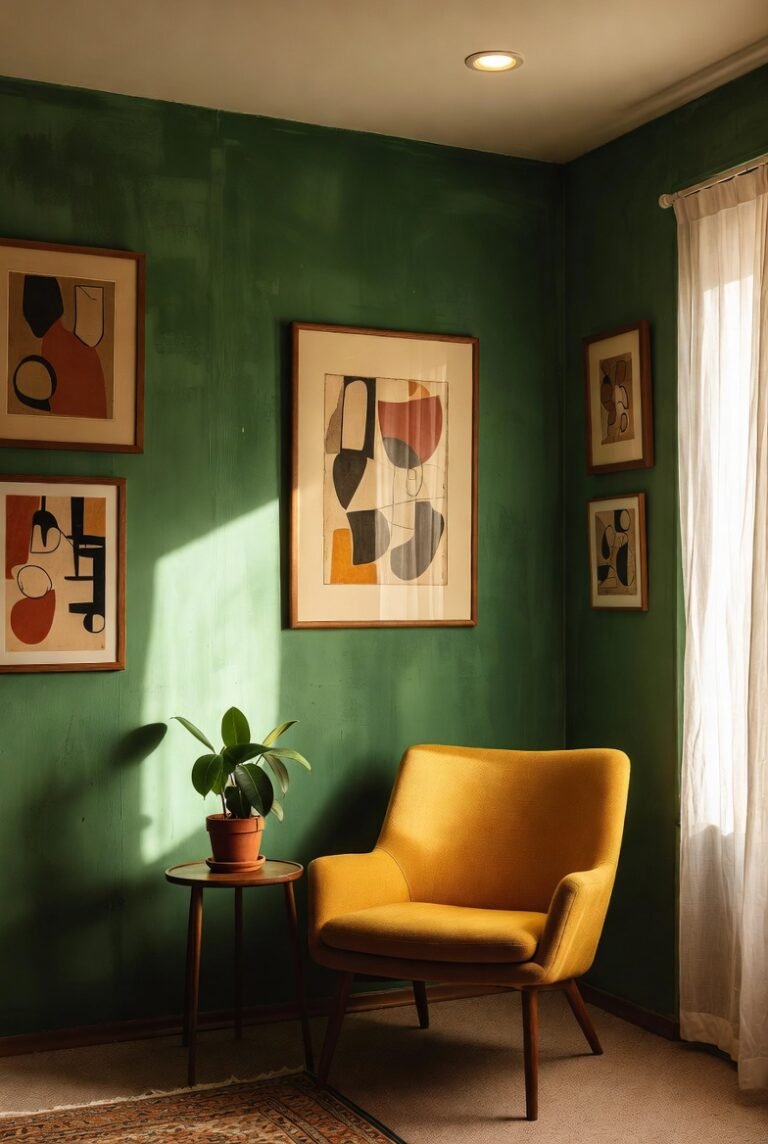
1) Mustard Yellow and Green
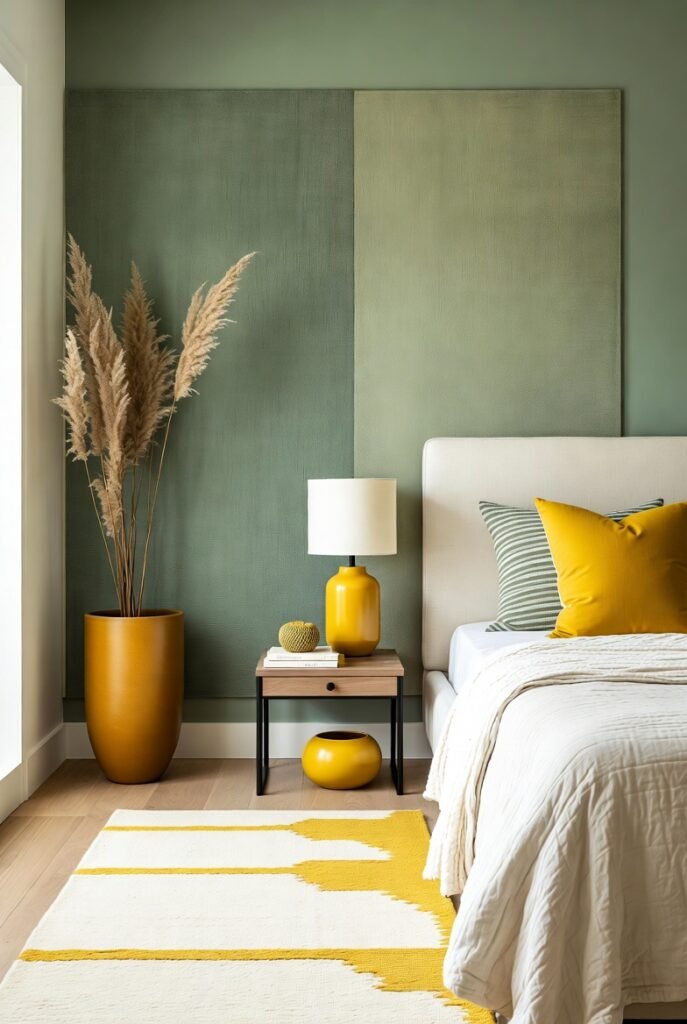
I find mustard yellow paired with green creates a balanced and inviting color scheme for interiors. Mustard yellow adds warmth without overpowering, while green brings a calming, natural vibe.
Using sage green on walls or large rugs grounds the space, and mustard yellow works well in accents like cushions or ceramics. This combo feels fresh but grounded, perfect for living rooms or bedrooms where you want both energy and relaxation.
I recommend this pairing when aiming for a design that is organic yet stylish. It enhances natural light and complements wood tones nicely.
2) Terracotta and Green
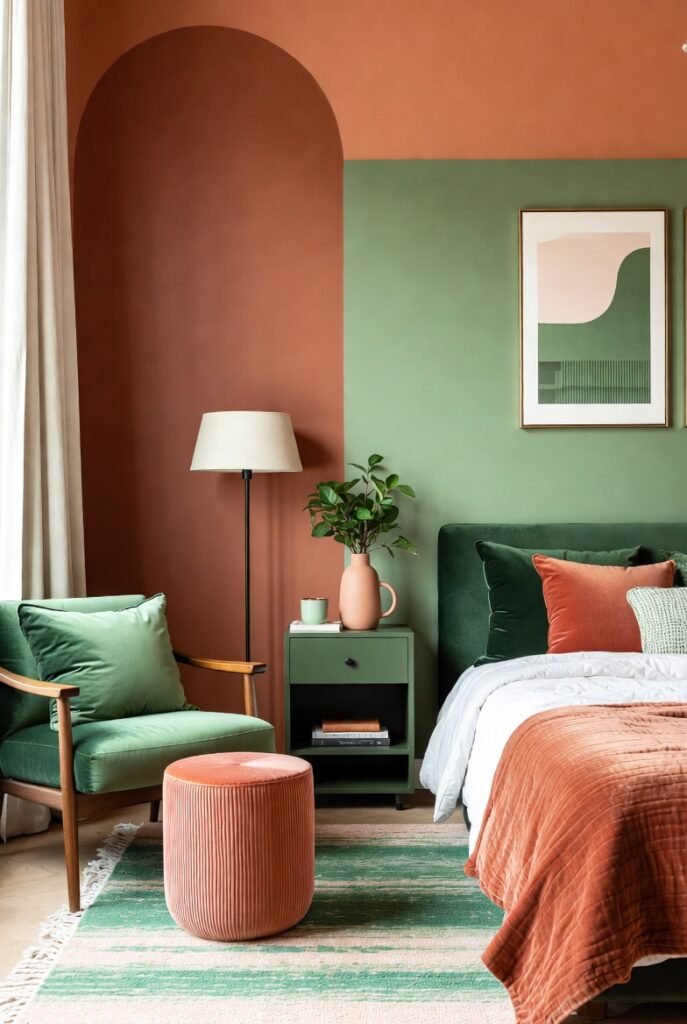
I find terracotta pairs naturally well with green tones, creating a grounded and balanced interior color scheme. The warmth of terracotta combined with the freshness of green adds depth without overwhelming a space.
In my experience, this combination works beautifully across various shades, from sage to forest green. It brings an earthy, inviting feel, ideal for living rooms or bedrooms seeking calm yet vibrant energy.
Using terracotta alongside green fabrics, paint, or accessories offers versatility. It’s a straightforward way to add warmth and harmony to your design.
3) Turquoise and Green
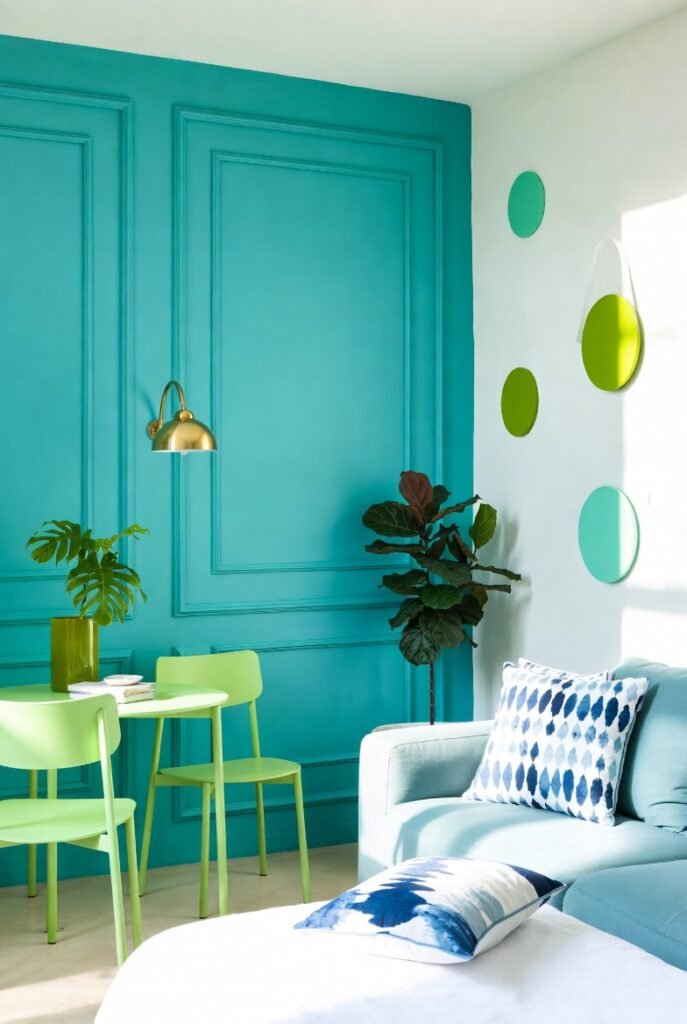
I find turquoise and green to be a versatile pairing in interior design. Turquoise’s vibrant blue-green tone works well with various shades of green, from soft mint to deep olive.
Using turquoise walls with pea green accents, like chairs or cushions, adds a fresh, lively feel to a room. This combination creates a balanced yet energetic atmosphere without overwhelming the space.
In my experience, blending these colors can give any room a modern and inviting look while maintaining a natural, calming vibe.
4) Gold and Green
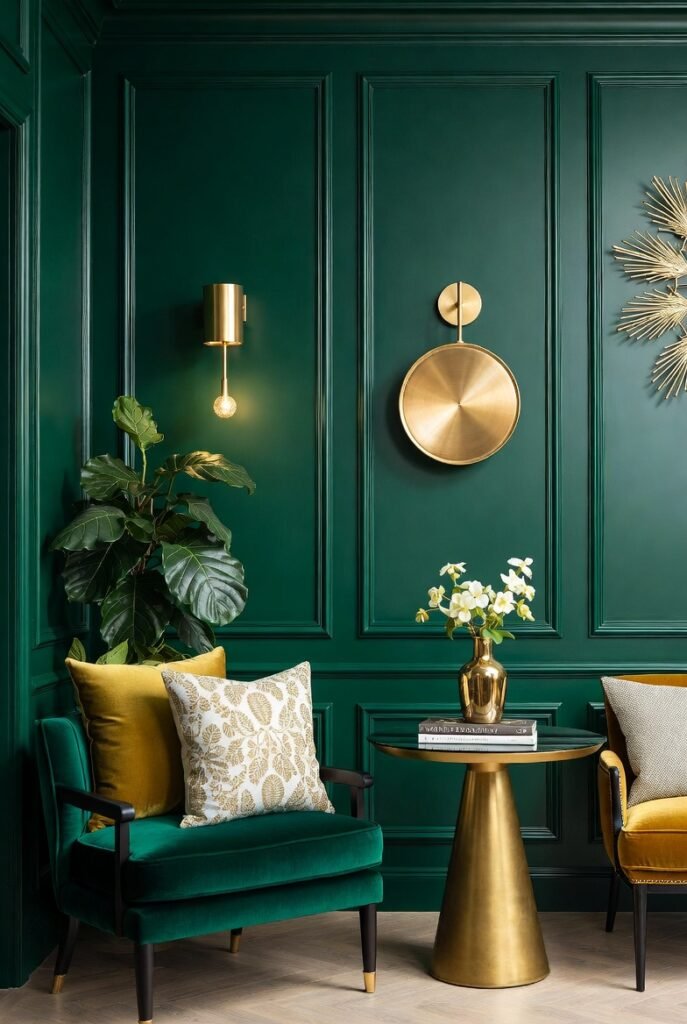
I find gold and green to be a classic combination in interior design. The richness of gold adds warmth and elegance to the natural, calming tones of green.
This pairing works well in living rooms or dining areas where I want to create a sophisticated yet inviting atmosphere. Using deep green shades with gold accents, like pillows or lighting fixtures, balances luxury with organic appeal.
In my experience, this color scheme is versatile enough for both modern and traditional spaces without feeling overdone.
5) Olive Green and Burnt Orange
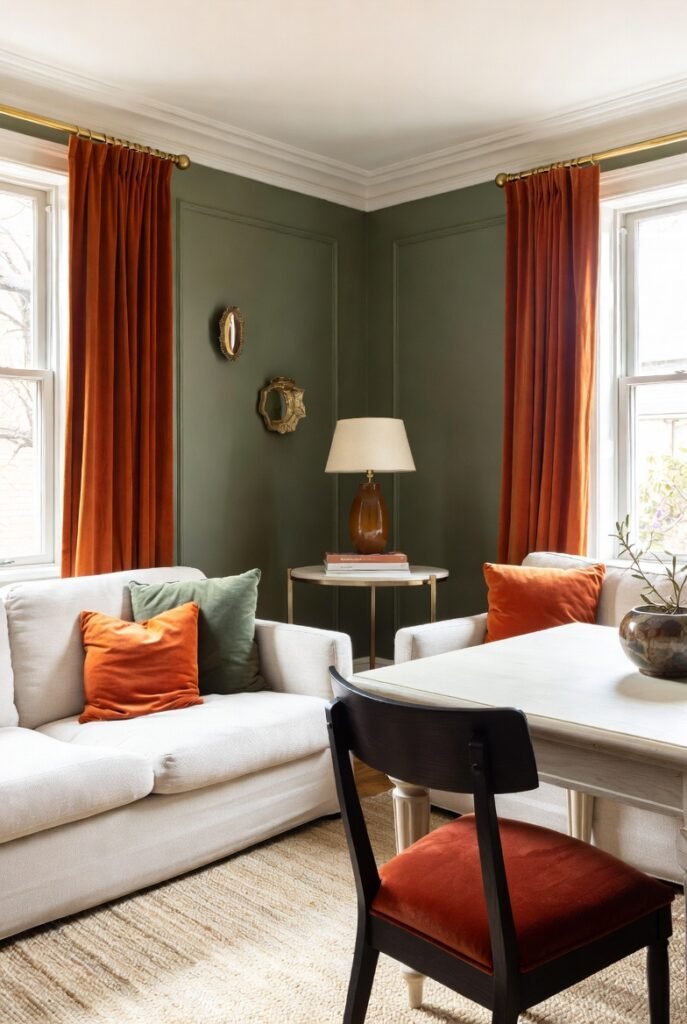
I find olive green and burnt orange create a warm, earthy color scheme that works well in interiors. Olive green’s muted tone offers a natural, calming backdrop.
Burnt orange adds a rich, vibrant contrast without overwhelming the space. Together, they bring warmth and sophistication to living rooms or dining areas.
Using off-white or neutral accents helps balance the boldness. This pairing is versatile, lending itself to both modern and rustic styles.
6) Dark Green and Satin Sheen Gold
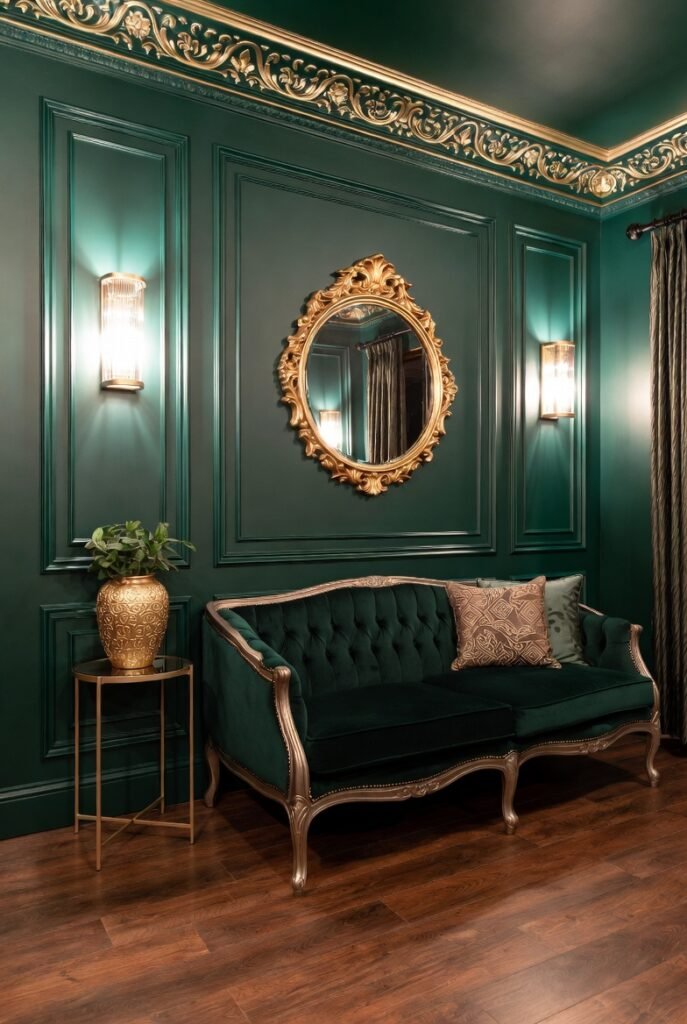
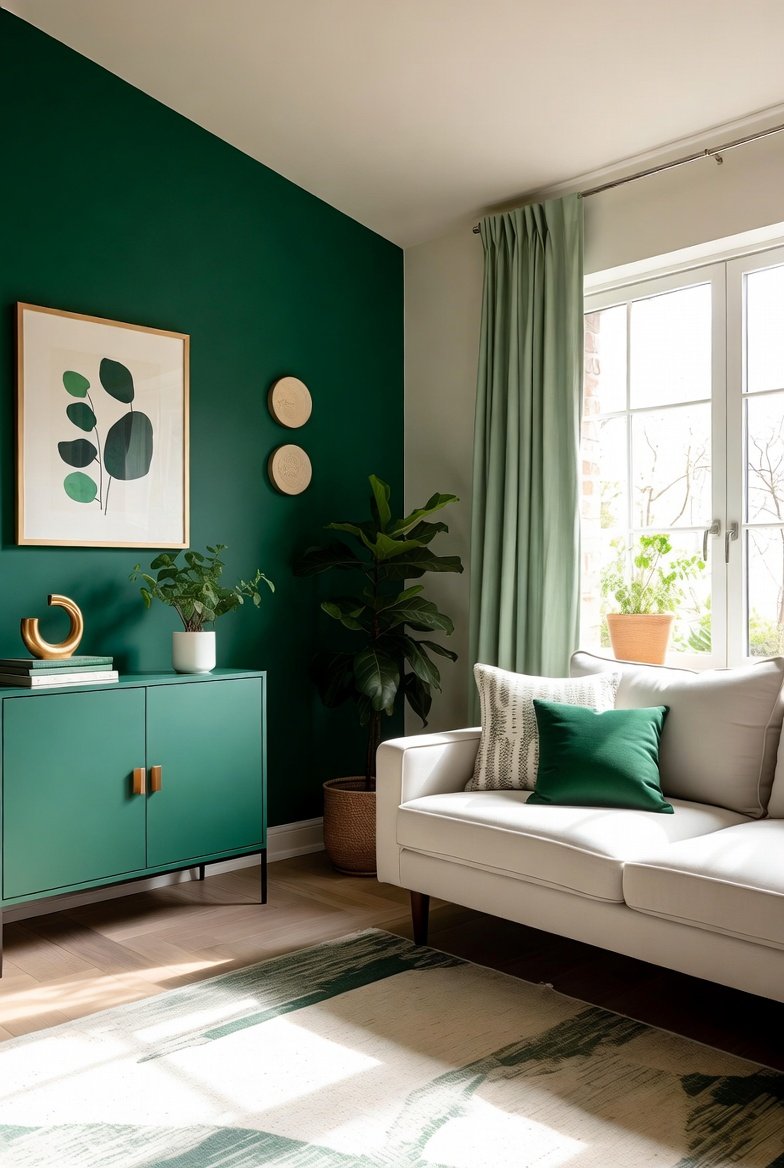
I find dark green and satin sheen gold create a sophisticated and balanced color scheme for interiors. The deep, earthy tone of dark green grounds a space, while satin sheen gold adds warmth and a subtle glow.
This combination works well in living rooms or dining areas where elegance is desired without overwhelming brightness. Using gold accents like light fixtures or hardware complements dark green walls or furniture effectively.
7) Sage Green and Taupe
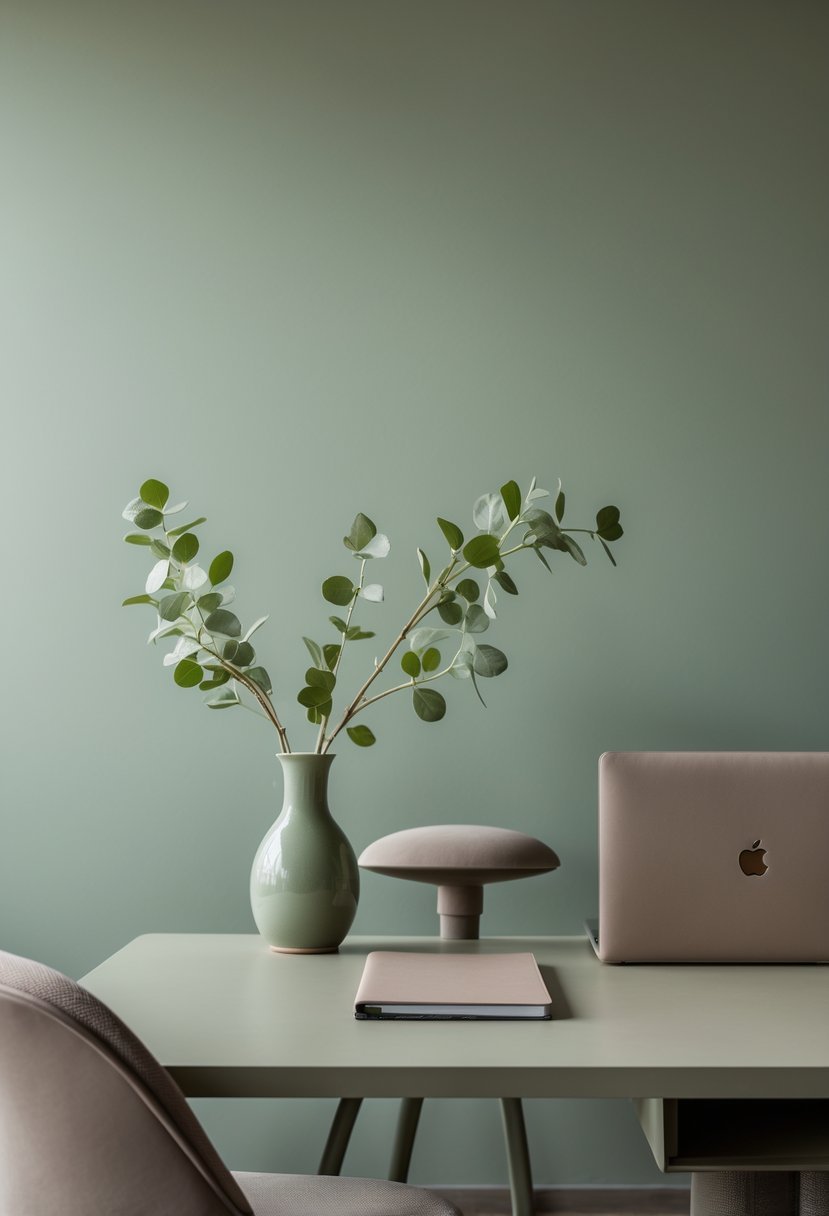
I find sage green and taupe to be a soothing and sophisticated pairing in interior design. Taupe, a subtle shade of grayish brown, balances the earthy tones of sage green without overpowering them.
Using taupe accents like pillows or rugs can enhance the calm atmosphere in a room. This combination works well for living rooms or bedrooms where a serene vibe is desired. It creates a timeless and inviting space that feels both natural and refined.
8) Emerald Green and Gold
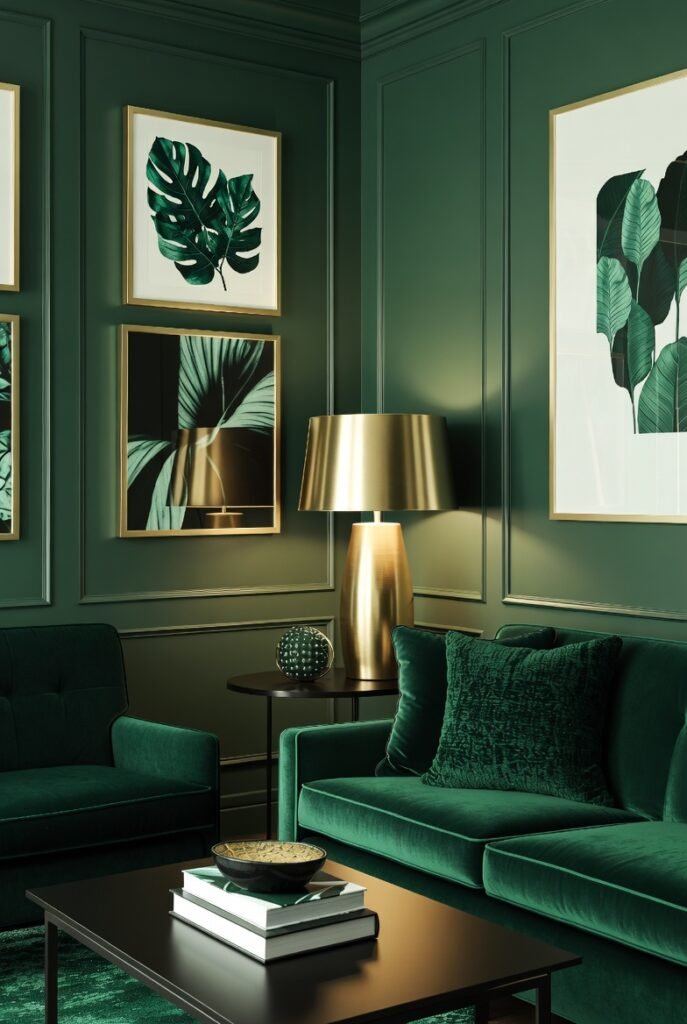
I find emerald green and gold to be a classic color combination in interior design. Emerald green brings a rich, natural depth, while gold adds a subtle metallic shimmer that enhances elegance.
Using gold accents like lamps, throw pillows, or wall art pairs well with emerald green furniture or walls. This mix creates a balanced look that is both sophisticated and inviting without feeling overwhelming.
9) Green and Red (muted shades)
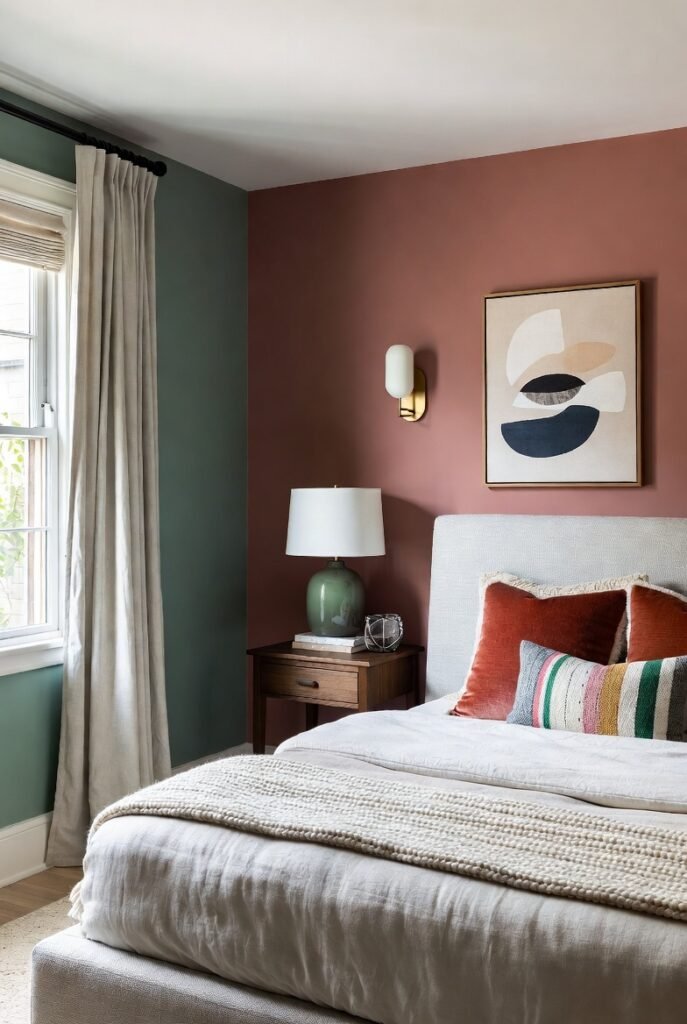
I find that pairing muted greens with soft reds creates a balanced and inviting space. These tones complement each other without overwhelming the room, making them ideal for cozy living areas or bedrooms.
Using neutral colors like beige or gray alongside these shades adds sophistication and improves the overall flow of the design. I avoid bright shades here, as they often clash and become visually harsh.
This combination works well for textiles, accent walls, or even furniture, bringing warmth without losing subtlety. It’s a timeless choice that feels both natural and refined.
10) Green and White
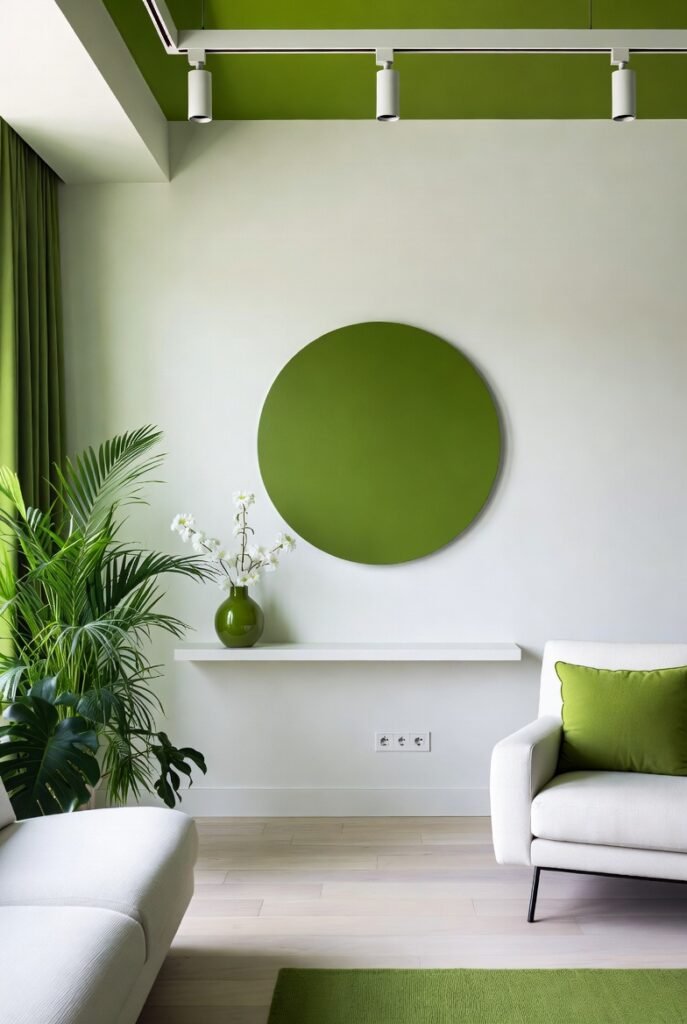
I find green and white to be a timeless combination in interior design. The crispness of white balances green’s natural vibrancy, creating a fresh and clean atmosphere. It works well in kitchens and bathrooms, where a light, airy feel is desirable.
In living spaces, this pairing offers versatility. White can soften strong greens like emerald or jade, making the space feel more open. I also appreciate how minimal and botanical this color scheme appears without overwhelming a room.
11) Green and Beige
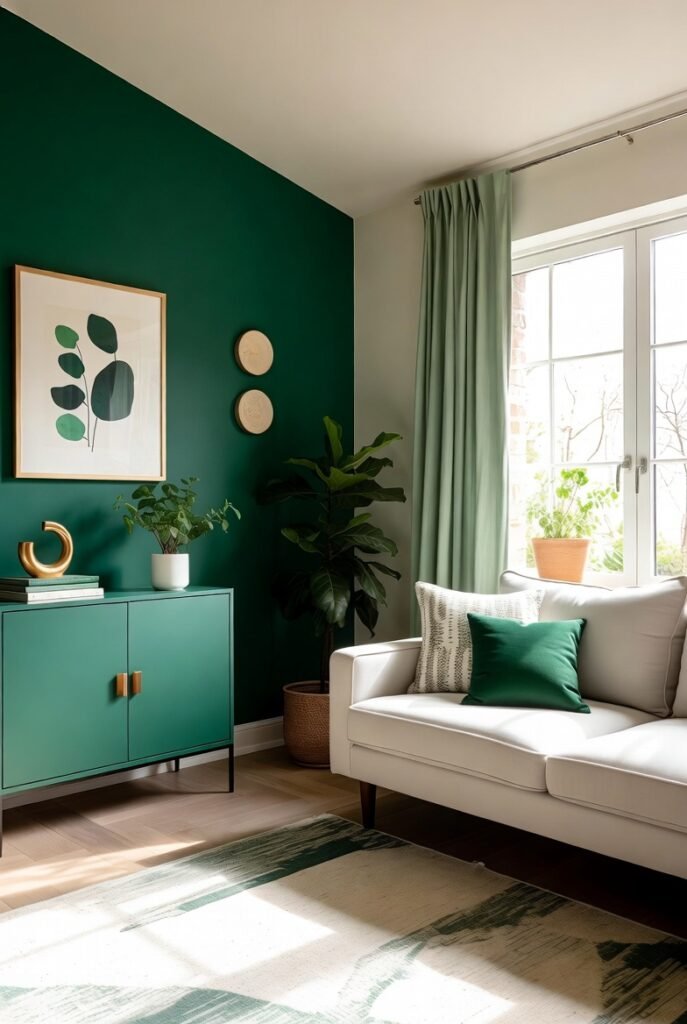
I find green and beige to be a timeless combination in interior design. Beige tones act as a soft, neutral backdrop that allows various shades of green to stand out without overwhelming the space.
Using beige with green creates a balanced, calming environment. It works well in living rooms, bedrooms, or kitchens where a natural, grounded feeling is desired. The warmth of beige paired with green’s freshness feels both sophisticated and approachable.
12) Green and Blue
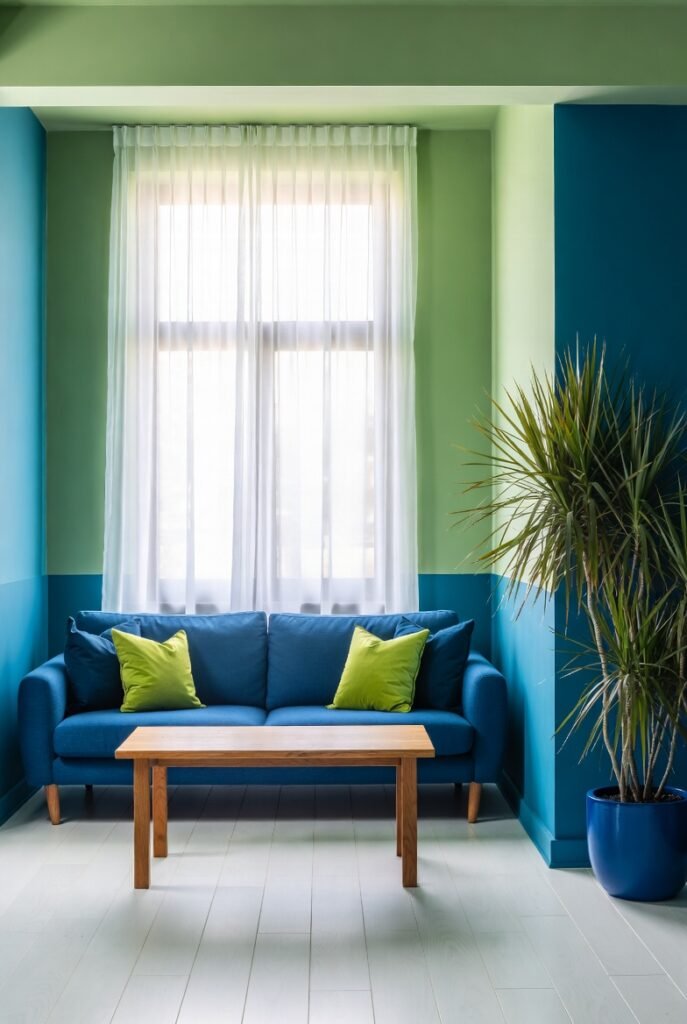
I often recommend combining green and blue for interior design because these colors create a naturally calming environment. Their proximity on the color wheel makes the pairing harmonious without feeling overwhelming.
In my experience, this duo works well in various styles, from coastal to modern. Using lighter blues with soft greens brings a fresh, airy vibe, while deeper shades of both colors can add richness and depth to a room.
13) Green and Yellow
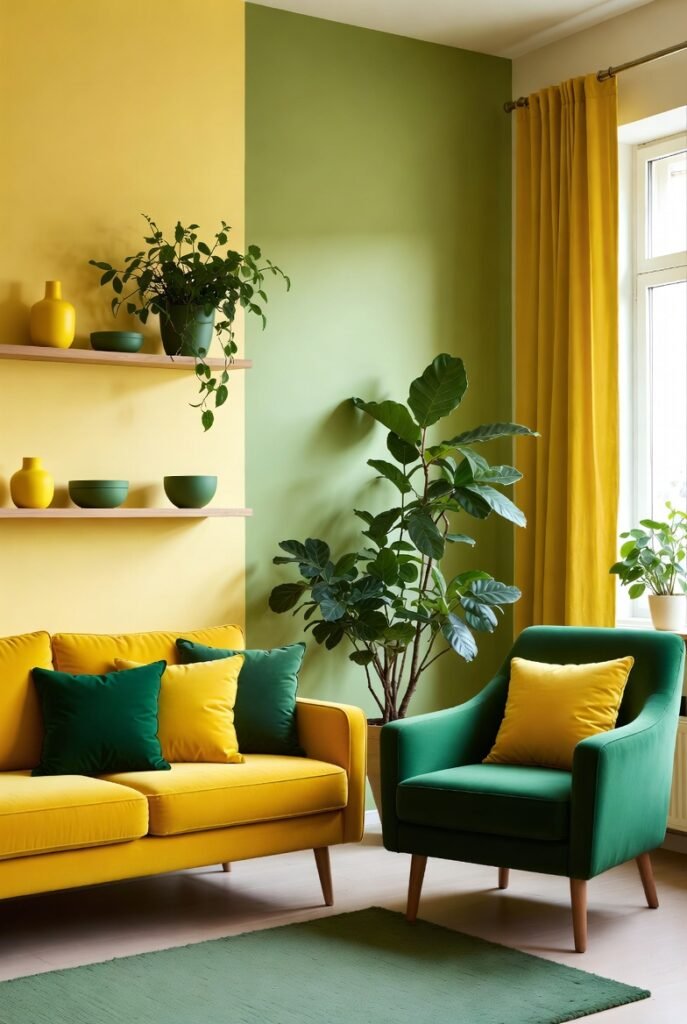
I find green and yellow to be a vibrant yet balanced combination in interior design. Yellow adds warmth and energy, complementing green’s calming nature.
In my experience, pairing softer yellows with muted greens creates a harmonious, inviting space. Brighter yellows work well with deeper greens for a bolder look, but it’s best to avoid overly intense shades together.
This palette is versatile—great for kitchens, living rooms, or even offices—bringing a fresh, natural feel without overwhelming the senses.
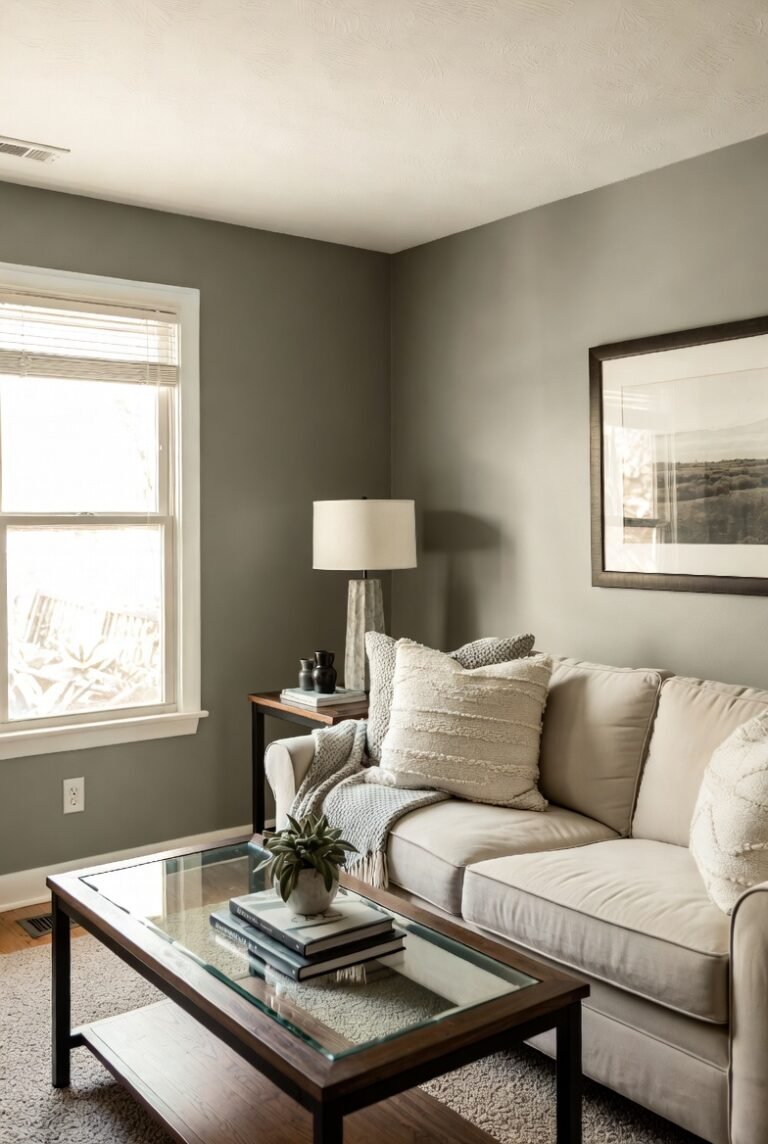
14) Green and Gray
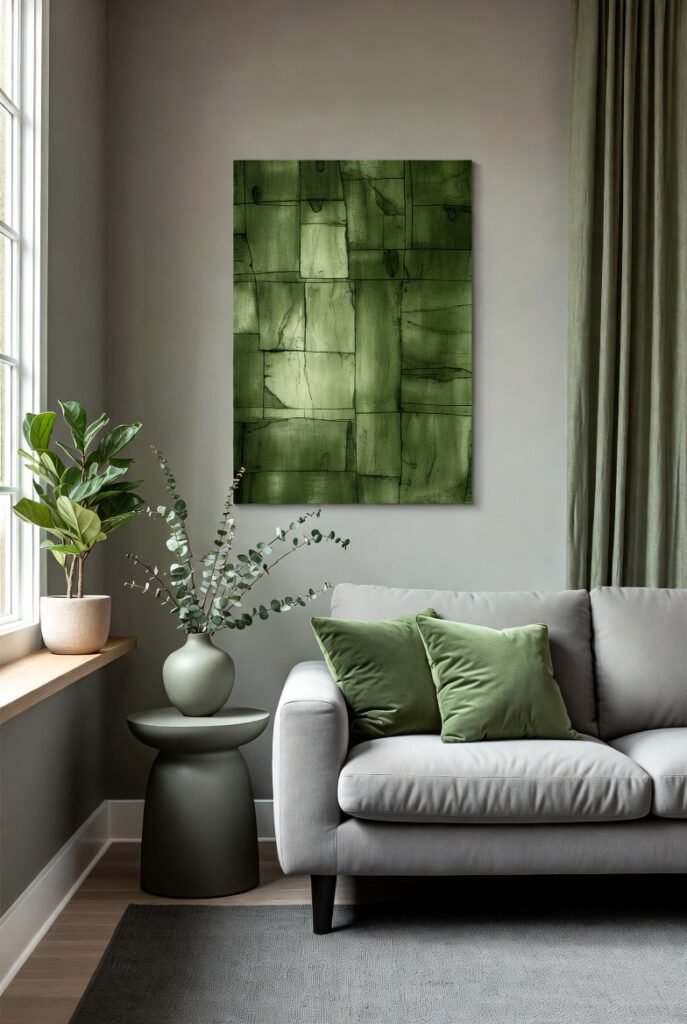
I find green and gray to be a reliable combination in interior design. Green brings a natural, calming vibe, while gray adds sophistication without overpowering the space.
Choosing the right undertone is essential. For example, a gray with green undertones complements the green perfectly, avoiding any clashing coldness.
This pairing works well in living rooms and bedrooms, offering a balanced ambiance that feels both fresh and elegant.
15) Green and Terra Cotta
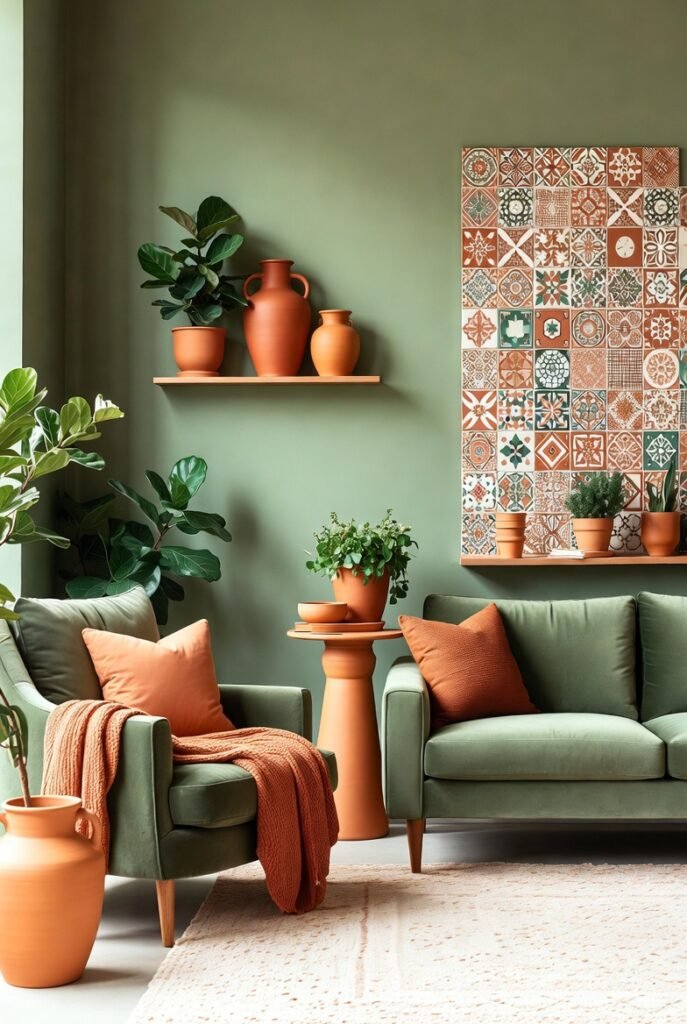
I find green and terra cotta to be a naturally harmonious pair in interior design. The earthy warmth of terra cotta balances green’s fresh, organic feel, creating a grounded yet inviting atmosphere.
In my experience, using sage or olive green with terra cotta works especially well. These muted greens soften the boldness of terra cotta, making spaces feel cozy without overwhelming the senses.
This combination adapts to a range of styles, from rustic to modern. I often use terra cotta walls or accents with green furnishings and plants to create layered, textured environments.
16) Green and Wood Tones
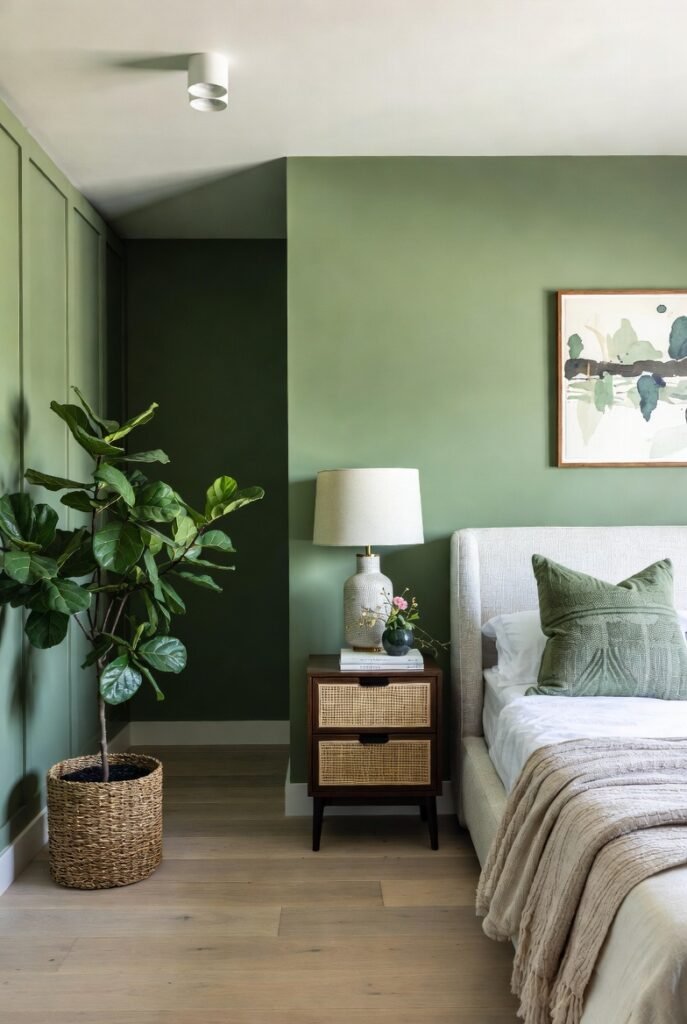
I find green pairs exceptionally well with natural wood tones in interior design. Combining greens like sage or olive with oak, walnut, or rattan creates a grounded, earthy atmosphere.
Wood adds warmth and texture, balancing green’s coolness. Light to medium wood floors or furniture emphasize a natural, organic feel. This mix brings a timeless, calm vibe that works in living rooms and bedrooms alike.
17) Green and Black
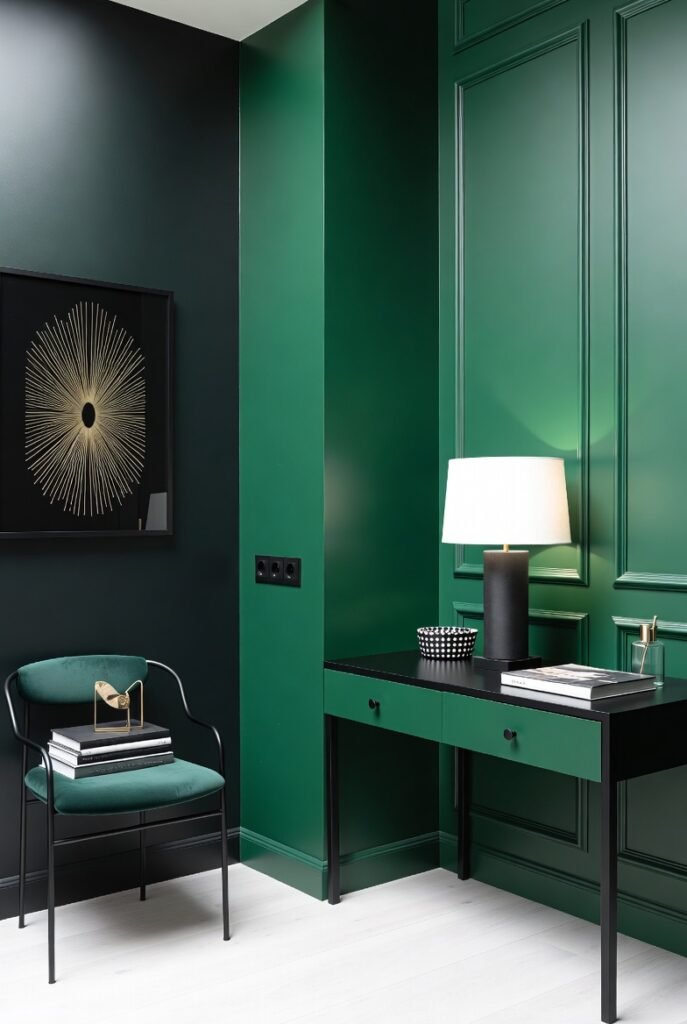
I find green and black to be a striking combination in interior design. Black acts as a strong, grounding neutral that allows various shades of green to stand out without overwhelming a space.
Using deep greens like emerald or forest green with black creates a sophisticated, modern look. I often add textures or matte finishes to soften the contrast and keep the room balanced.
This pairing works well in living rooms or offices, where you want a bold yet calming atmosphere. Adding metallic accents can also elevate the overall aesthetic.
18) Green and Mustard
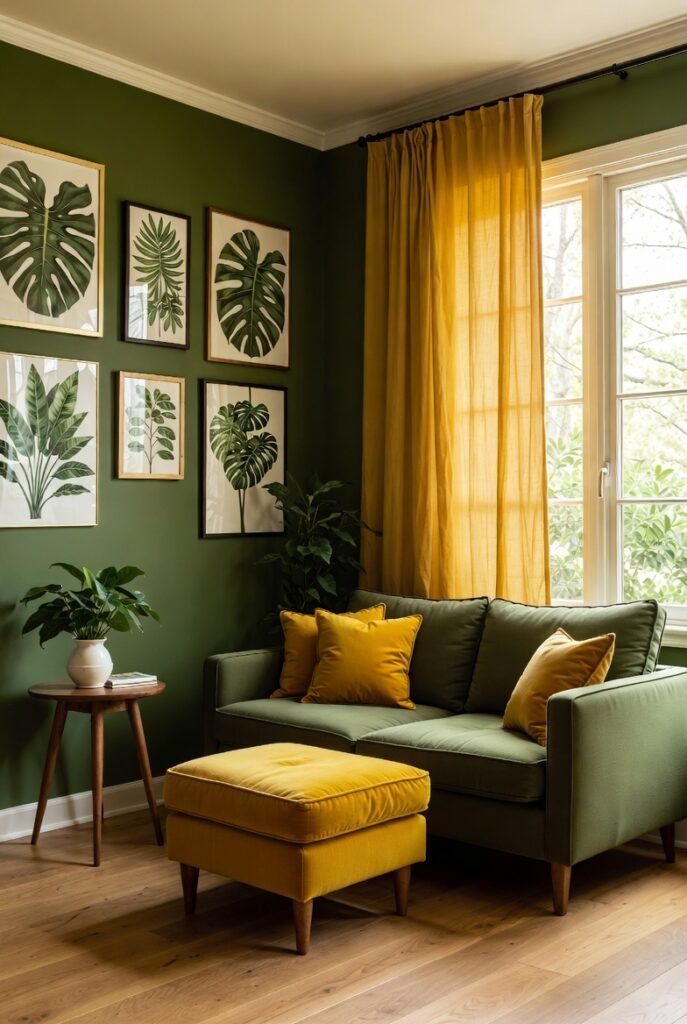
I find green and mustard to be a striking combination in interior design. Mustard’s warm yellow tones contrast well with various shades of green, creating a balanced, inviting space.
This pairing works especially well with deeper greens like forest or olive, where mustard introduces a subtle pop of color without overwhelming the room. Together, they evoke a natural, earthy feel perfect for living rooms or kitchens.
19) Green and Coral
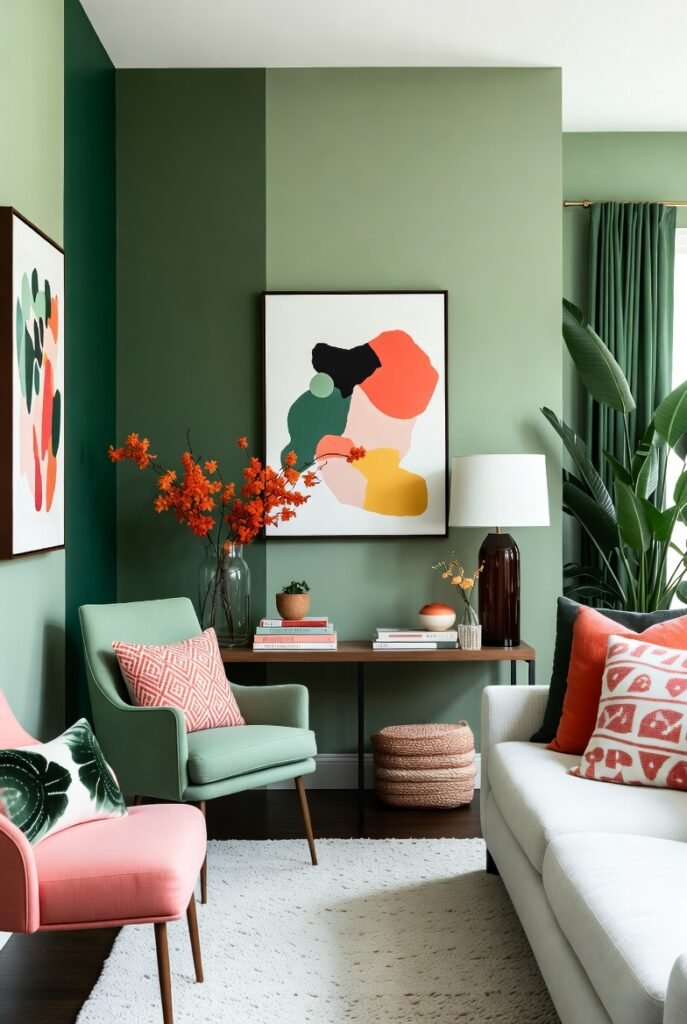
I find green and coral to be a striking combination in interior design. Coral adds a vibrant contrast to the natural calm of green, making spaces feel both lively and balanced.
This pairing works well in accent pieces like cushions or art, especially with lighter green shades such as sage. It can also complement darker greens when used sparingly to brighten a room.
In my experience, green and coral create a fresh, inviting atmosphere without overwhelming the senses.