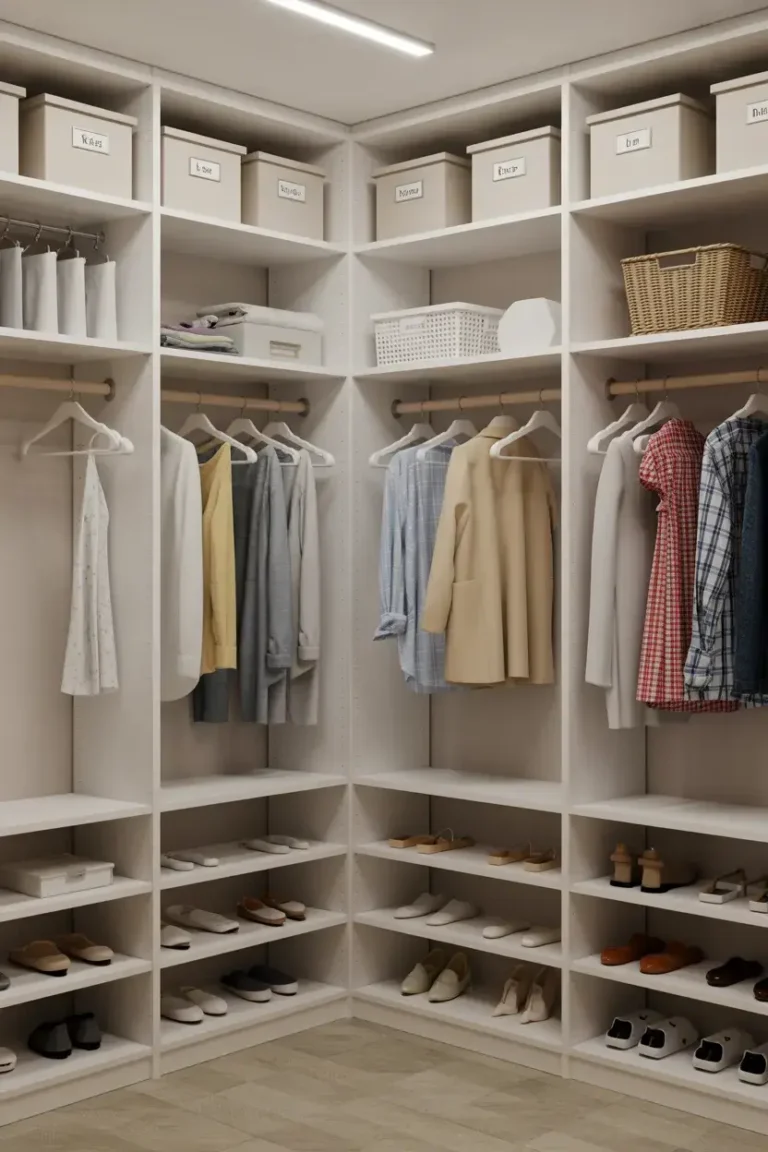
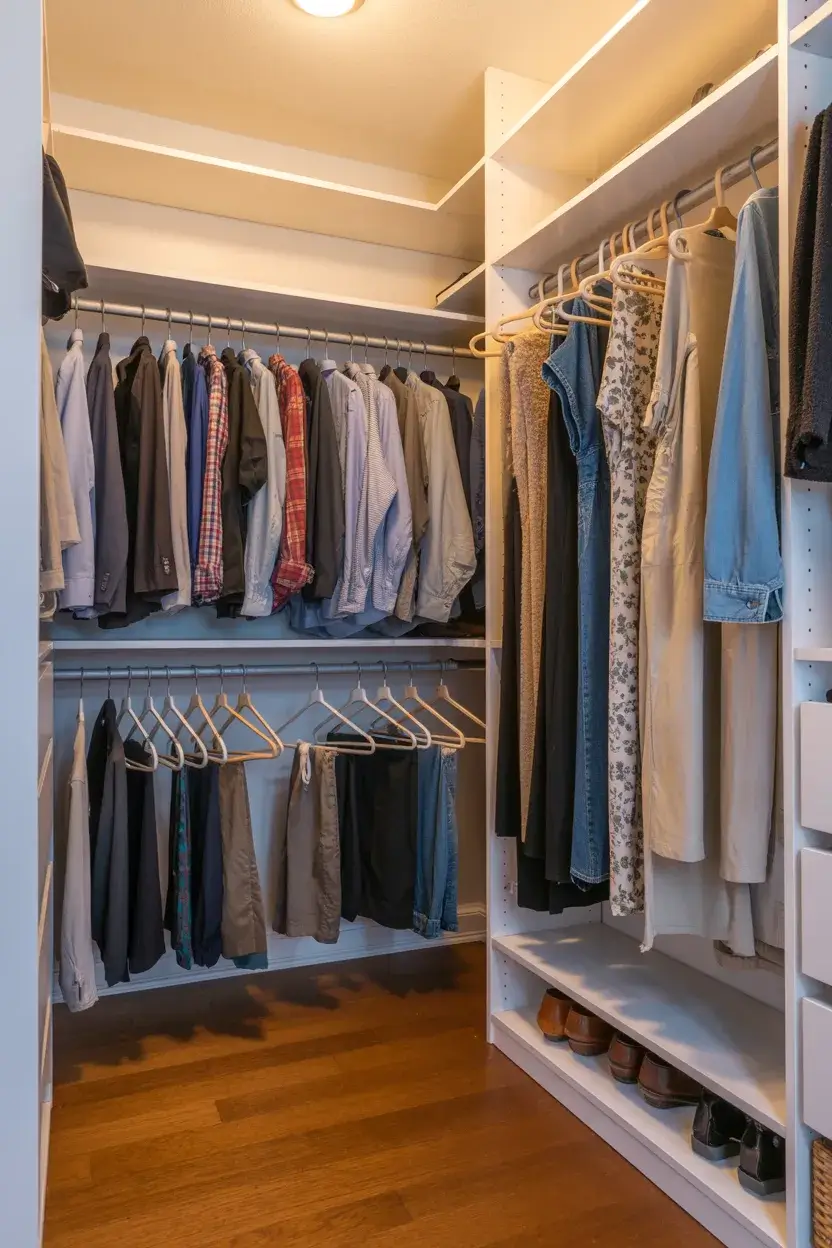
16 Small Hallway Closet Ideas to Maximize Every Inch
I know the struggle of tripping over shoes the moment I walk in the door. Small hallway closets are notoriously difficult to keep tidy, often becoming a dumping ground for coats, bags, and mystery items.
But with a few smart tweaks, I can transform that cramped space into a functional storage powerhouse. Here are 16 ideas I use to make the most of a small entry closet and keep my home organized.
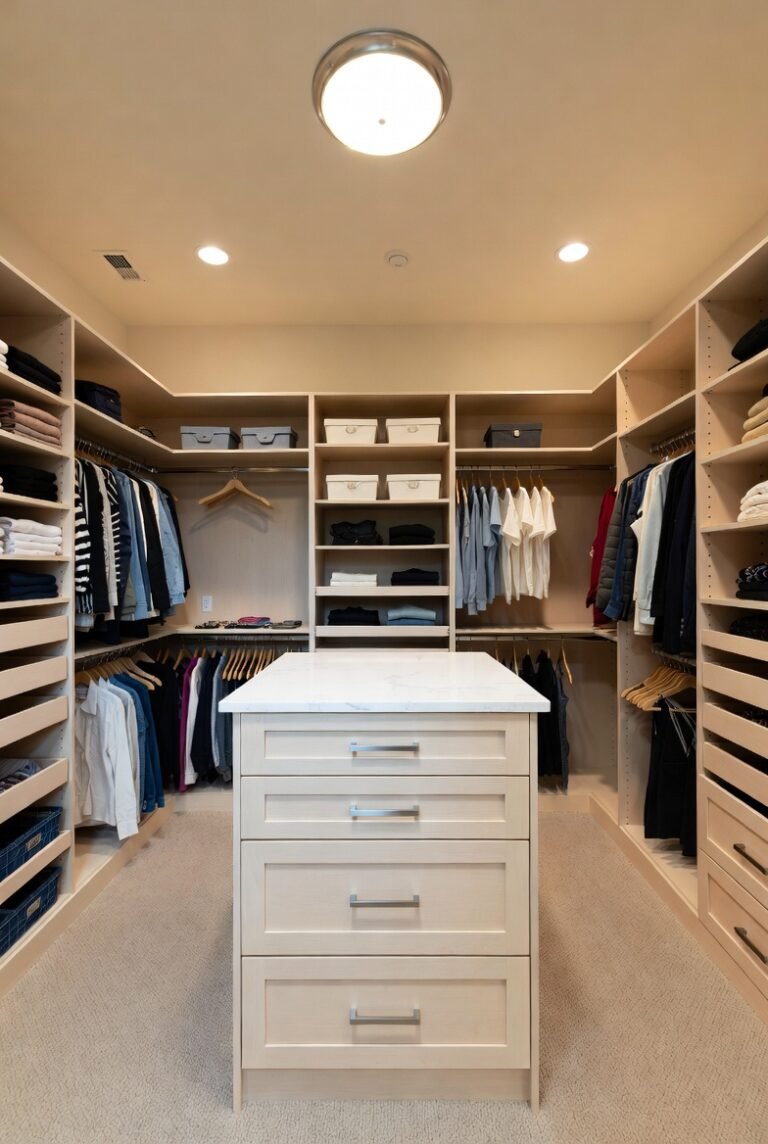
1. Double the Hanging Space
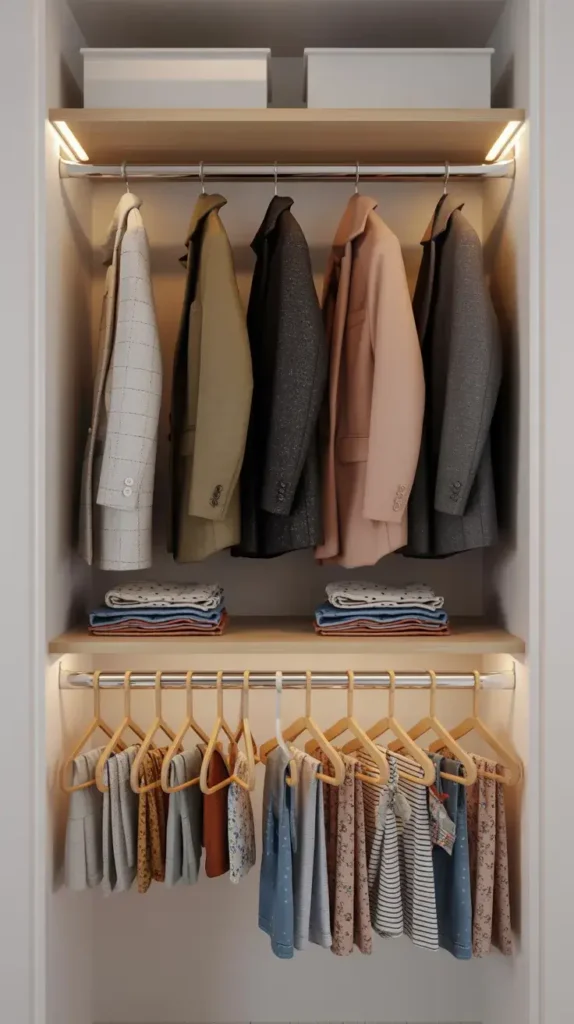
I always suggest installing two rods if you have the vertical height. I place the top rod at 80 inches and the bottom one at 40 inches from the floor.
This layout instantly doubles your storage capacity. It works perfectly for shorter items like jackets, kids’ clothes, or folded pants, making efficient use of the vertical space.
2. Utilize the Back of the Door
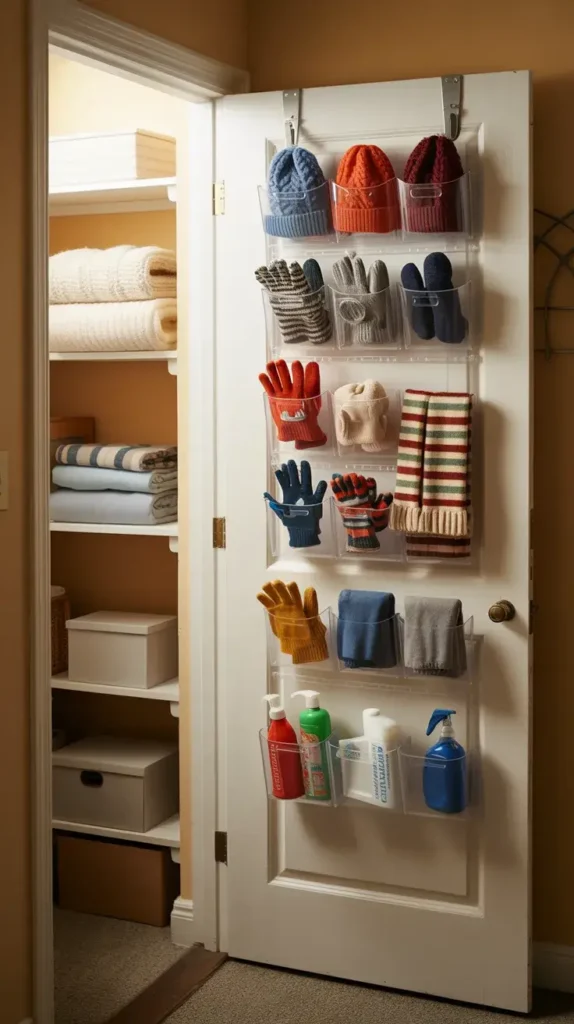
I never let the back of a closet door go to waste. I hang an over-the-door organizer with pockets to store winter hats, gloves, scarves, and even cleaning supplies.
This frees up valuable shelf space inside the closet. It keeps small, easy-to-lose items visible and accessible right when I need to rush out the door.
3. Install Slim Shoe Cabinets
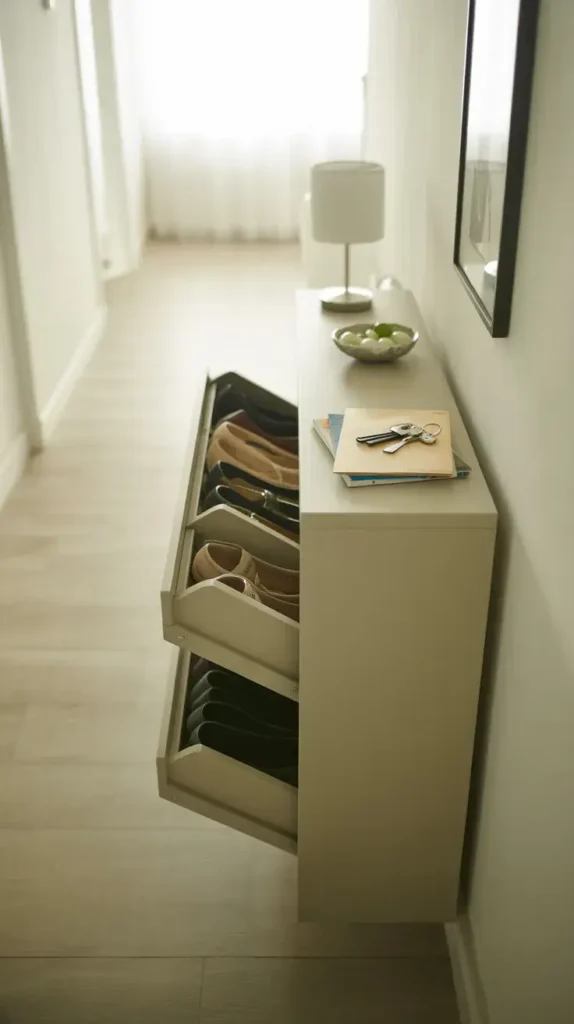
If your hallway is tight, I recommend using a tip-out shoe cabinet. These units are often less than 10 inches deep but can hold up to 20 pairs of shoes.
They hide footwear completely, reducing visual clutter. I love that the top surface doubles as a console table for keys and mail, adding function to a narrow space.
4. Adjust Shelf Heights
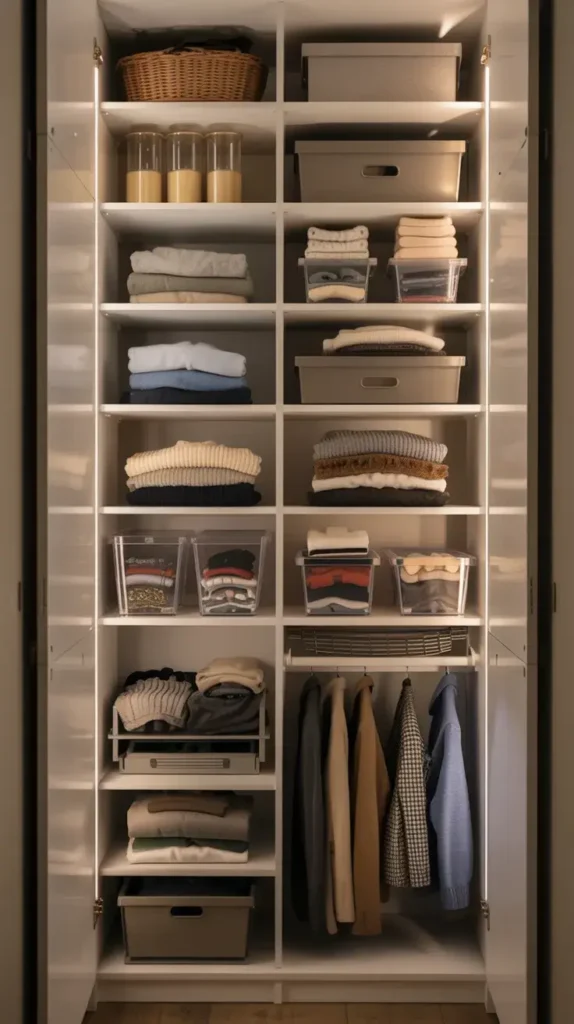
I hate wasted air space between shelves. I space my shelves about 12 to 16 inches apart to ensure I’m maximizing the vertical storage potential.
This spacing prevents precarious stacks of clothes that topple over. It allows me to fit more layers of storage bins or folded sweaters without leaving huge gaps.
5. Use the “Dead” Space Up High
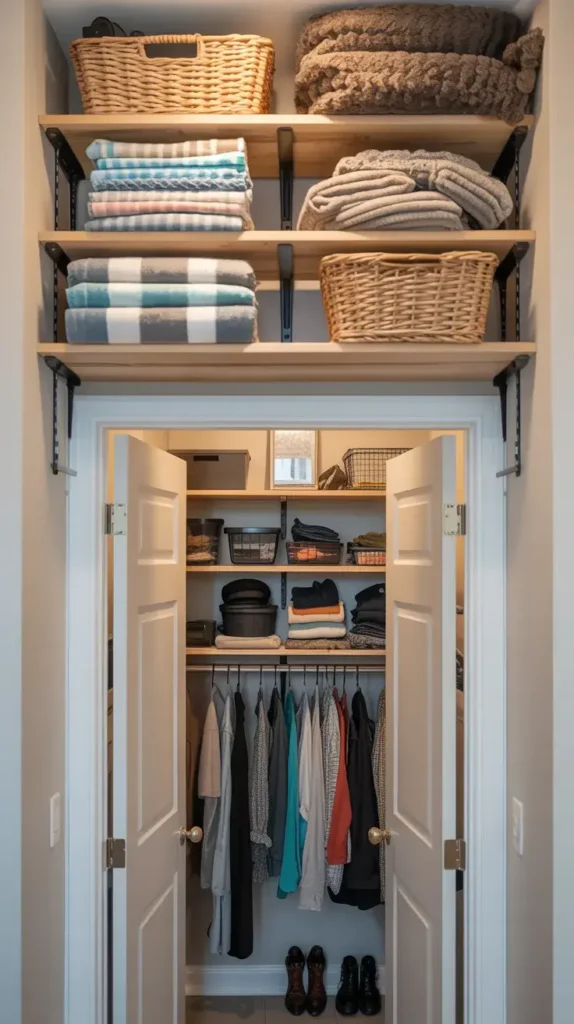
I install a shelf right above the door header, usually around 84 inches high. It is often tough to reach, but it is perfect for items I rarely use.
I store seasonal gear here, like beach towels in winter or heavy scarves in summer. It keeps these items out of the way but still within the footprint of the closet.
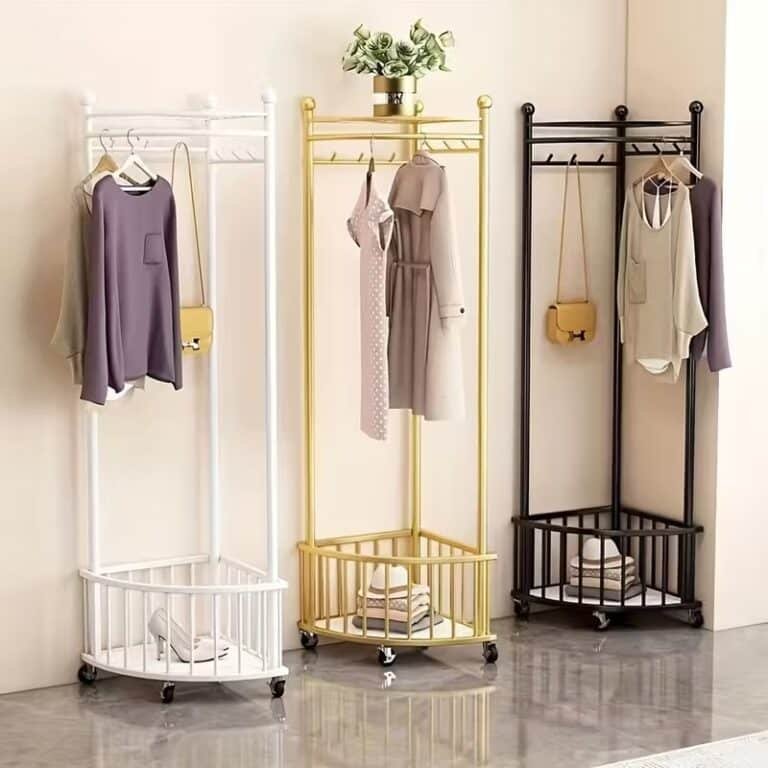
6. Swap to Slim Hangers
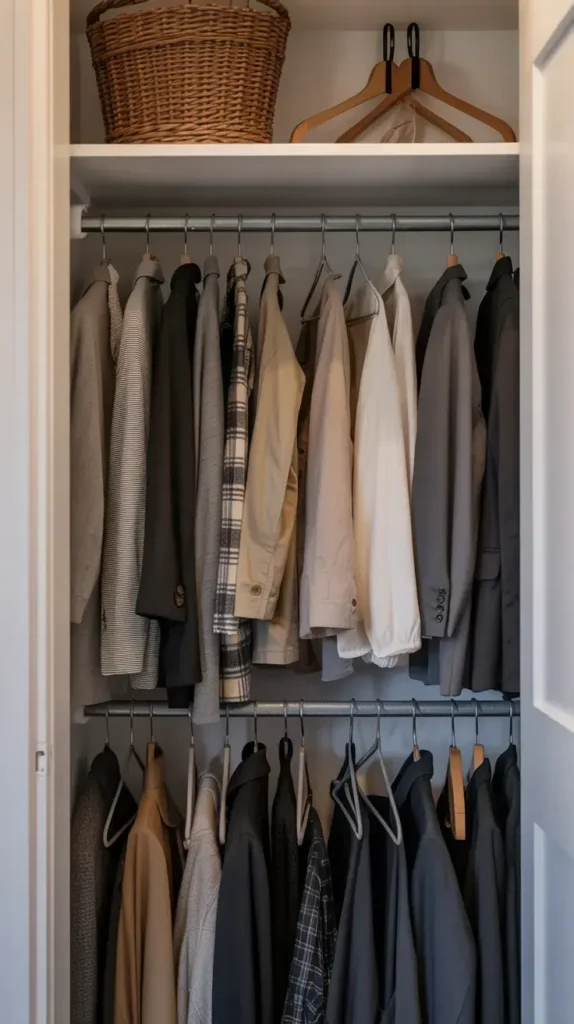
I switched to velvet slimline hangers years ago and never looked back. They save a massive amount of horizontal space on the rod compared to bulky wooden or plastic hangers.
This simple swap allows me to fit more coats without overcrowding the closet. Plus, the velvet texture stops slippery raincoats or silk scarves from sliding off onto the floor.
7. Add Hooks to Side Walls
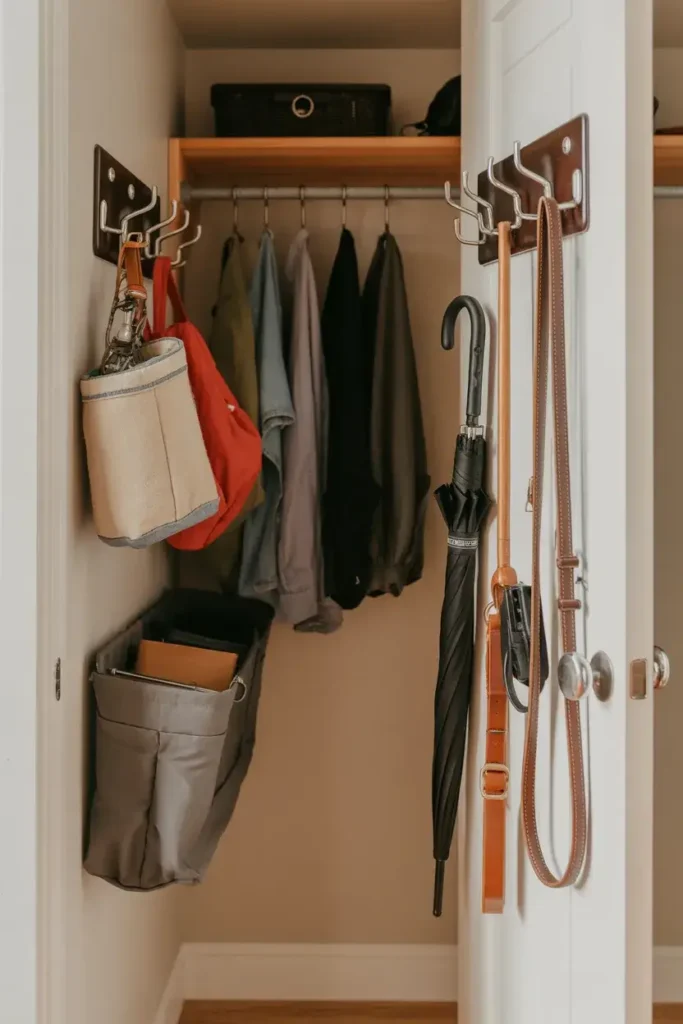
I utilize the side walls of the closet—the “return” space often hidden by the door frame. I stick heavy-duty hooks there for bags, umbrellas, or dog leashes.
This captures space that usually sits empty. It keeps these awkwardly shaped items off the floor and prevents them from getting tangled in the hangers.
8. Illuminate Dark Corners
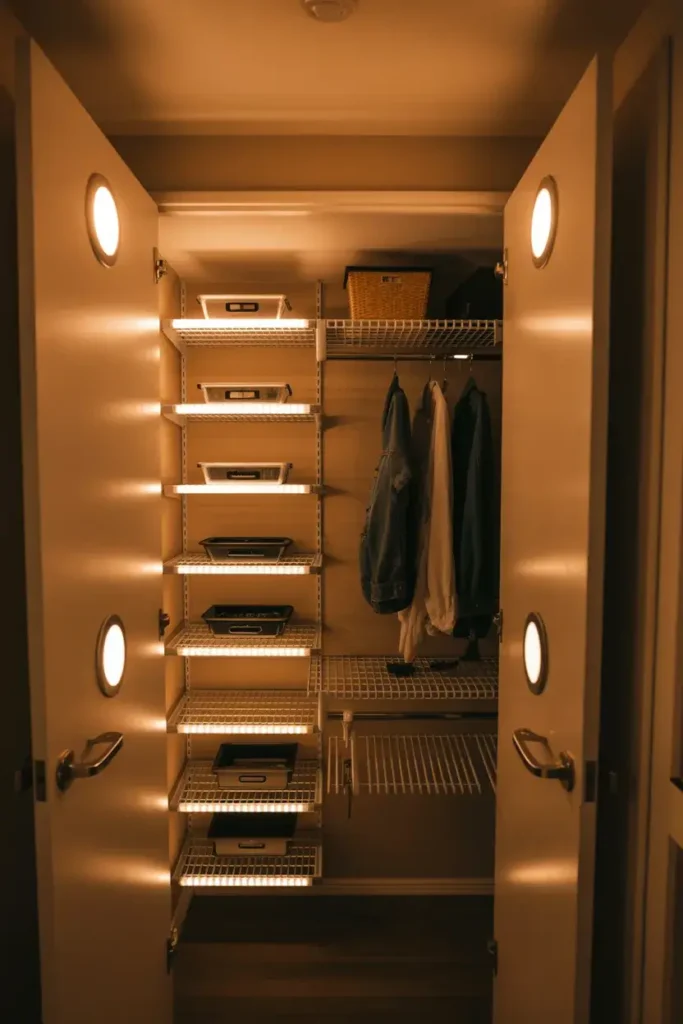
I find that dark closets quickly become messy closets. I stick battery-operated motion sensor lights inside or on the underside of shelves.
Seeing exactly what I have stops me from digging around and making a mess. It makes the small space feel larger and more welcoming every time I open the door.
9. Rotate Seasonal Items
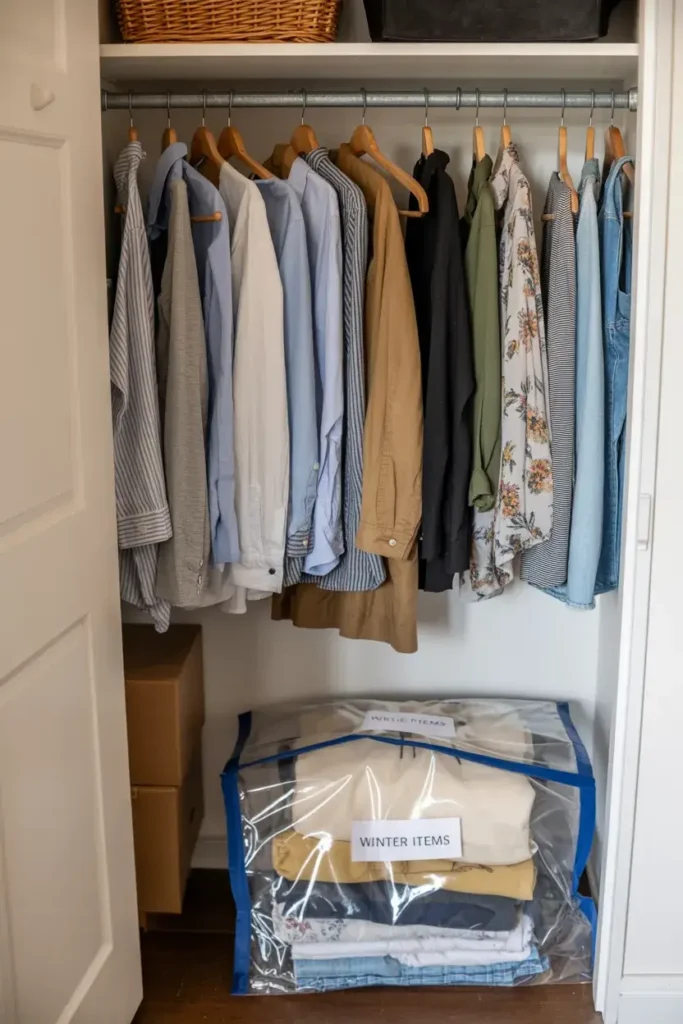
I don’t keep winter parkas in the hall closet during July. I move off-season gear to vacuum-seal bags under my bed or into attic storage.
This keeps the small hallway closet breathing freely. It ensures that the items I see are the ones I actually need for the current weather.
10. Use Clear Shelf Dividers
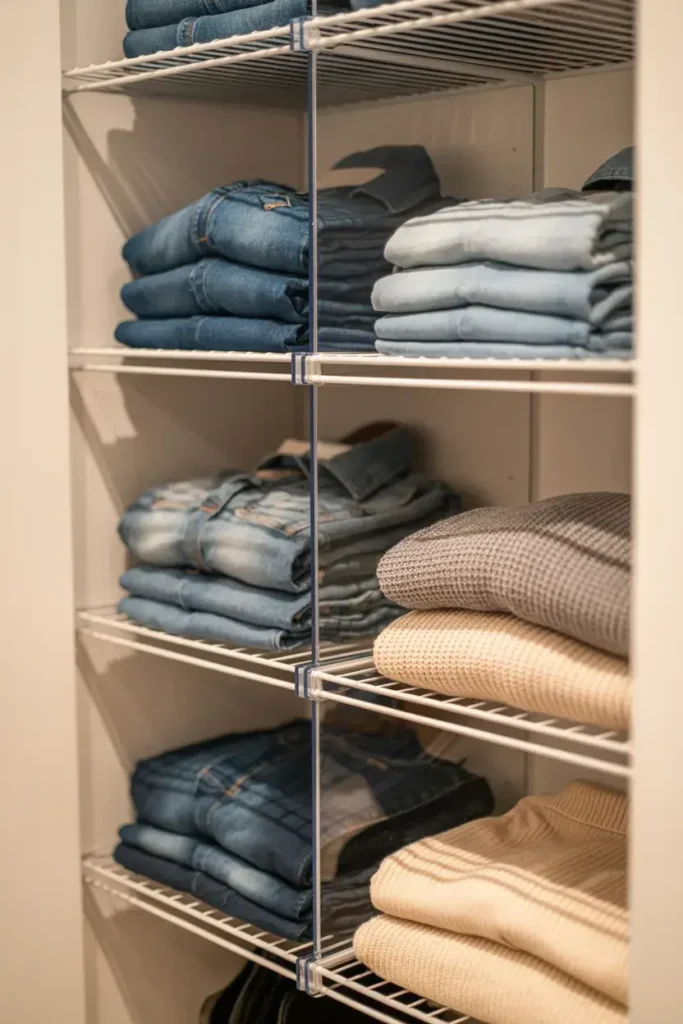
I love acrylic dividers for keeping stacks of folded jeans or sweaters neat. They prevent piles from toppling over into each other, maintaining a boutique-style look.
They slide right onto existing wood or wire shelving. This small addition forces me to keep items in their designated lanes, maintaining order long-term.
11. Create a Dedicated Shoe Zone
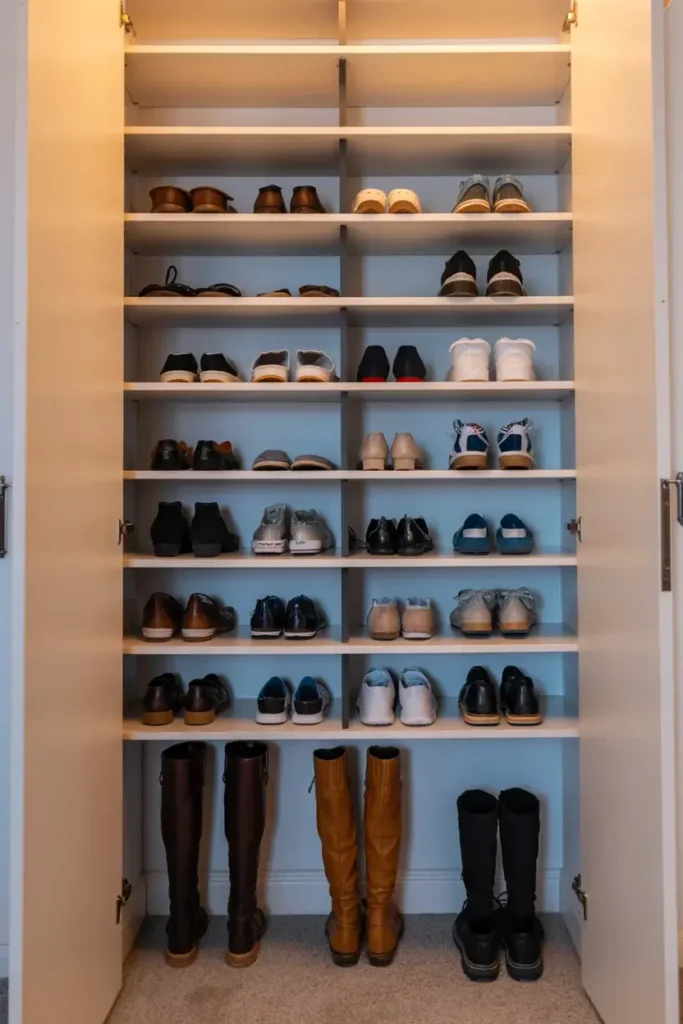
I place the lowest shelf about 12 to 18 inches off the floor. This specific height leaves just enough room underneath for tall boots while giving me a surface for sneakers.
Most shoes only need about 7 inches of vertical space. By measuring this accurately, I avoid wasting precious room at the bottom of the closet.
12. Remove the Door
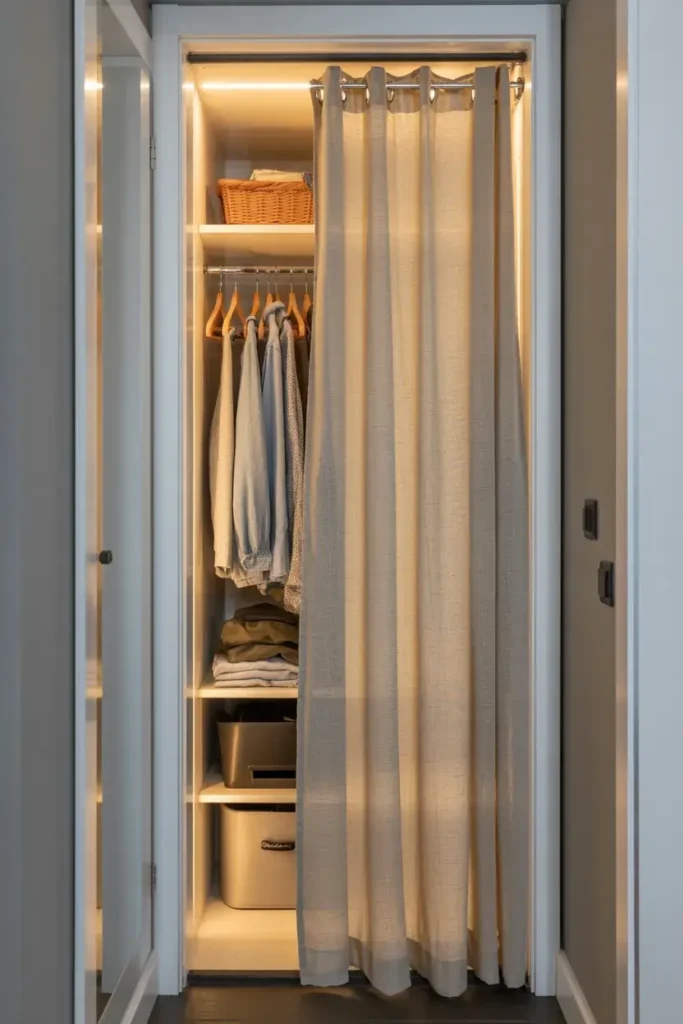
If the door swings into a tight hallway and blocks traffic, I take it off entirely. I replace it with a stylish curtain or leave it open if the interior is organized.
This removes the physical barrier that makes a small hallway feel cramped. It also forces me to keep the closet tidy since it is always on display!
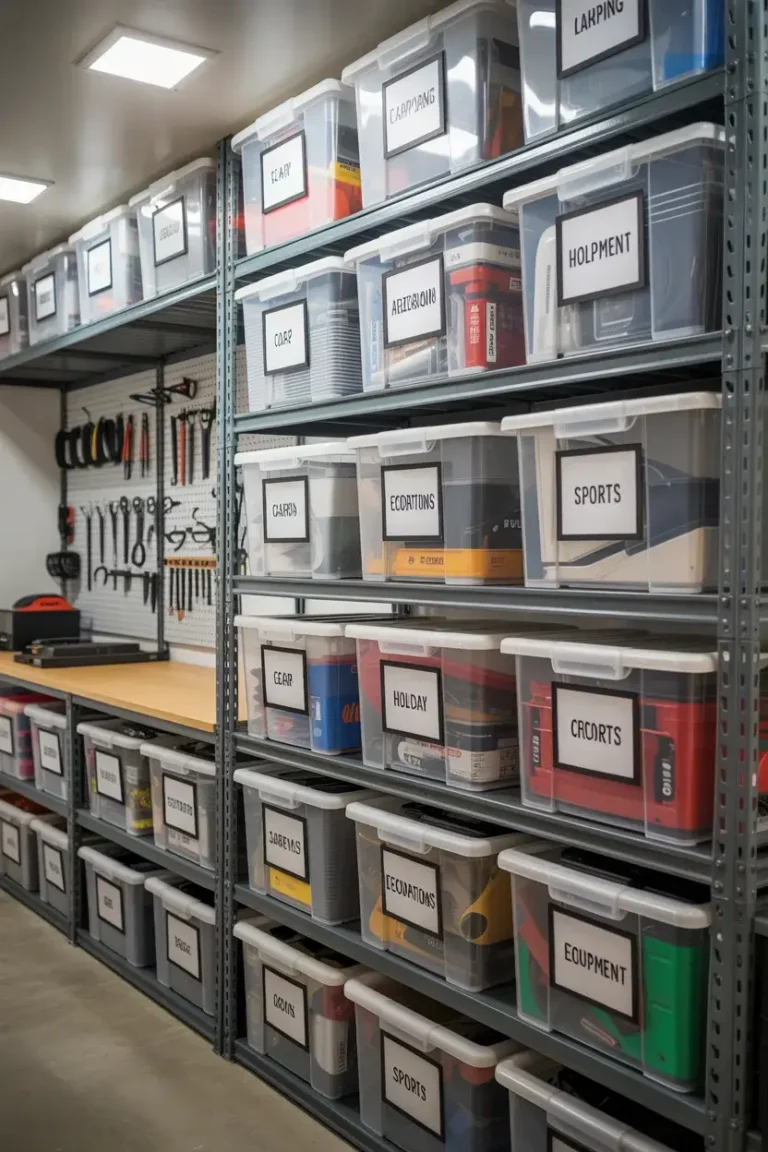
13. Utilize the Floor with Bins
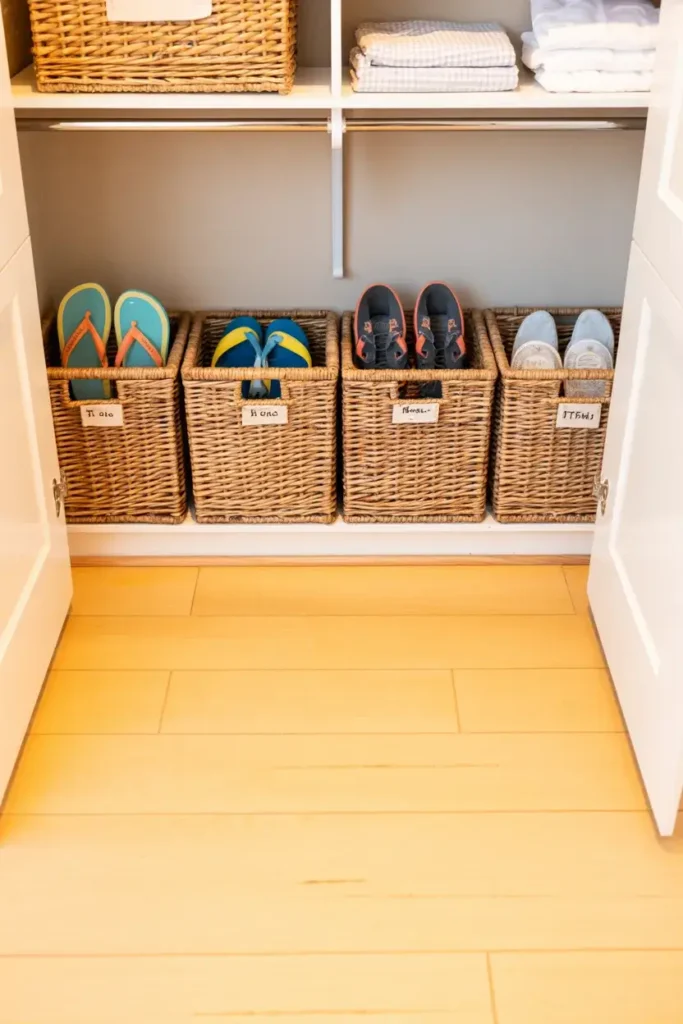
I place matching baskets on the floor for loose items like flip-flops or sports gear. It hides the visual clutter and keeps the floor clear for walking.
I assign one bin to each family member. This stops the “shoe mountain” from forming and gives everyone a specific place to toss their things.
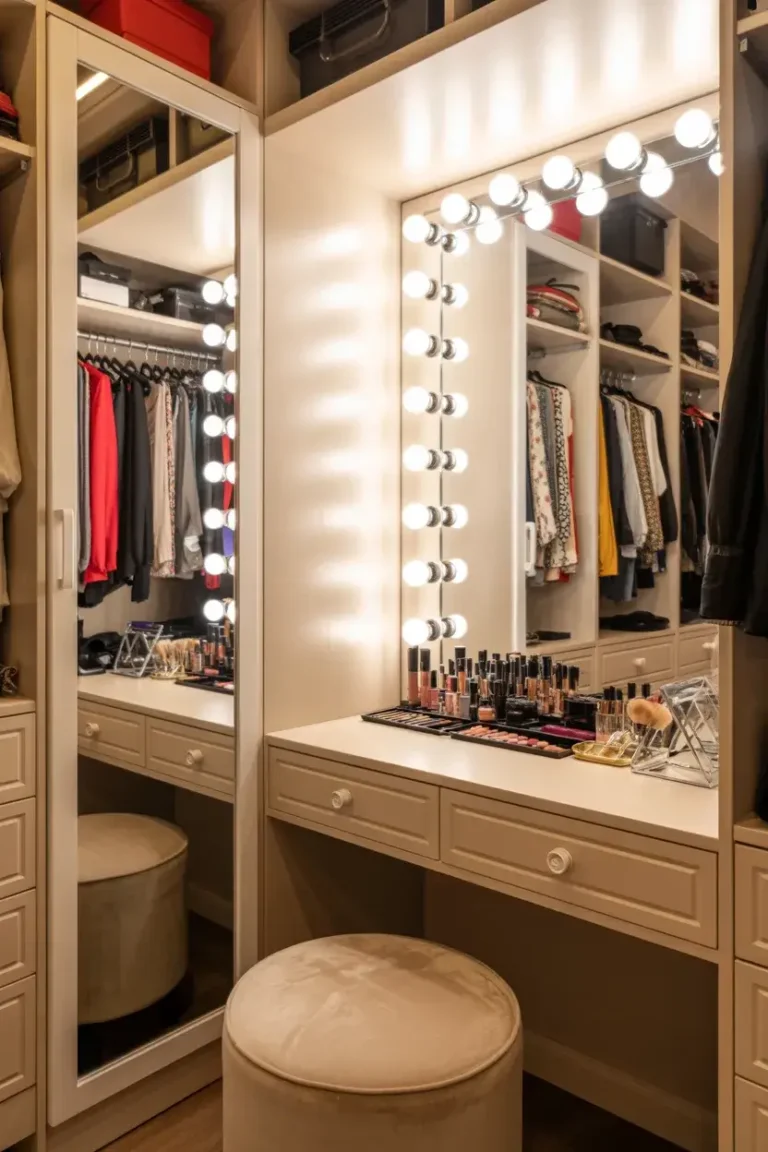
14. Mount a Mirror Inside
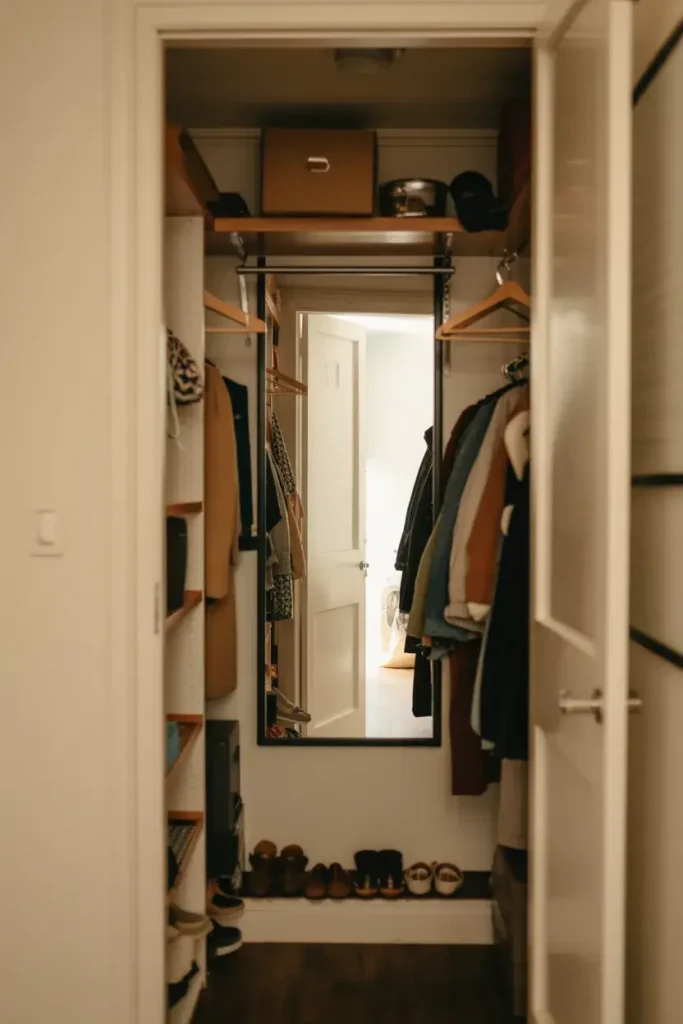
I attach a mirror to the back wall or the inside of the door. It reflects light to make the tiny space feel bigger and less claustrophobic.
It also serves a practical purpose. I can do a quick outfit or hair check immediately before leaving the house without needing a separate mirror in the hallway.
15. Create a “Drop Zone”
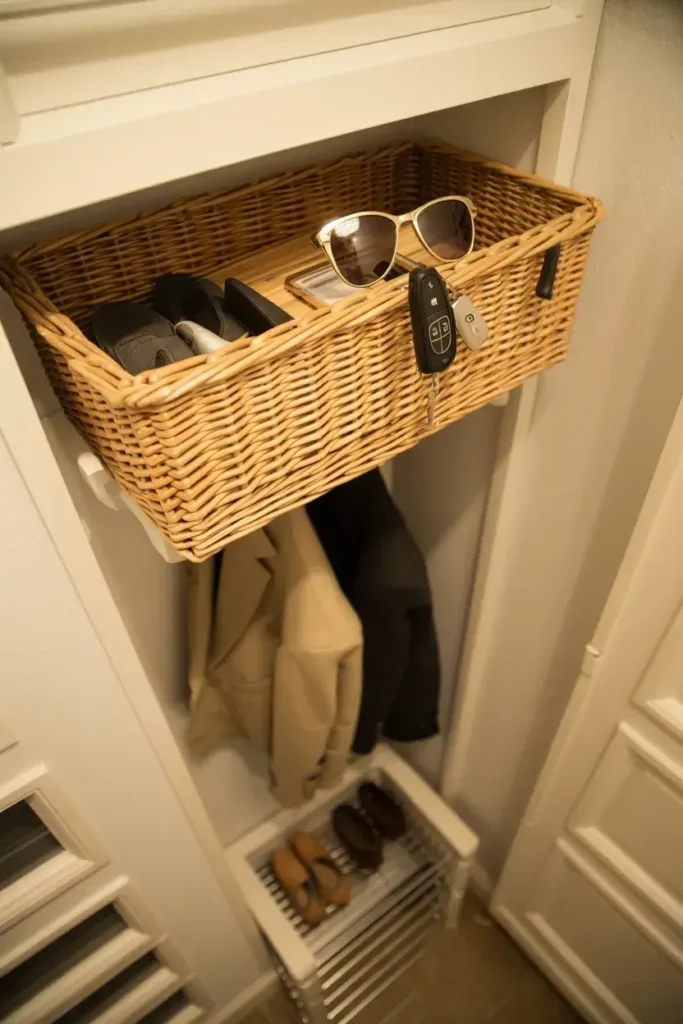
I mount a small basket or tray on the wall specifically for keys and sunglasses. It prevents these small essentials from getting lost in deep coat pockets.
Having a designated spot saves me panic in the morning. I know exactly where my keys are, and they aren’t cluttering up other surfaces in the house.
16. Keep a Donation Bin Handy
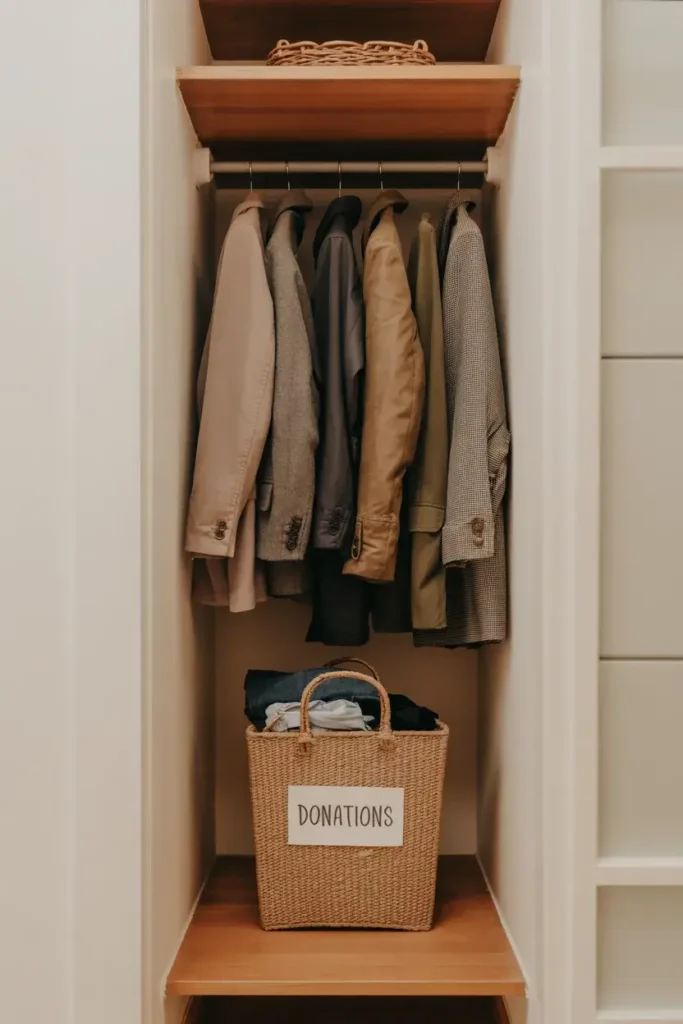
I keep a small tote bag in the bottom of the closet dedicated to donations. When I try on a jacket that no longer fits, I put it straight into the bag.
When the bag fills up, I take it to the charity shop immediately. This habit stops clutter from accumulating and ensures I only keep what I actually wear.
Final Words
If you’re ready to reclaim your entryway, start by measuring your closet today and picking just one of these ideas to implement this weekend!