
16 Colors That Go With Sage Green to Transform Your Home
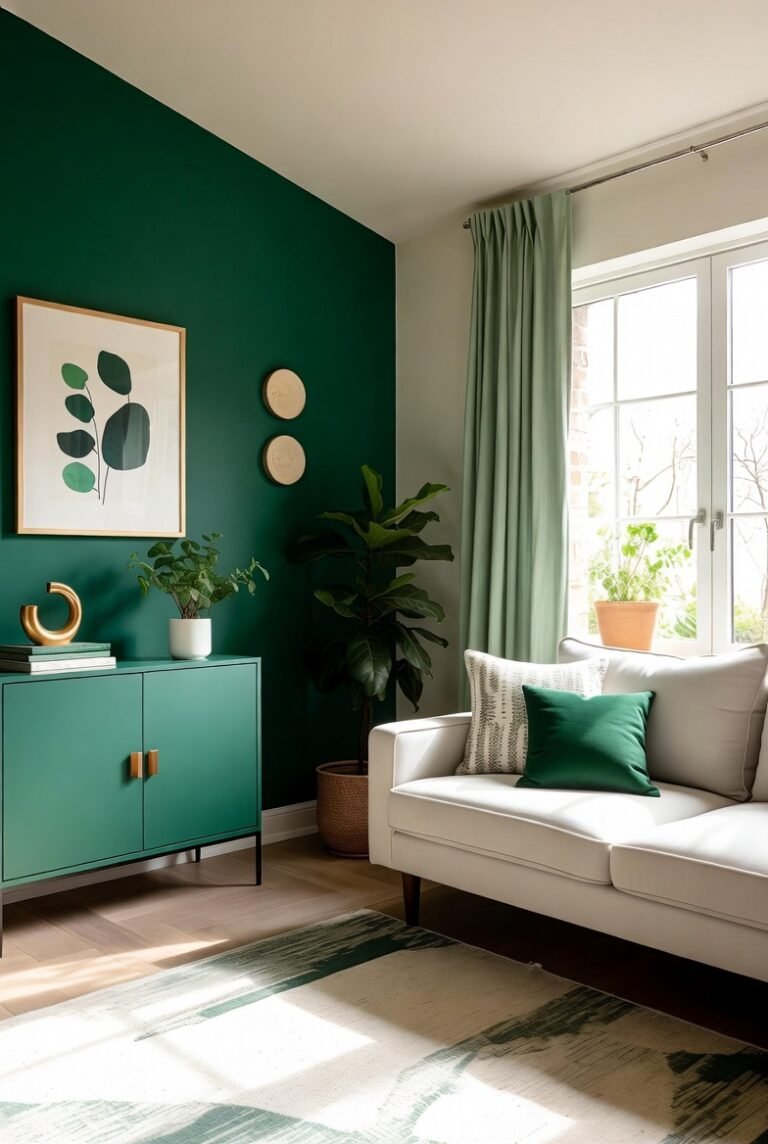
I believe sage green is the ultimate neutral for modern homes. It brings the calming essence of nature indoors without demanding too much attention. While popular paint colors like Benjamin Moore’s Saybrook Sage or Sherwin-Williams’ Contented are trending right now, knowing exactly what to pair them with can feel tricky.
I have found that sage is surprisingly versatile. It acts as a chameleon, shifting between cool and warm depending on its surroundings.
Whether you want a moody, cozy den or a bright, airy kitchen, the right accent color makes all the difference.
Here are the 16 best colors to pair with sage green to elevate your home decor.
1. Crisp White
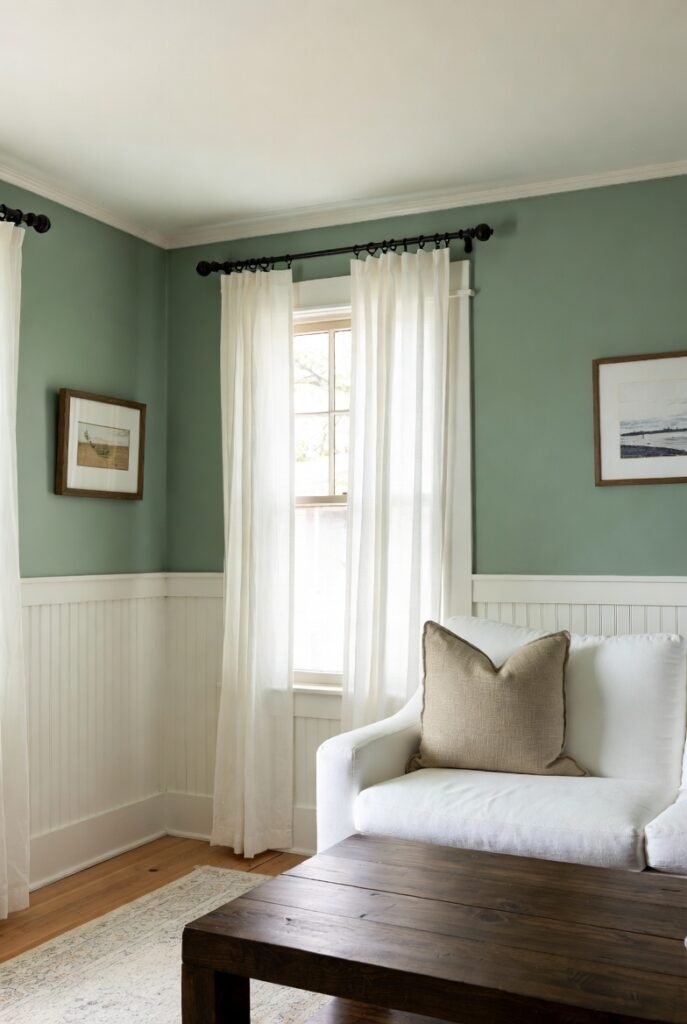
I always start with the classics, and you can’t beat the fresh combination of sage green and crisp white. This duo creates a clean, spa-like atmosphere that works perfectly in bathrooms or kitchens.
Paint your walls sage and keep the trim bright white for a look that feels timeless. I love using white beadboard or wainscoting against sage walls to add architectural interest and a touch of cottage charm.
2. Cream
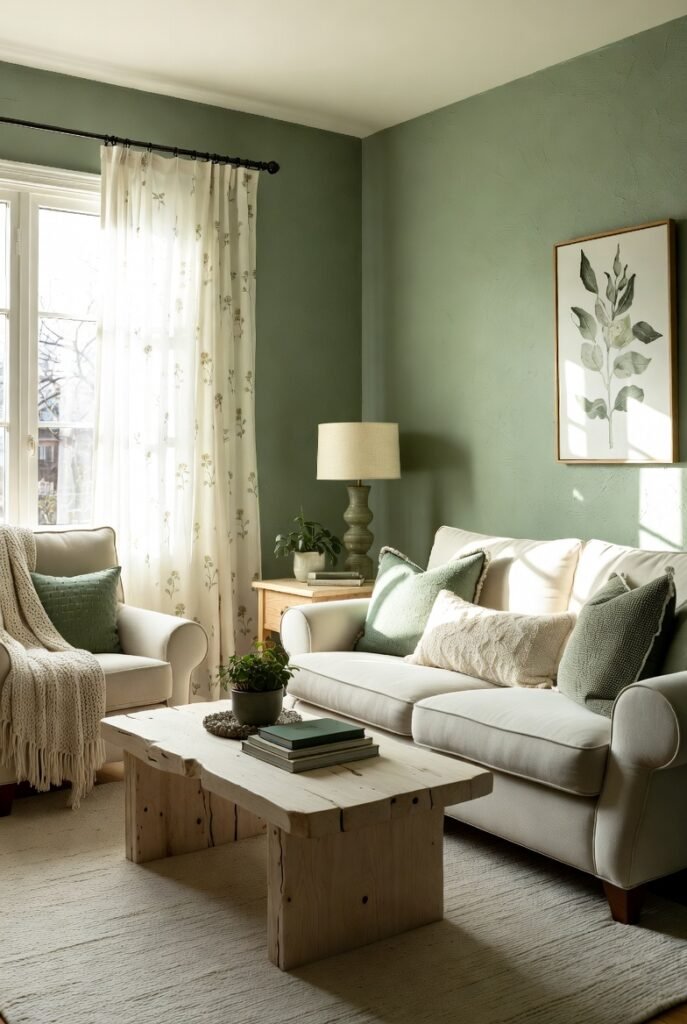
If bright white feels too stark for your space, I recommend swapping it for cream. This softer off-white shade adds warmth to the cool undertones of sage, making a room feel inviting and lived-in.
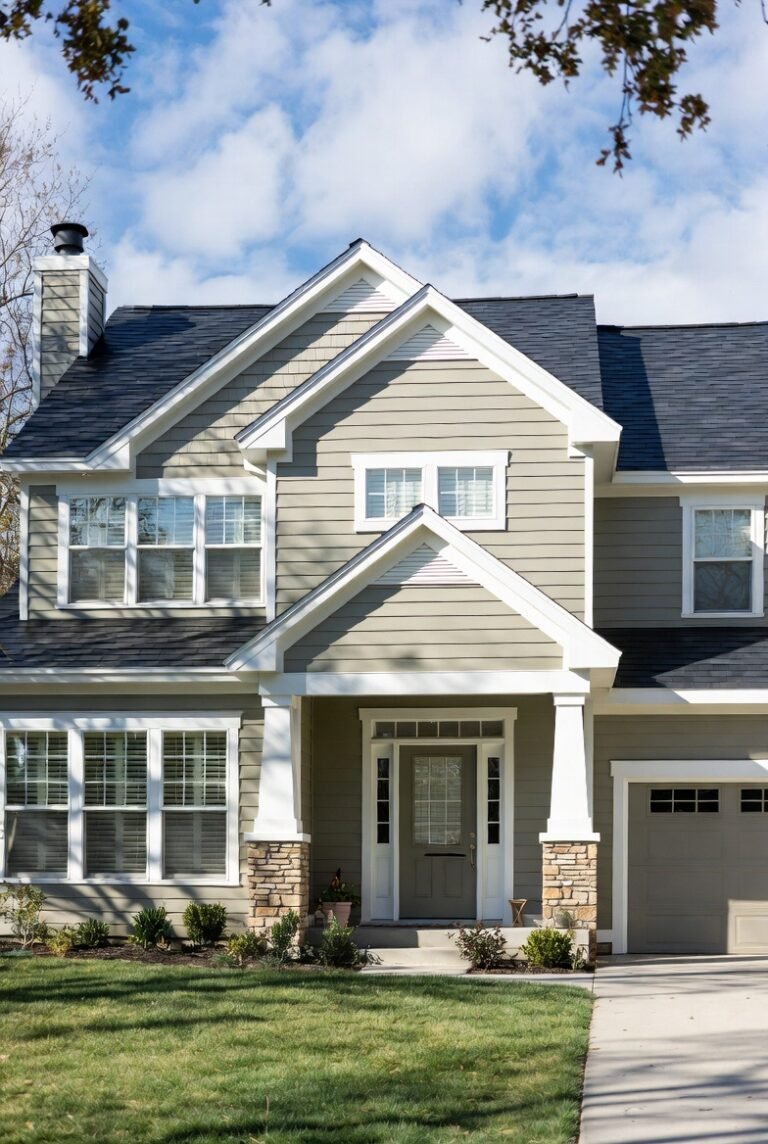
I find this pairing works exceptionally well in living rooms or on home exteriors. The yellow undertones in cream highlight the warmth in the green, creating a harmonious and cozy vibe that feels very organic.
3. Terracotta
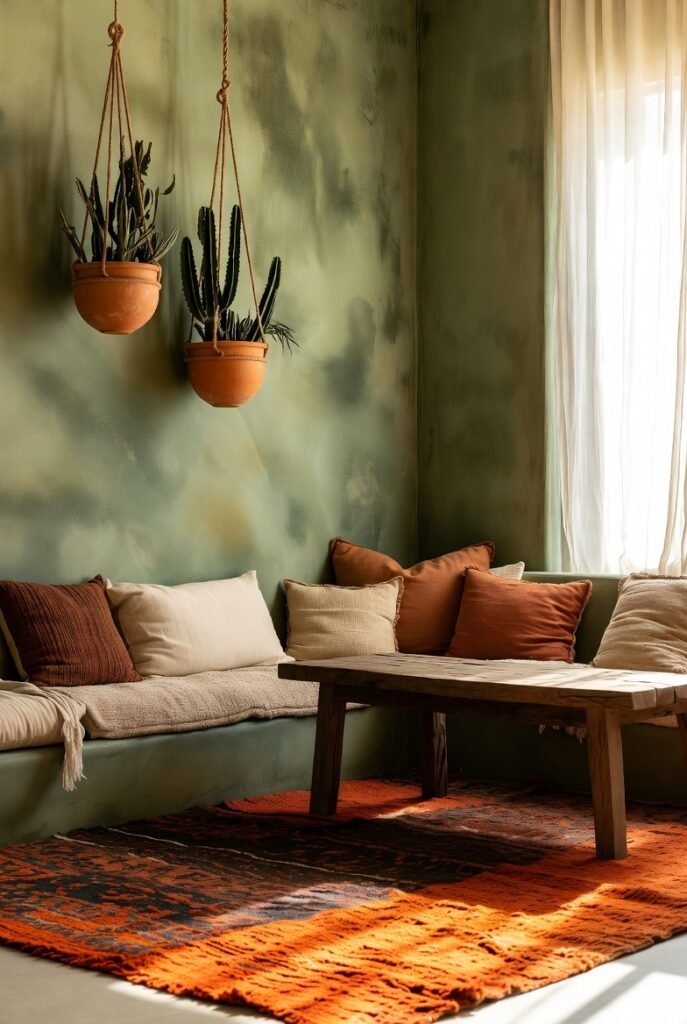
I adore the earthy combination of sage green and terracotta. Since sage sits opposite red-orange on the color wheel, these two hues naturally balance each other out while keeping the palette grounded in nature.
Try adding terracotta planters or a rug with burnt orange tones to a sage-walled room. This pairing immediately gives a space a bohemian, desert-inspired feel that is both trendy and relaxing.
4. Navy Blue
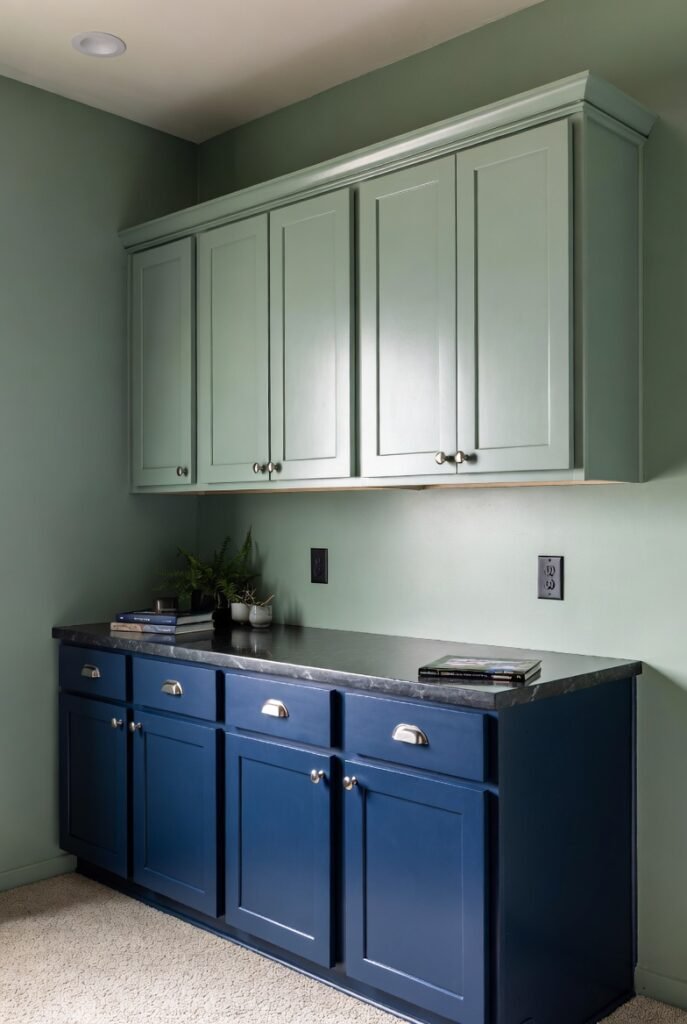
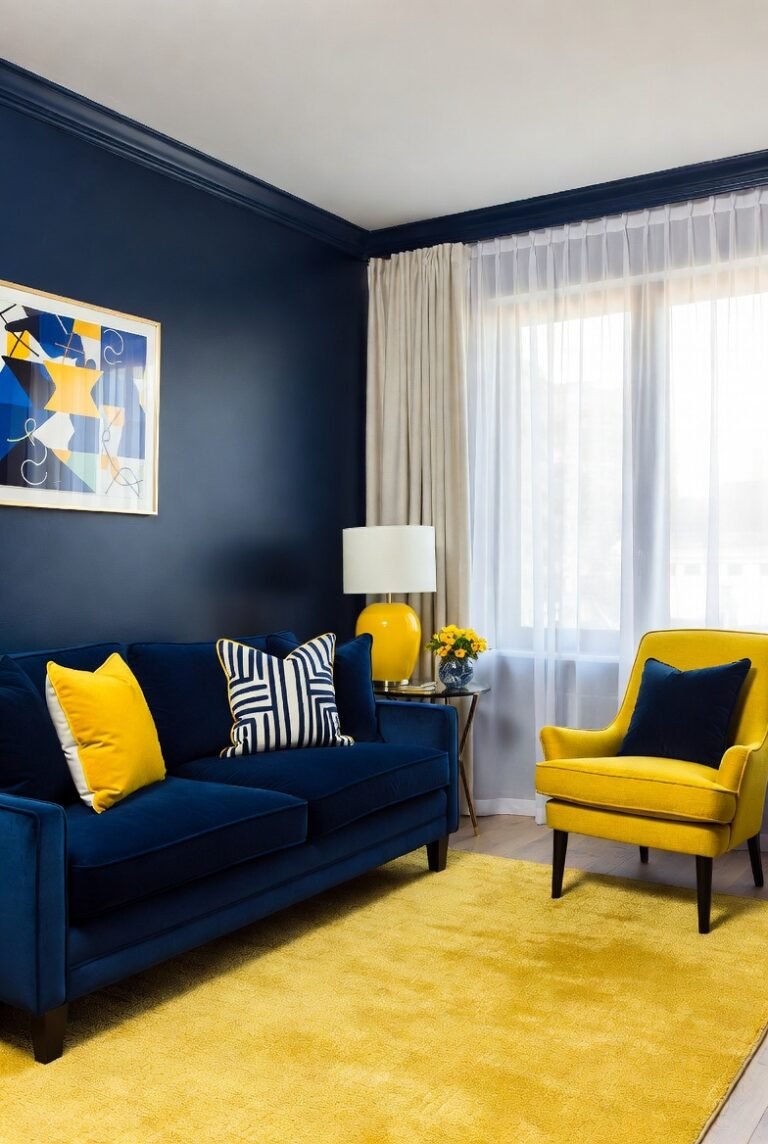
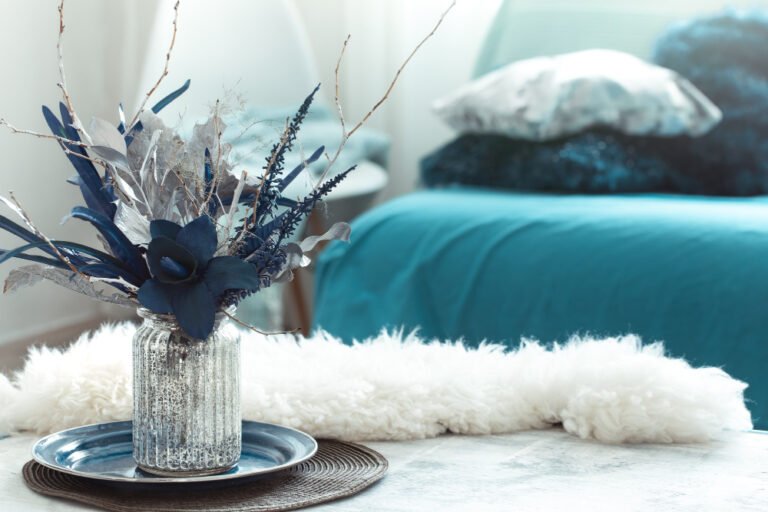
For a sophisticated and moody look, I turn to navy blue. The depth of navy provides a striking contrast against the lighter, airier sage, which prevents the room from feeling too dark.
I think this combination looks stunning in a home office or a kitchen with two-toned cabinets. Use navy for the lower cabinets and sage for the walls or uppers to ground the space with elegance.
5. Blush Pink
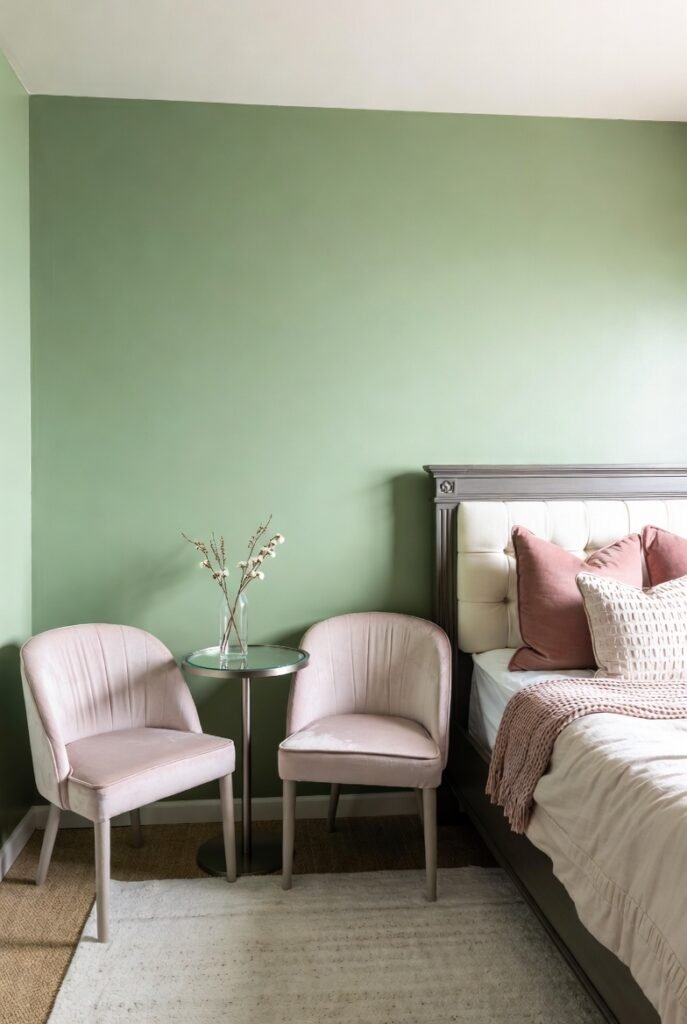
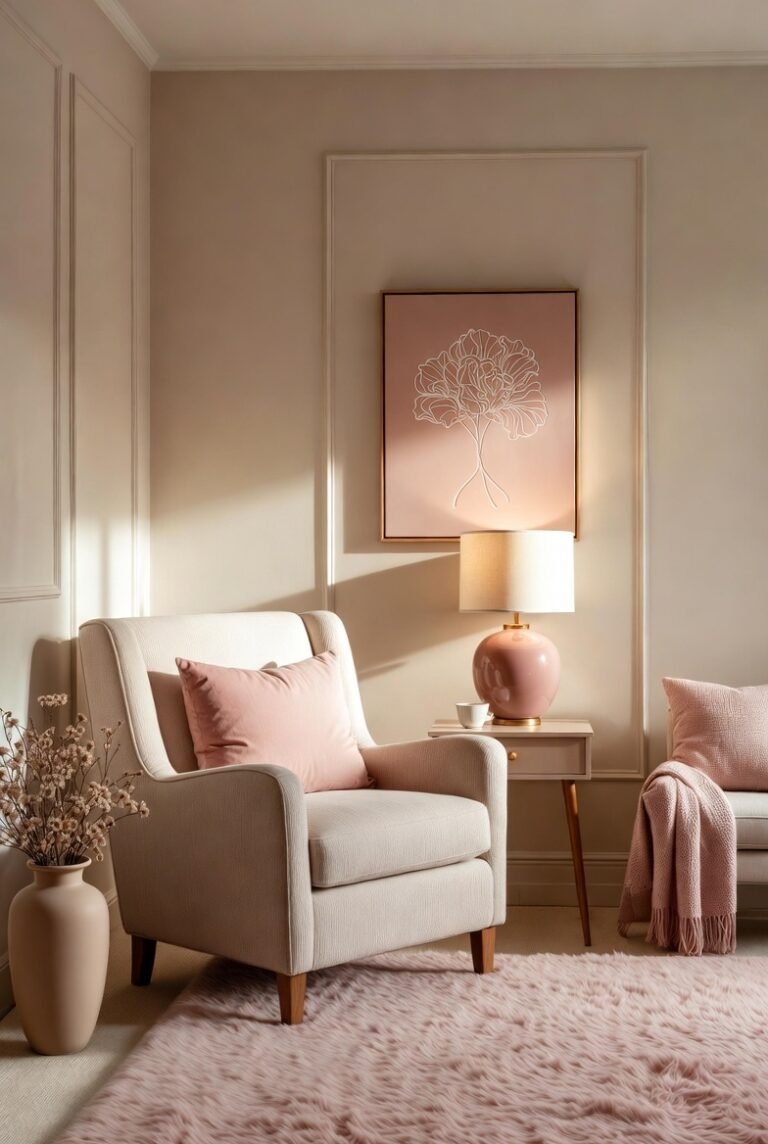
I find that pink and green are a match made in heaven. While it might sound like a nursery palette, using a muted sage with a soft blush pink creates a chic, playful energy suitable for dining rooms or adult bedrooms.
Add pink throw pillows or velvet chairs to a room with sage walls. The warmth of the pink counteracts the coolness of the green, making the space feel cheerful and vibrant without being overwhelming.
6. Natural Wood Tones
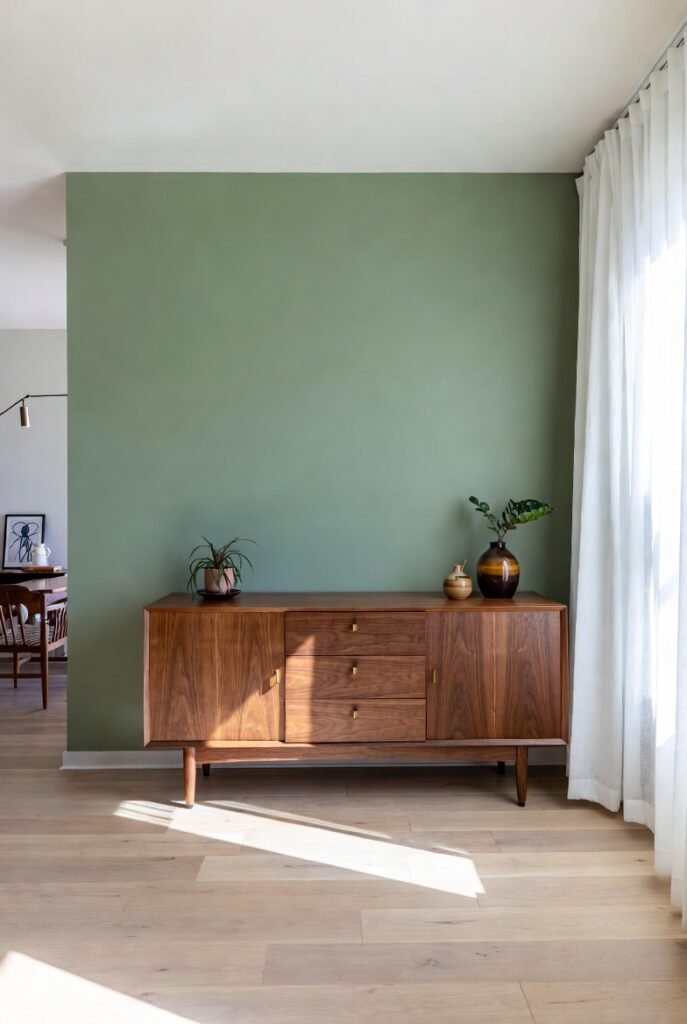
While technically a texture, I treat wood tones as a crucial color in any sage palette. Sage is a color found in nature, so it makes perfect sense to pair it with oak, walnut, or pine furniture.
I love placing a mid-century modern walnut credenza against a sage accent wall. The rich browns of the wood warm up the green, reinforcing that biophilic design principle of bringing the outdoors in.
7. Gold and Brass
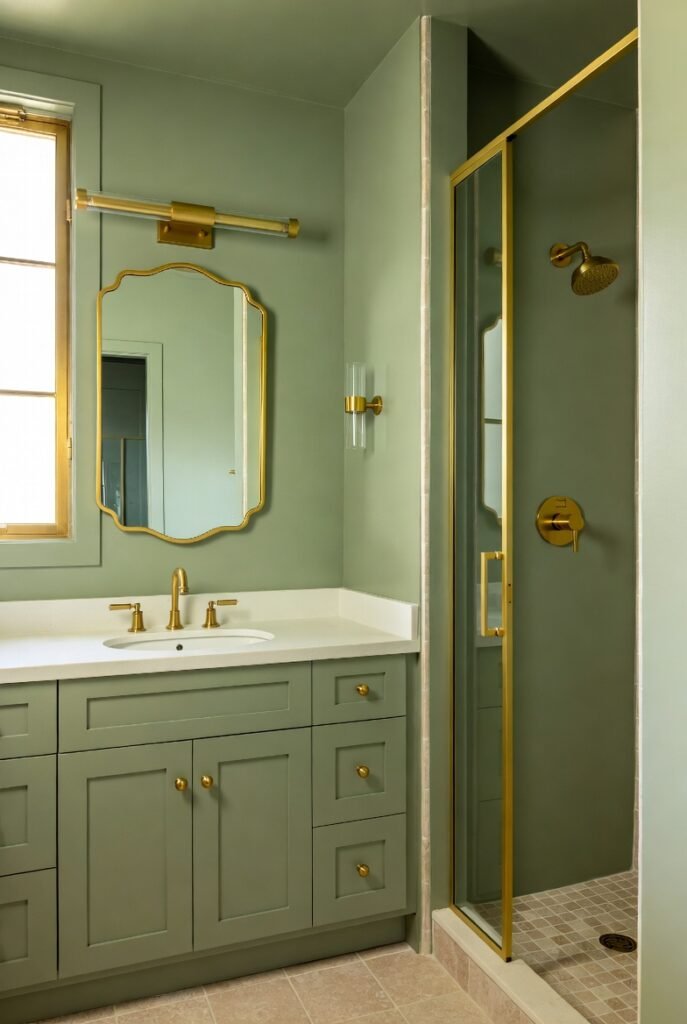
I believe hardware is the jewelry of a room, and nothing shines brighter against sage green than gold or brass. The yellow tones in these metals pop beautifully against the muted green background.
Swap out your cabinet pulls, light fixtures, or faucets for unlacquered brass. I find this simple update instantly makes a sage green kitchen or bathroom look expensive and high-end.
8. Charcoal Gray
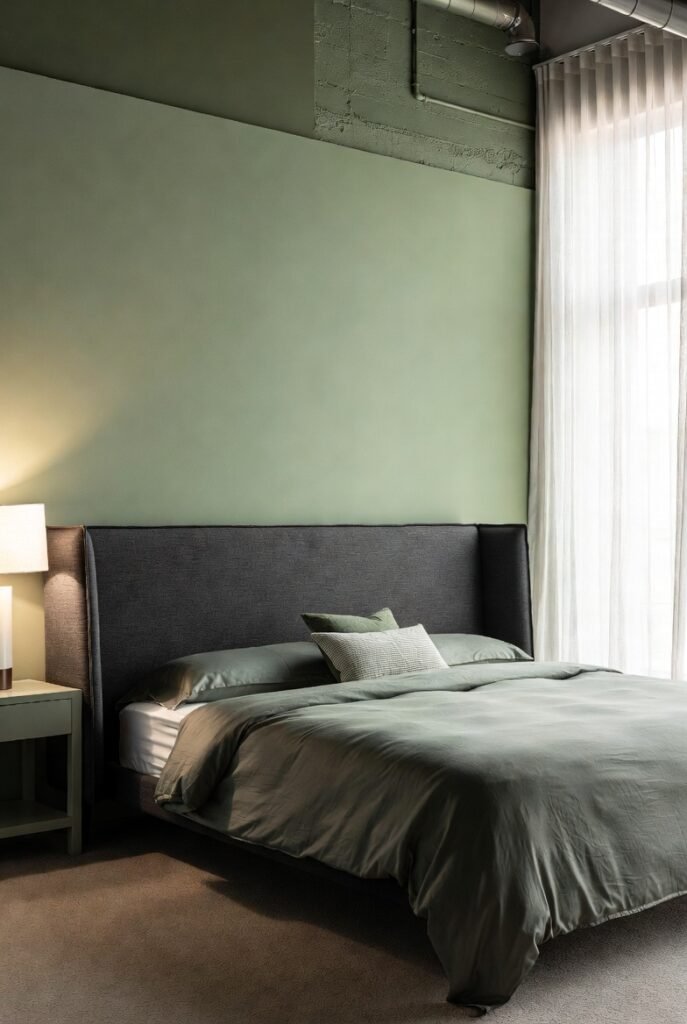
If you prefer a modern industrial aesthetic, I suggest pairing sage with charcoal gray. The dark gray adds a sleek edge to the softness of the sage, creating a balanced and contemporary look.
I like using charcoal for upholstery, such as a sofa or headboard, in a sage room. It grounds the airy green color and adds a layer of masculine sophistication that works well in dens or bedrooms.
9. Copper
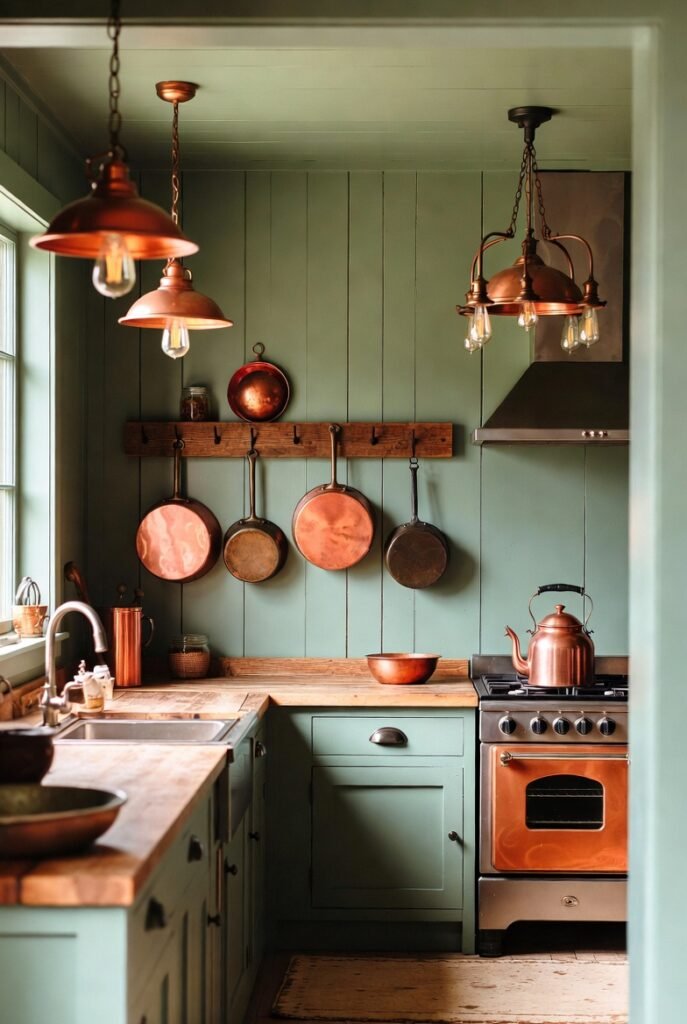
For a rustic, farmhouse feel, I lean towards copper accents. Like terracotta, the reddish-orange hues of copper provide a warm contrast that really sings when placed next to sage green.
I recommend hanging vintage copper pots in a sage kitchen or using copper light fixtures. The gleam of the metal adds warmth and old-world charm that makes the green feel established and timeless.
10. Mustard Yellow
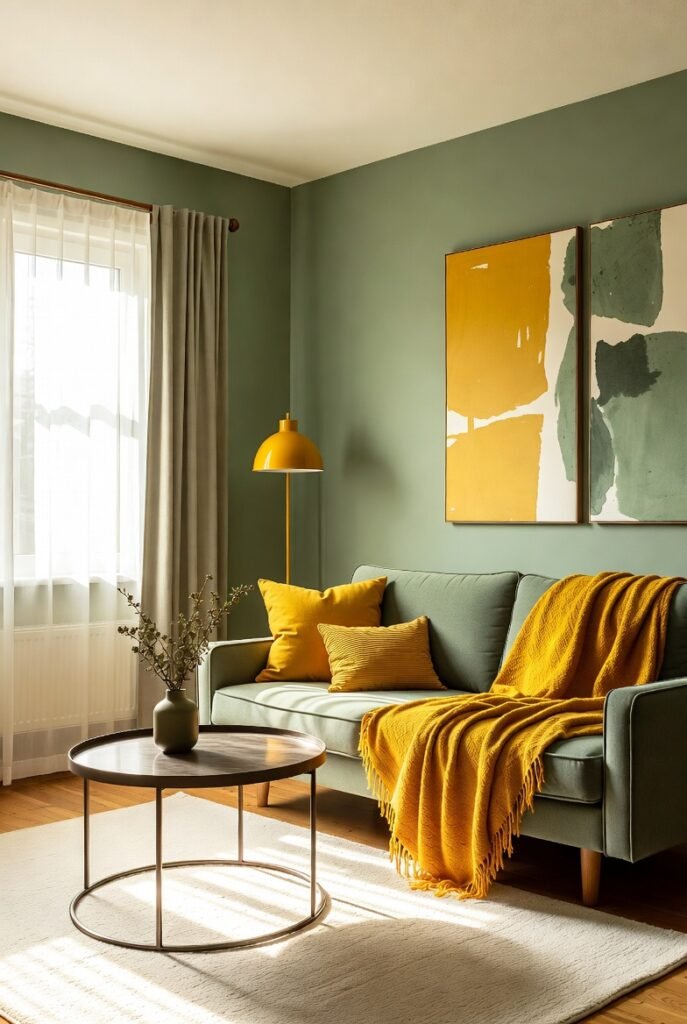
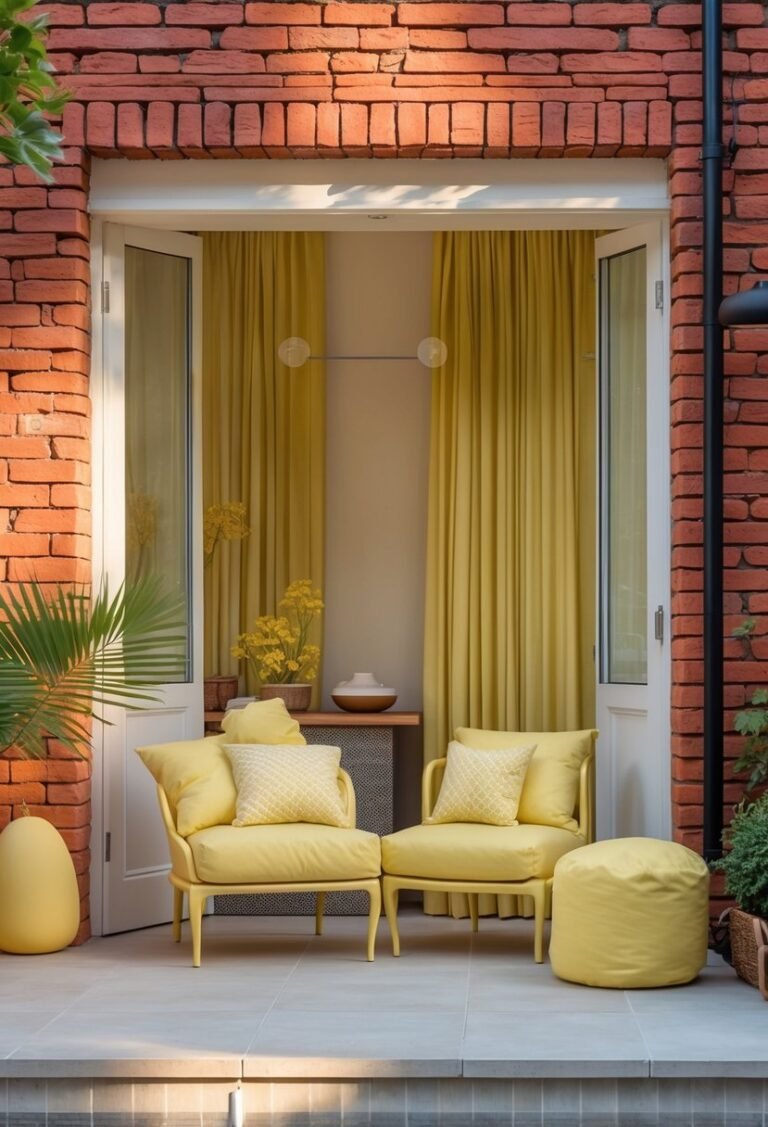
I love the retro energy of mixing sage green with mustard yellow. This zesty combination feels energetic and happy, perfect for creative spaces like a studio or a lively living area.
Toss a mustard yellow blanket on a sage sofa or hang art with yellow accents. I find that a little goes a long way here; just a few pops of yellow are enough to wake up a serene sage room.
11. Slate Blue
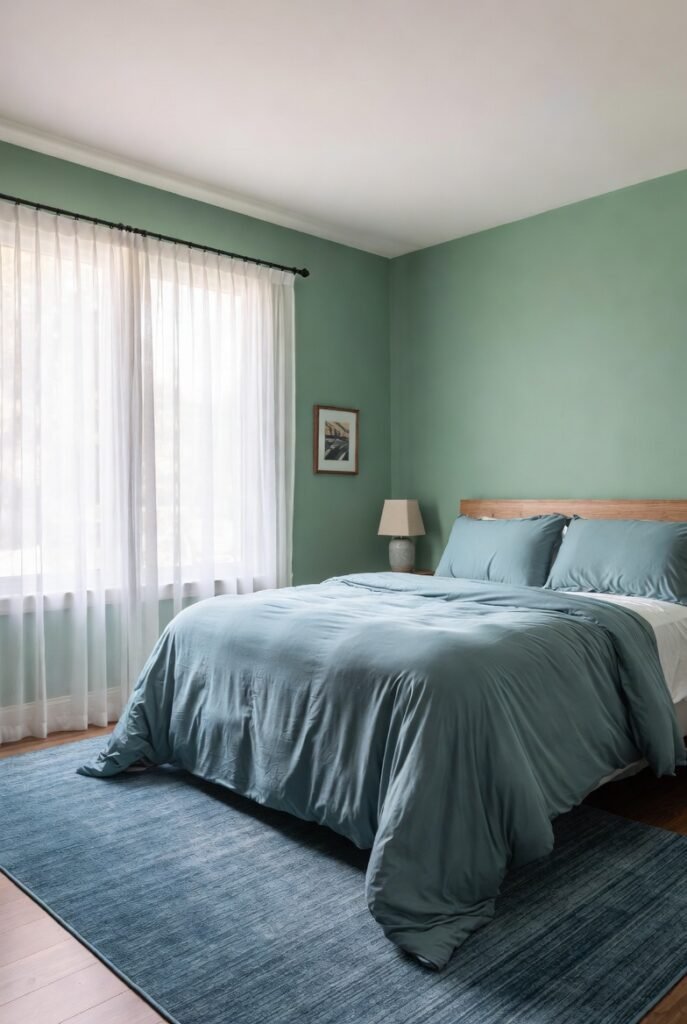
For a serene, tone-on-tone effect, I pair sage with slate blue. These two colors sit next to each other on the color wheel, creating an analogous color scheme that is incredibly restful to the eye.
I use this pairing in bedrooms or bathrooms where relaxation is the goal. A slate blue rug or bedding set complements sage walls perfectly, enhancing the cool, calming properties of both shades.
12. Matte Black
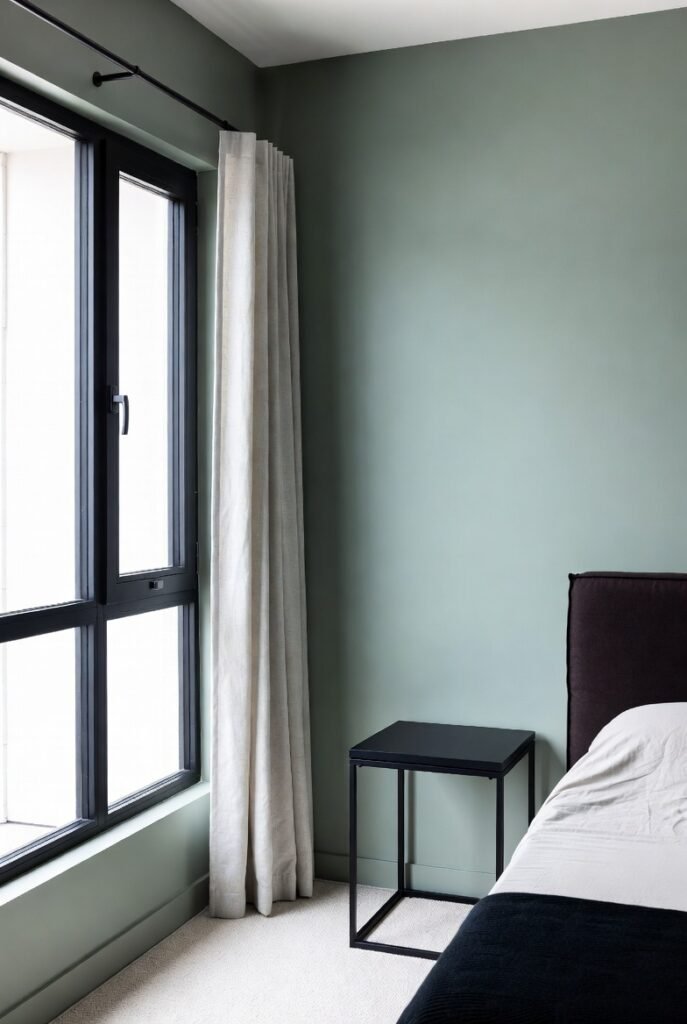
I think every room needs a touch of black to ground it, and sage green spaces are no exception. Matte black accents add definition and a modern punch to what is otherwise a very soft color.
Try using black window frames, curtain rods, or a black side table. I find that these sharp, dark lines prevent a sage room from looking too washed out or pastel.
13. Lilac

I am seeing purple and green pairings everywhere in design trends lately. Lilac is a lighter shade of purple, which is the direct complement to green, making this a scientifically pleasing duo.
Add floral fabrics or art featuring lilac tones to a sage room. I find this combination creates a sweet, English garden aesthetic that feels fresh and airy, especially in guest rooms.
14. Chocolate Brown
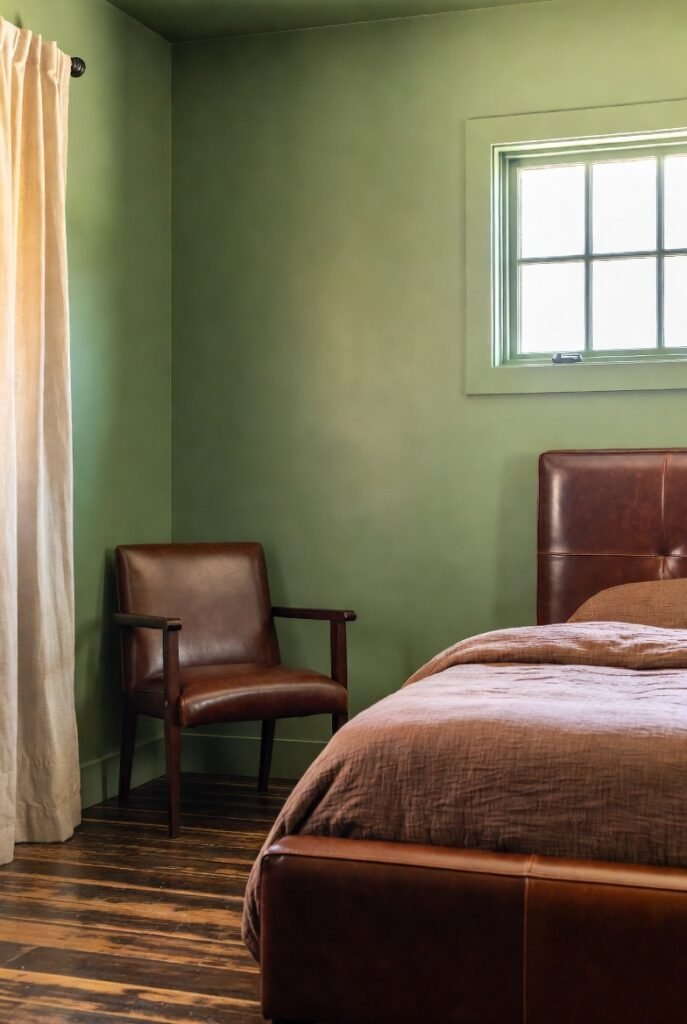
To amp up the cozy factor, I look to chocolate brown. Dark, moody browns turn a sage room into a warm, cabin-like retreat, perfect for cooler climates or reading nooks.
I suggest using leather furniture in a rich brown shade against sage walls. The combination creates a masculine, earthy vibe that feels incredibly comforting and secure.
15. Teal
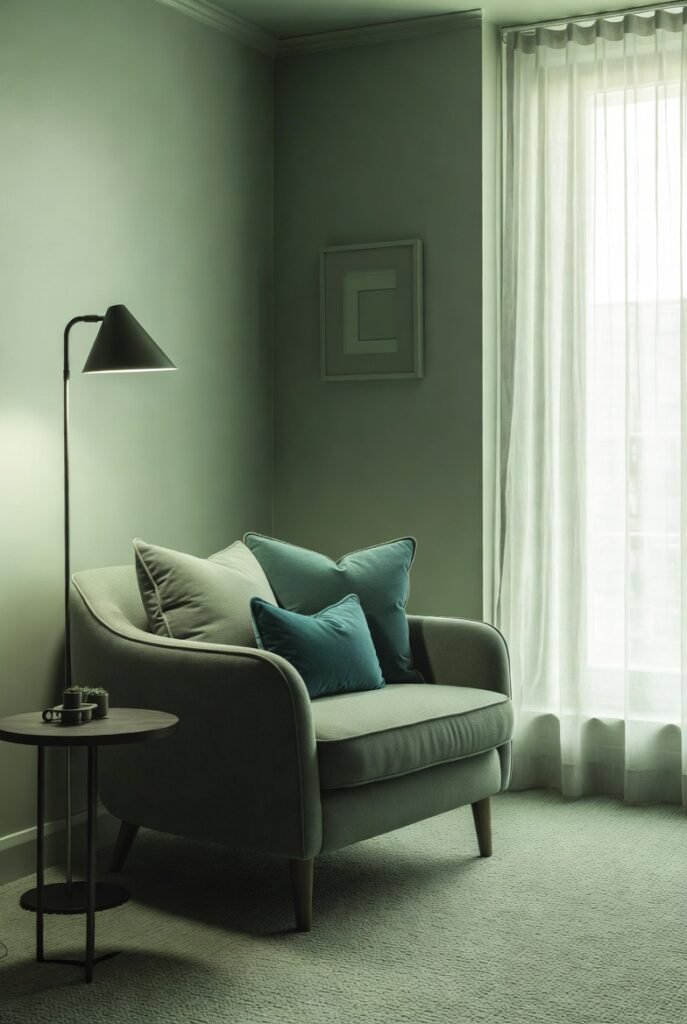
If you want to stay in the green family but add drama, I recommend teal. As a darker, bluer cousin to sage, teal adds depth and richness without clashing.
I love using teal velvet cushions or a statement armchair in a lighter sage room. It creates a layered, monochromatic look that feels designed and intentional rather than mismatched.
16. Rust Red
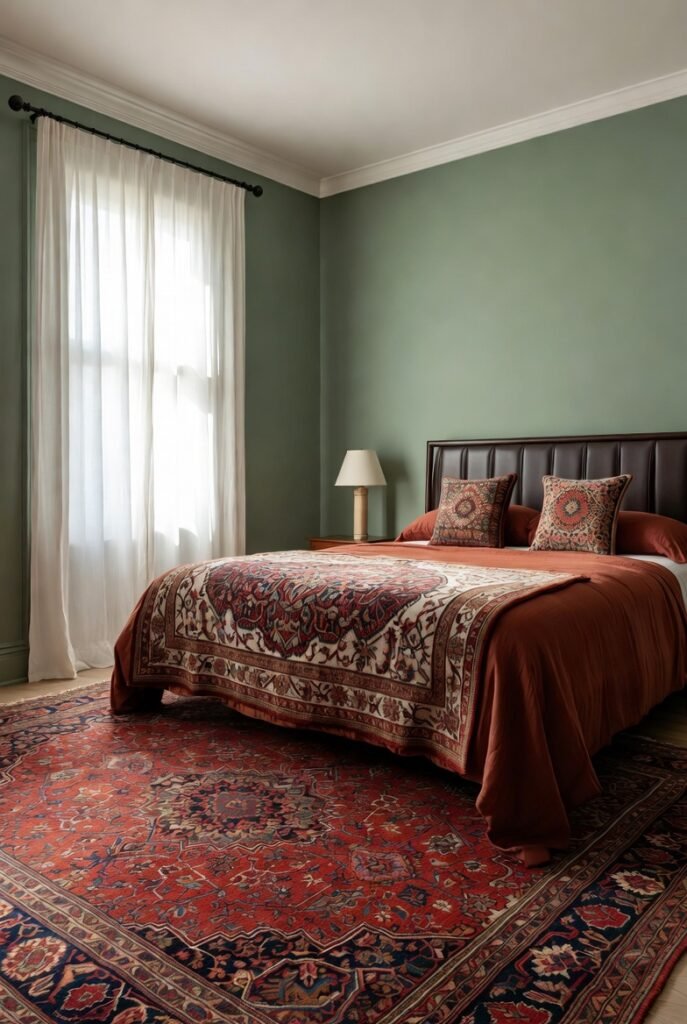
I know pairing red and green can risk looking like Christmas decor, but I promise rust red works differently. A deep, earthy red adds sophistication and warmth to sage without screaming “holiday.”
I use Persian-style rugs that feature deep reds to anchor a sage room. The complex patterns and muted tones ensure the pairing looks historical and elegant rather than seasonal.
Conclusion
Sage green offers endless possibilities for your home. Whether you choose to pair it with bold blacks, warm woods, or soft pinks, this versatile shade provides the perfect canvas for your personal style.
Grab some paint swatches and hold them up against your furniture to see which combination speaks to you. A fresh coat of paint and a few new accents might be all you need to fall in love with your space again.