How to Dispose of Paint Thinner Correctly
I remember finishing my first big furniture restoration project. The table looked incredible, but I was left with a garage full of sticky rags and a jar of cloudy, amber liquid. I stared at that container of used paint thinner and realized I had no idea what to do with it.
Can I pour it down the sink? (Absolutely not.) Should I toss it in the trash? (Definitely not.)
Disposing of paint thinner isn’t as intuitive as taking out the recycling. It is a harsh chemical solvent that requires special handling to protect your home, your plumbing, and the environment. But don’t worry—it is not difficult once you know the rules.
In this guide, I will walk you through exactly how to dispose of paint thinner safely, how to reuse it to save money, and the critical mistakes you must avoid.
What is paint thinner and why is it hazardous?

Before we get to the “how-to,” let’s briefly talk about what we are dealing with. Paint thinner (often mineral spirits or turpentine) is a petroleum-based solvent. It is excellent for stripping oil-based paints and cleaning brushes, but it is also classified as Household Hazardous Waste (HHW).
According to the EPA, products like these contain hazardous ingredients that can catch fire, react dangerously, or release toxic fumes. Because of this, we cannot treat them like normal trash.
If you pour paint thinner down the drain, it can corrode your pipes and contaminate local groundwater. If you throw it in the trash, it can leak in the garbage truck or landfill, creating environmental hazards.
The good news is that paint thinner is actually one of the easiest solvents to recycle right at home.
The best way to dispose of paint thinner: Reuse it!
You might be surprised to learn that you rarely need to “dispose” of paint thinner after just one use. Unlike water used to clean latex paint, solvents like mineral spirits can be reclaimed and used over and over again.
Here is the “settle and separate” method I use after every project.
Step 1: Let the solids settle
After you clean your brushes, pour the dirty, cloudy thinner into a clear glass jar. I prefer using old pickle jars or mason jars for this.
Seal the lid tightly and place the jar in a safe place where it won’t be knocked over. Now, just wait.
Over time—usually a few days to a week—gravity does the work for you. The heavy paint sludge will sink to the bottom, leaving clear, reusable solvent at the top.
Step 2: Pour off the clean solvent
Once the separation is complete, get a second clean container. Carefully pour the clear liquid from the top of the first jar into the new one.
Be steady and stop pouring before the sludge at the bottom starts to slide out.
You now have “reclaimed” paint thinner that is almost as good as new. You can use this for your next initial brush cleaning, saving the fresh stuff for the final rinse.
Step 3: Handle the sludge
Now you are left with just a small amount of goopy paint sludge at the bottom of the jar. This is the only part you actually need to dispose of as hazardous waste.
Leave the jar open in a well-ventilated area (away from kids, pets, and flames) to let the remaining liquid evaporate. Once the sludge hardens completely, you can usually dispose of it in the trash, but check your local laws first.
If it remains liquid, you must take it to a hazardous waste facility.
How to dispose of liquid paint thinner
If you have old paint thinner that you cannot reuse, or if you have a large quantity of contaminated solvent, you need to dispose of it through official channels.
Here is the step-by-step process to do it legally and safely.
Check for local collection events
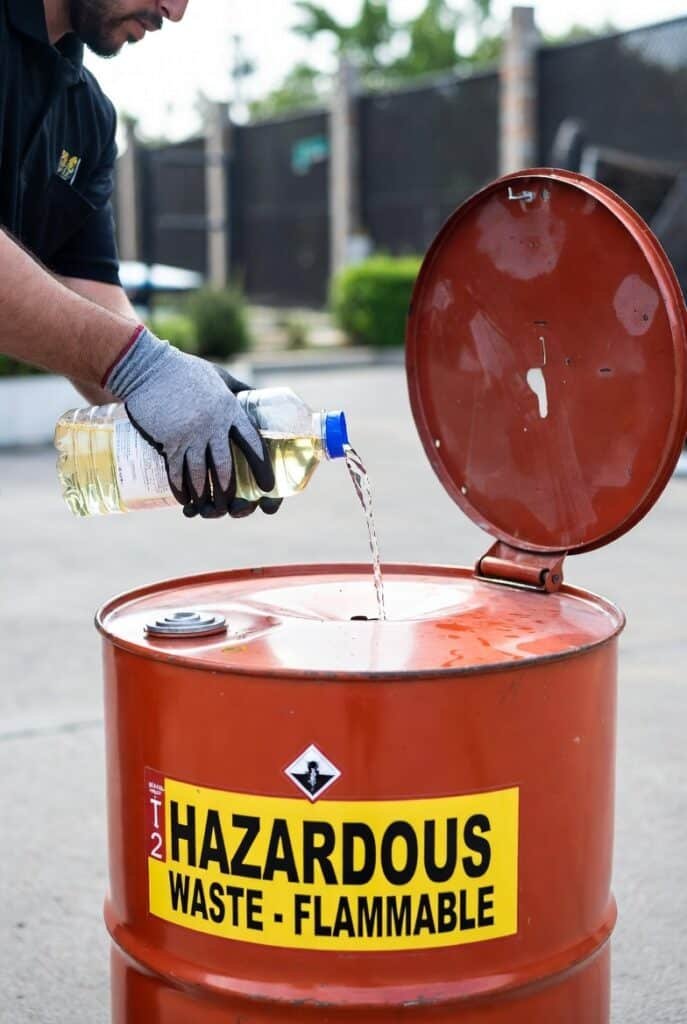
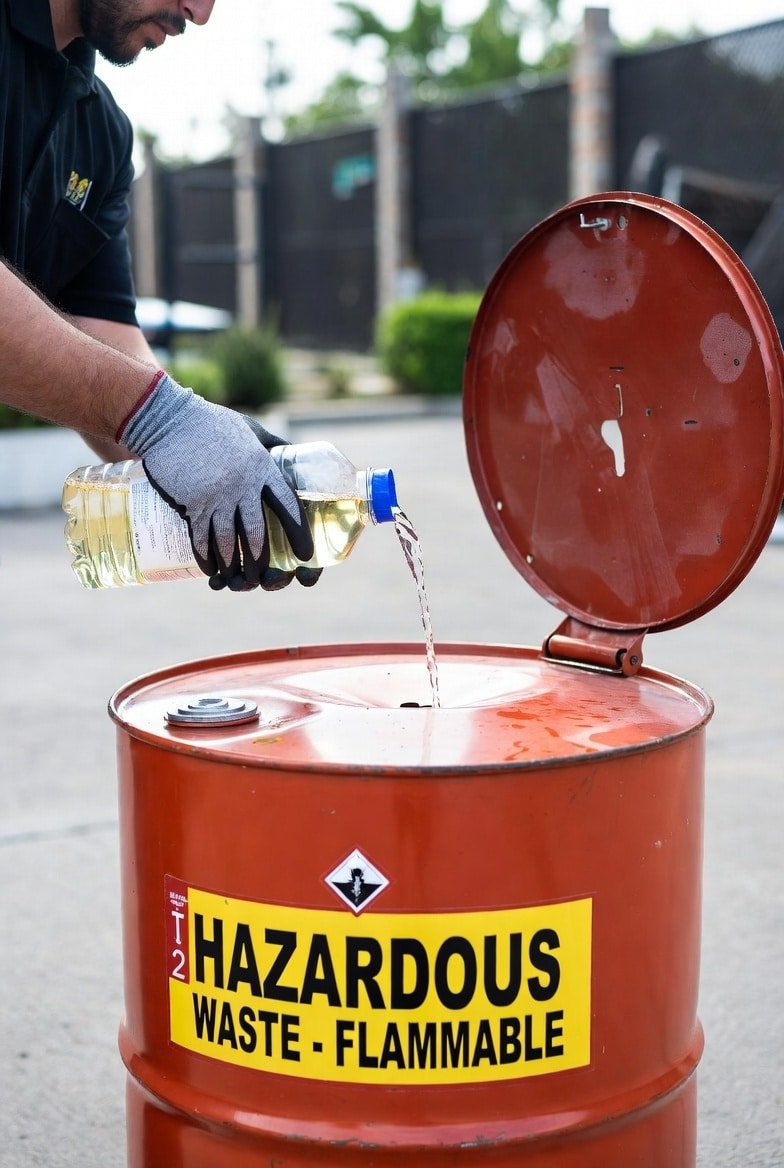
Most cities and counties have a Household Hazardous Waste (HHW) program. They often host “drop-off days” where residents can bring dangerous items like batteries, pesticides, and solvents for free.
I recommend searching online for “[your city] household hazardous waste disposal.” You will likely find a schedule for upcoming collection events.
Find a permanent drop-off facility
If you can’t wait for an event, look for a permanent HHW facility. Many waste management centers have a specific zone for hazardous materials.
Call ahead to confirm they accept paint thinner and ask if there are any fees or residency requirements.
Prepare the container
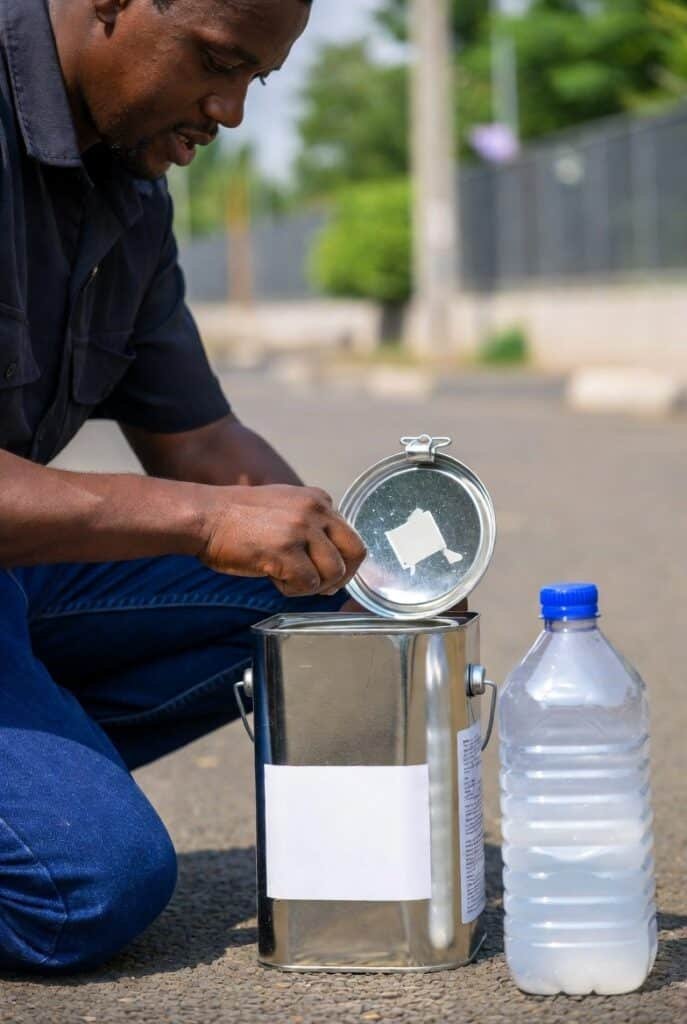
Never bring an open bucket of chemicals to a drop-off site. Keep the thinner in its original metal container if possible. If the original can is rusted or leaking, transfer the liquid to a sturdy plastic container with a tight-sealing lid.
Crucial tip: clearly label the container “PAINT THINNER.” The workers at the facility need to know exactly what they are handling to stay safe.
How to dispose of paint thinner rags (Fire Hazard!)
This is the most important safety tip in this entire post. Rags soaked in paint thinner, oil stain, or linseed oil can spontaneously combust.
As the oil dries and oxidizes, it generates heat. If the rags are wadded up in a pile or thrown in a trash can, that heat gets trapped. It can build up enough thermal energy to ignite the cloth without a spark or flame present.
According to the Ross Valley Fire Department, spontaneous combustion fires cause millions of dollars in damage every year. Do not let your home become a statistic.
The safe way to dry rags
- Never pile them up: Do not leave wet rags in a pile on the floor or in a bucket.
- Hang them to dry: Lay the rags flat on a non-flammable surface (like a concrete driveway) or hang them on a line outdoors. Keep them weighted down so they don’t blow away.
- Let them cure: Allow them to dry completely until they are stiff and brittle. This allows the heat of oxidation to dissipate harmlessly into the air.
- Disposal: Once they are fully dry and hard, you can usually place them in the trash. However, for maximum safety, I place my dried rags in an old metal coffee can with water and a lid before tossing them.
Common mistakes to avoid
I have seen many DIYers make dangerous mistakes because they just wanted to get the cleanup over with. Avoid these common errors to keep your home and community safe.
Do not pour it down the drain
I cannot stress this enough. Paint thinner destroys the “good” bacteria in septic systems and can damage municipal water treatment plants. It creates toxic fumes in your pipes and pollutes local waterways.
Do not pour it on the ground
Dumping thinner in the backyard is just as bad. It kills grass, poisons the soil, and can seep into the groundwater table.
Do not mix chemicals
Never mix paint thinner with other waste like ammonia, bleach, or even latex paint. Mixing chemicals can create dangerous reactions, toxic gas, or even explosions. Keep your thinner separate.
Do not put liquid in the trash
Garbage trucks compact trash. If you throw a container of liquid thinner in the bin, it will likely burst under pressure. This leaks flammable solvent all over the truck and the road, creating a massive fire risk for sanitation workers.
FAQs
Can I evaporate paint thinner?
Technically, you can let small amounts of solvent evaporate in a well-ventilated area. However, paint thinner contains Volatile Organic Compounds (VOCs) that pollute the air. It is much better for the environment to reuse the liquid or take it to a collection facility.
Is paint thinner the same as mineral spirits?
They are very similar, but not identical. Mineral spirits are a refined petroleum distillate, meaning they are cleaner and less smelly than generic paint thinner. However, for disposal purposes, you treat them exactly the same way.
How long does paint thinner last?
If stored correctly in a sealed metal container, paint thinner can last almost indefinitely. This is why the “settle and separate” reuse method is so effective—the solvent doesn’t really “go bad.”
A cleaner, safer workshop
Handling hazardous waste properly is part of the job when you love DIY projects. It might take a little extra effort to drive to the disposal facility, but it protects your plumbing and our environment.
Plus, by using the settling method I described, you will save money by buying less solvent in the future.
Check your local waste management website today and find out where your nearest HHW drop-off point is. You will feel much better knowing that the jar of chemicals in your garage is gone for good—and gone to the right place.